Low Volume Machining: Rapid Changeover & Lean Sequencing
Date:2026-07-14Article editor:Starting Point PrecisionViews:313In today’s volatile market, manufacturers face relentless pressure to handle Low Volume Machining orders without sacrificing efficiency. The era of mass production is giving way to High-Mix Low-Volume Production Flexibility—a paradigm where agility, quick response, and cost control define competitiveness. This article dives into the technical backbone of this flexibility: rapid tool-change systems and disciplined production sequencing, tailored for precision engineering workshops.
Traditional CNC lines thrive on long runs. However, Low Volume Machining (batches of 50–500 pieces) with high mix (dozens of part numbers daily) introduces chronic downtime from setup changes. Studies show that changeover can consume 30–50% of total machine time in such environments. The solution lies not in faster spindles, but in systematic changeover reduction (SMED) and rigorous order prioritization based on tooling commonality and due dates.
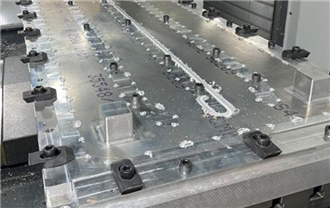
Achieving sub‑10‑minute changeovers for Low Volume Machining requires both advanced hardware and standardized methods. Our Precision equipment list features the Germany DMG HSC 75 linear 5‑axis machining center. The DMG HSC 75 linear is purpose‑built for complex, small‑batch production with its 28,000 RPM direct‑drive spindle, 60‑tool magazine (HSK‑63), and rapid traverse of 80 m/min in all linear axes. This high‑speed dynamics, combined with zero‑point clamping systems (repeatability ≤0.005mm) and offline tool presetting, allows us to complete a full changeover for new part families in under 8 minutes on this machine.
For instance, a recent job—17 variants of aerospace brackets—saw average changeover time drop from 45 minutes to just 8 minutes using the DMG HSC 75 linear’s quick‑release pallet system. This dramatic reduction is the foundation of our sequencing flexibility.
Production Sequencing: The Organisational Lever
Rapid changeovers enable frequent job switching, but effective sequencing ensures machines stay productive. Rather than complex algorithms, we rely on a visual management board and weekly grouping of orders by similar tool sets. This lean approach—rooted in the Toyota Production System —allows our team leaders to re‑sequence jobs on the fly when urgent orders arrive.
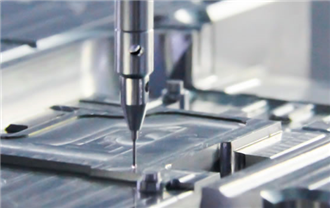
For Low Volume Machining, first-article inspection (FAI) is critical. We integrate in-line probing (Renishaw OMP400) on the DMG HSC 75 linear and post-process CMM checking. Our ISO 9001:2015 and AS9100D certifications ensure each batch meets strict tolerances (often ±10µm on critical features). The workshop layout follows lean principles—machines arranged by part families rather than process type, reducing travel waste and simplifying job handovers.
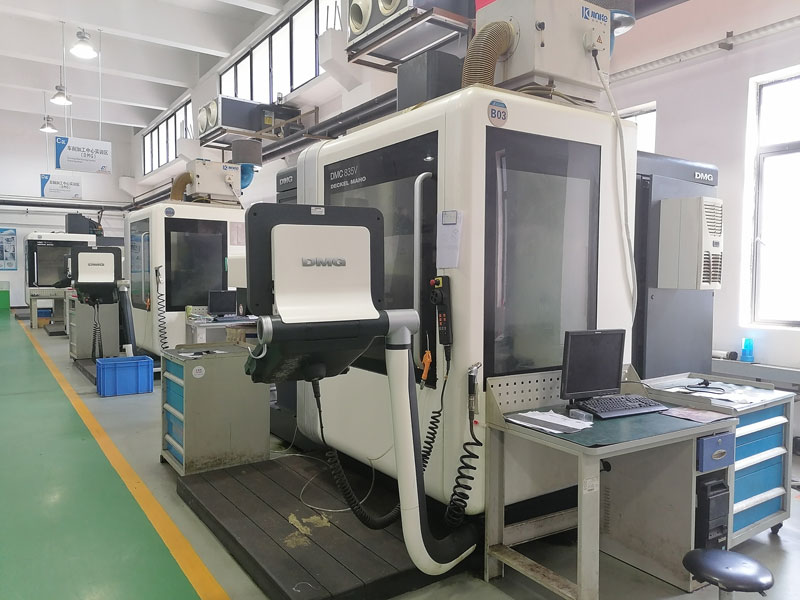
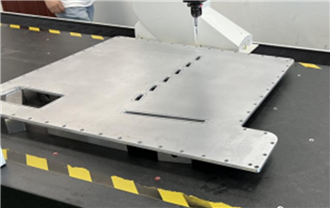
Our production floor
A recent contract required 12 titanium alloy implant designs, each in 80‑piece lots, with surface finish Ra 0.4μm. Using our rapid changeover protocol and a fixed weekly sequencing plan based on tool family, we completed all 960 parts in 6 working days—20% faster than the client’s previous supplier. The DMG HSC 75 linear was the primary workhorse for the 5‑axis contouring operations, thanks to its linear drives that ensure high dynamic stiffness even at tight radii. Grouping operations by tool family and using a dedicated quick-change pallet system for this machine were the decisive factors. This instance validates that Low Volume Machining can be both agile and profitable when changeover and sequencing are synchronized without over‑complicating the control system.
According to the Global Sources (Flexible manufacturing Systems), successful high-mix operations invest equally in hardware and human-led planning. The DMG HSC 75 linear’s ability to maintain thermal stability during frequent start‑stop cycles makes it ideal for our intermittent Low Volume Machining workflow. We also adopt lean tools from Toyota’s production system to refine our SMED routines. Our team conducts daily stand‑up meetings to review the next 24‑hour job sequence, ensuring that urgent orders are accommodated with minimal disruption.
High-Mix Low-Volume Production Flexibility is not a buzzword—it is a measurable capability built on rapid changeover (average ≤12 min across our 5‑axis cells, with the DMG HSC 75 linear achieving sub‑8 min) and disciplined production sequencing. Our equipment, processes, and team are geared to turn small-batch complexity into a competitive advantage. If you are navigating the challenges of Low Volume Machining, we invite you to review our detailed equipment specs and case files.
Contact us to discuss your long-term manufacturing needs. Let’s engineer flexibility together.
Q1: What is the minimum batch size you accept for Low Volume Machining?
We routinely handle batches as small as 10 pieces, with no upper limit. Our focus is on high-mix jobs, so even single prototypes are welcome.
Q2: How does the DMG HSC 75 linear benefit small-batch production?
Its 28,000 RPM spindle and linear drives drastically reduce cycle times for complex contours, while the 60‑tool magazine supports multi‑variant jobs without frequent manual tool loading.
Q3: Which materials do you support for Low Volume Machining?
All machinable metals (aluminum, steel, stainless, titanium, Inconel) and engineering plastics (PEEK, Delrin, Ultem). The DMG HSC 75 linear handles titanium and Inconel efficiently with its rigid spindle design.
Q4: Can you provide first-article inspection reports?
Yes. Every order includes a full FAIR with CMM results, surface roughness profiles, and material certificates, per AS9102 or PPAP requirements.
Q5: How quickly can you start a new order?
After design approval, we typically begin production within 2 business days, thanks to our rapid changeover readiness and pre‑set tooling inventory.
Add: Building 3No.277 Zhen'an Middle Road, Chang'an Town,Dongguan,Guangdong, China
Tel:+86-769-82855591
Copyright © 2019 All Rights Reserved Dongguan Start Precision Technology Co., Ltd. Tel: +86-769-82855591
Add: No. 277 Zhen'an Middle Road, Chang'an Town, Dongguan, Guangdong, China



 中文版
中文版 English