Aluminum CNC Turning Parts: From Prototype to Production
Date:2026-07-18Article editor:Starting Point PrecisionViews:249The transition from prototype to full-scale production for aluminum CNC turned components is a critical phase determining product quality, cost efficiency, and time-to-market. While prototyping focuses on form and function verification, production demands consistency, speed, and process capability. This article outlines a strategic roadmap covering rapid prototyping workflows, tooling reuse, CPK improvement, and production ramp-up for turning operations.
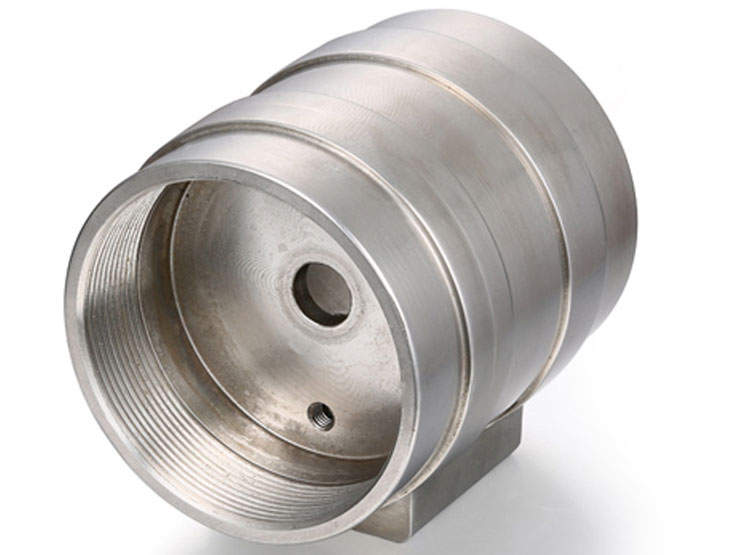
Effective prototyping begins with CAD modeling and CAM programming for turning toolpaths, cutting parameters, and cycle times. Material selection is crucial—6061-T6 aluminum is preferred for its machinability and strength-to-weight ratio, while 7075 is chosen for higher strength applications, per ASTM standards. Prototyping employs high-precision CNC turning centers to produce functional shafts, sleeves, and connectors that validate geometry and tolerances within days.
| Turning Center Model | Max Turning Diameter | Spindle Speed | Typical Application |
| DMG CTX beta 800 | 600 mm | 5,000 rpm | Large-diameter complex parts |
| TAKZSAWA NEX-108 | 420 mm | 6,000 rpm | Medium-volume, high-accuracy shafts |
| CK6136 (China) | 360 mm | 2,500 rpm | General-purpose turning |
The DMG CTX beta 800 turning center, with 600 mm max diameter and 5,000 rpm spindle, is ideal for prototyping large aluminum housings and flanges. Rapid iteration, enabled by in-process CMM inspection, allows engineers to refine cutting parameters—surface speeds of 200–400 m/min and feeds of 0.05–0.15 mm/rev—before production tooling commitment.
Tooling reuse is a key cost-saving strategy. Rather than designing dedicated collets and jaws for prototypes and separate ones for mass production, manufacturers adopt modular workholding systems. Quick-change tool posts, standardized hydraulic chucks, and interchangeable carbide inserts (e.g., CNMG or VNMG geometries) allow the same setup to handle batch sizes from 50 to 50,000 parts. Investing in high-quality PCD-tipped tools maintains edge integrity over extended runs, allowing turning centers to run both prototype and production jobs with minimal changeover. This reduces non-productive time, lowers custom tooling inventory, and ensures process parameters remain consistent—a principle aligned with ISO 9001 quality management.
CPK measures how well a process produces within specification limits. For aluminum turning, a CPK of 1.0 is acceptable for prototypes, but volume production demands at least 1.33, with 1.67 considered excellent. Achieving CPK improvement involves Statistical Process Control monitoring of critical diameters, tool wear compensation through adaptive feed control, and regular machine calibration—the TAKZSAWA NEX-108 offers ±0.002 mm repeatability, while the DMG CTX beta 800 achieves ±0.001 mm. A structured CPK improvement plan typically elevates capability from 1.0 during pilot runs to 1.5+ within the first production month, reducing scrap and rework. X-bar and R charts help detect shift trends early.
Production ramp-up starts from 50–100 parts per day in prototype phase, targeting 500–1,500+ parts daily within 4–6 weeks. Key enablers include multi-turret turning (e.g., TAKZSAWA NEX-108 with 6,000 rpm), automation integration with bar feeders and gantry loaders, and process optimization using high-pressure coolant (up to 70 bar) for chip control. For high-volume runs, the CK6136 offers cost-effective general turning, while the DMG CTX beta 800 handles large-diameter workpieces with Y-axis live tooling for off-center drilling and milling. A well-executed ramp-up plan maintains CPK targets while increasing OEE. Cross-functional teams review first-article inspection (FAI) results and train operators on standardized work.
An automotive electronics supplier required 8,000 aluminum liquid level sensor housings per month, with critical bore tolerance of ±0.01 mm, surface finish Ra 1.6 μm, and leak‑tight thread sealing. Using the TAKZSAWA NEX‑108 turning centers, the team validated all dimensions and sealing performance within 5 days. Modular collet fixtures served both prototype and production runs, eliminating the need for redesign. Implementation of SPC raised the CPK from 0.90 during pilot runs to 1.44 in full production. Combined with automated bar feeders and optimized cutting parameters, daily output increased from 80 pieces to 620 pieces within 4 weeks. This approach reduced lead time by 22% and lowered per‑part cost by 16%.
Mastering the prototype-to-production journey for aluminum CNC turning requires disciplined focus on rapid prototyping, tooling reuse, CPK improvement, and production ramp-up. With the right strategies and equipment—from DMG and TAKZSAWA turning centers to modular workholding—manufacturers can achieve high-quality volume production. For more information on precision CNC turning capabilities and detailed equipment specifications, please visit Start Precision and explore our comprehensive precision equipment list.
We invite you to contact us to discuss your manufacturing requirements and explore how our expertise can accelerate your next project.
Frequently Asked Questions (FAQ)
Q1: What aluminum alloys are best for CNC turning prototypes and production?
6061-T6 is most versatile for general turning applications. 7075-T6 offers higher strength but is more challenging to machine. 2024 is used for aerospace applications where high fatigue resistance is needed.
Q2: How can I improve CPK from prototype to production for turned parts?
Implement SPC monitoring from the first pilot run, use high-quality carbide inserts with consistent wear characteristics, regularly calibrate machines (especially for diameter control), and adjust offsets based on real-time data. Focus on reducing variation in material hardness, coolant concentration, and ambient temperature.
Q3: What is the typical timeline for production ramp-up of aluminum turning parts?
A typical ramp-up from prototype approval to full production volume (500+ parts/day) takes 4–8 weeks, depending on part complexity, tooling availability, and automation integration. Early involvement of manufacturing engineers can shorten this timeline.
Q4: How does tooling reuse benefit small-batch and medium-batch turning production?
Modular tooling reduces setup time, eliminates the need for prototype-specific jaws, and ensures process parameters remain consistent. This lowers per-part cost and accelerates time-to-market for short-run or bridge production orders.
Q5: Which turning center is best for high-volume aluminum turning – DMG CTX beta 800 or TAKZSAWA NEX-108?
DMG CTX beta 800 is preferred for large-diameter workpieces (up to 600 mm) and complex geometries with live tooling. TAKZSAWA NEX-108 is more suitable for medium-diameter shafts (up to 420 mm) with high spindle speed and excellent repeatability for volume production. The choice depends on part size, complexity, and annual volume.
Add: Building 3No.277 Zhen'an Middle Road, Chang'an Town,Dongguan,Guangdong, China
Tel:+86-769-82855591
Copyright © 2019 All Rights Reserved Dongguan Start Precision Technology Co., Ltd. Tel: +86-769-82855591
Add: No. 277 Zhen'an Middle Road, Chang'an Town, Dongguan, Guangdong, China



 中文版
中文版 English