Titanium Precision Components for Low-Volume Customization
Date:2026-07-17Article editor:Starting Point PrecisionViews:237In the demanding world of high-performance engineering, the shift towards low-volume customization for titanium precision components represents a strategic move away from mass production. For industries like aerospace, semiconductor equipment, and scientific research, the value lies not in quantity, but in the exacting quality, material integrity, and design flexibility that only a focused, low-quantity approach can provide. This guide details the core pillars of successful collaboration with a specialized manufacturing partner.
The most immediate hurdle in sourcing custom titanium parts is often the prohibitive Minimum Order Quantity (MOQ). Traditional high-volume foundries are optimized for runs of thousands, making small-batch prototyping or niche production financially unviable. Our model is built on flexibility, offering low MOQs that empower engineers to validate designs, conduct rigorous testing, or produce limited-run components for specialized equipment without committing to massive inventory. This approach reduces financial risk and accelerates the path from concept to real-world application, ensuring you pay only for the titanium precision components you need, when you need them.
Success with titanium alloys—such as Grade 5 (Ti-6Al-4V) or the more challenging Ti-6Al-2Sn-4Zr-2Mo—requires a profound understanding of the material's metallurgy. Titanium's high strength-to-weight ratio is matched by its low thermal conductivity and high reactivity, which can lead to work hardening and tool wear during machining. Our advantage stems from extensive research into toolpath optimization, cutting speeds, and coolant application.
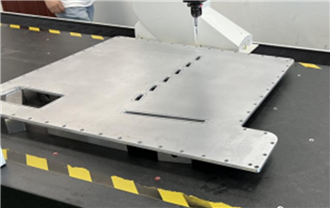
We leverage advanced machining centers, including 5-axis simultaneous CNC machines capable of handling complex geometries. For instance, our DMG HSC 75 linear and LGMazak VCN-510C (see our complete precision equipment list) provide the rigidity and precision required to achieve tolerances of +/- 0.01mm. This processing experience is not just about machine operation; it’s a deep-seated knowledge base that informs every decision, from fixturing to stress-relief strategies, ensuring the production of flawless titanium precision components.
In mission-critical applications, material provenance is non-negotiable. Our commitment to quality begins with raw material certification and extends through every stage of production. We partner only with ISO 13485 and AS9100 accredited mills, ensuring that each bar or billet of titanium is supplied with a complete Material Test Report (MTR) and chemical analysis, in full compliance with ASTM B348 and other relevant standards.
This material certification process includes verification of mechanical properties—yield strength, ultimate tensile strength, and elongation—as well as a detailed review of the mill’s own testing protocols. Full traceability is maintained via a unique batch number, which is linked to all subsequent machining, heat treatment, and inspection records. This rigorous chain of custody provides our clients with absolute confidence in the final component’s integrity.
Time-to-market is critical. Our rapid iteration process is the engine that drives innovation, allowing you to refine your design quickly and efficiently. This collaborative workflow is structured to turn concepts into validated, production-ready titanium precision components in record time.
1. Design for Manufacturability (DFM) Review: Our application engineers analyze your CAD model, providing instant feedback on material selection, wall thickness, and tolerance feasibility to optimize for both performance and cost.
2. Proto-typing and Pilot Run: Utilizing our flexible production cells, we produce a small batch of parts. This step is crucial for identifying any unexpected machining challenges and allowing for physical verification of dimensional accuracy.
3. Testing and Quality Feedback: The pilot components undergo rigorous inspection, including CMM and optical scanning. We deliver a complete inspection report and work with you to assess performance.
4. Process Refinement & Production: Based on the pilot run, we refine the CNC program and tooling strategy before proceeding with the full production run, ensuring that the final batch perfectly matches the validated design.
Consider the case of a national research laboratory requiring a custom titanium vacuum chamber for a particle accelerator experiment. The chamber demanded ultra-high vacuum compatibility (10⁻⁹ Torr), minimal outgassing, and complex internal geometries for sensor integration. Through our DFM review, we recommended a modified welding strategy and a specialized electropolishing treatment to achieve the required surface finish of Ra 0.4 µm. In just three weeks, we delivered a pilot batch of two chambers, which passed helium leak testing with a leak rate below 1×10⁻¹⁰ mbar·L/s and met all dimensional tolerances. This successful low-volume run enabled the lab to proceed with their critical experiments ahead of schedule, demonstrating the power of our rapid iteration process for even the most demanding titanium precision components.
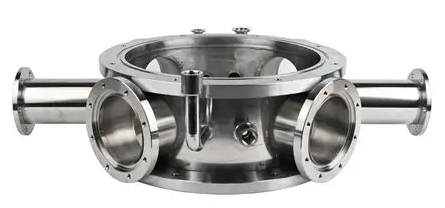
Successfully navigating the complexities of low-volume customization for titanium parts—especially for high-stakes applications like vacuum chambers—demands a partner with deep technical expertise, a flexible manufacturing approach, and a commitment to quality. By prioritizing low MOQs, leveraging extensive processing experience, insisting on full material certification, and executing a streamlined rapid iteration process, we provide a comprehensive solution for your most challenging requirements.
Contact us to discuss your manufacturing requirements and discover how we can turn your precise vision into reality.
1. What is the typical Minimum Order Quantity (MOQ) for custom titanium components?
Our MOQ is flexible and project-dependent, starting from as few as 1-5 units for prototyping or pilot runs, scaling up to 100+ for small-batch production, ensuring you only invest in what you need for your stage of development.
2. What are the key challenges in machining titanium alloys?
Titanium's low thermal conductivity and high chemical reactivity cause heat to concentrate at the cutting edge, leading to rapid tool wear and work hardening. This requires specialized tooling, precise coolant application, and optimized cutting parameters to manage heat and maintain part integrity.
3. How does your rapid iteration process handle complex geometries like vacuum chambers?
We use advanced 5-axis machining and collaborate closely during the DFM stage to optimize internal features and surface finishes. Our pilot run allows us to validate leak-tightness and dimensional accuracy before full production, ensuring critical vacuum integrity is achieved.
4. What material certifications do you provide for titanium parts?
We supply full Material Test Reports (MTRs) from the mill, including chemical composition, mechanical properties, and heat lot number. All certifications are traceable to the final component and comply with ASTM and ISO standards.
Add: Building 3No.277 Zhen'an Middle Road, Chang'an Town,Dongguan,Guangdong, China
Tel:+86-769-82855591
Copyright © 2019 All Rights Reserved Dongguan Start Precision Technology Co., Ltd. Tel: +86-769-82855591
Add: No. 277 Zhen'an Middle Road, Chang'an Town, Dongguan, Guangdong, China



 中文版
中文版 English