Understanding CNC Lathe Types: A Complete Classification Guide
Date:2026-04-23Article editor:Starting Point PrecisionViews:504The term "CNC lathe" covers a broad spectrum of machine tools, but not every lathe is built for the same job. From simple two-axis turning to complex multi-tasking mill-turn centers, understanding the classification of these machines is essential for selecting the right equipment for your workshop floor. This guide breaks down CNC lathes by spindle movement, structure, layout, and functionality.
1. Classification by Workpiece Movement: Fixed Headstock vs. Sliding Headstock
The most fundamental distinction lies in how the material moves during cutting.
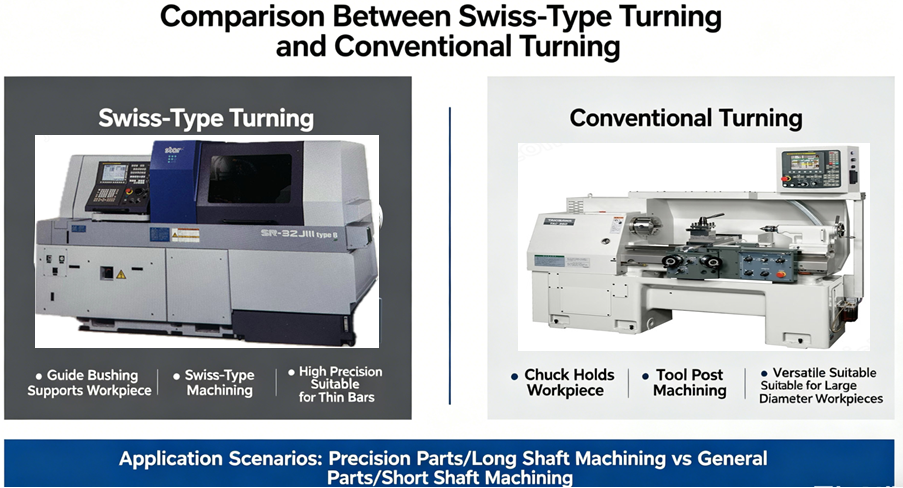
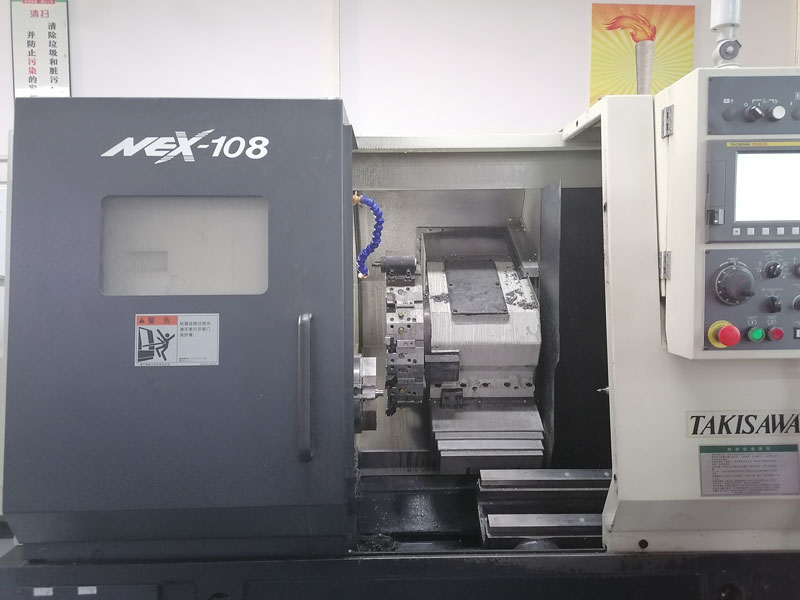
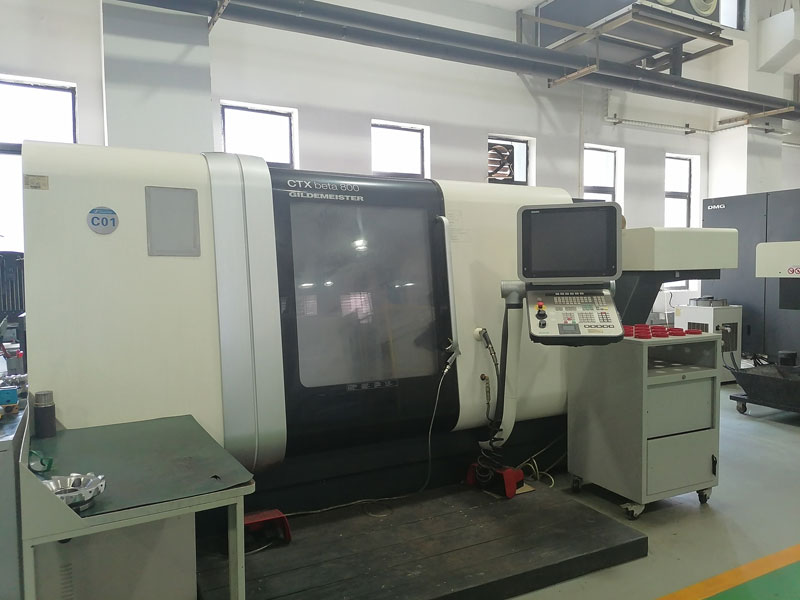
● Fixed Headstock (Conventional/Turret Lathe): In these machines, the spindle and workpiece rotate but remain fixed in the Z-axis position. The tool turret does all the moving. This is the universal standard for chucking work. They excel at machining chucked parts like flanges, pulleys, and short shafts. Representative models include the robust TAKISAWA NEX-108 and the versatile DMG MORI CTX beta 800.
● Sliding Headstock (Swiss-Type Lathe): Often called Swiss Automatic lathes, these feature a guide bushing that supports the bar stock extremely close to the cutting point. The headstock itself moves the bar axially (along the Z-axis) through the bushing while the tools remain stationary in the radial plane. This design minimizes deflection, making it the gold standard for long, slender parts with tight tolerances. These machines dominate the medical device, watchmaking, and electronics connector industries.
2. Bed Structure: Flat Bed vs. Slant Bed
The physical construction of the machine base directly impacts rigidity and chip management.
● Flat Bed (Horizontal Bed): A traditional, cost-effective design where the ways are horizontal. While simple to manufacture and maintain, gravity works against chip evacuation, potentially causing heat buildup and thermal distortion.Learn more about CNC LATHE BED DESIGN. They remain a viable option for basic training and low-budget maintenance shops.
● Slant Bed: The standard in modern, high-performance turning. The bed is angled (typically 30°, 45°, or 60°), allowing chips to fall freely into the conveyor. This configuration also provides superior rigidity against cutting forces and makes loading/unloading easier for automation. The TAKISAWA NEX-108 exemplifies this robust, high-precision slant bed architecture.
3. Functional Complexity: From 2-Axis to Mill-Turn
Modern manufacturing demands efficiency, driving the evolution from simple turning to complete machining.
● 2-Axis Lathes (X & Z): These machines perform basic cylindrical operations: facing, turning, grooving, and threading. They lack live tooling and a Y-axis, making them ideal for high-volume production of simple parts where cost-per-piece is the primary driver.
● Mill-Turn Centers / Multi-Tasking Machines: This category represents the high end of the spectrum. Equipped with a C-axis (spindle orientation), a Y-axis (off-center milling), and powered rotary tool holders, machines like the DMG MORI CTX beta 800 can mill flats, drill bolt-hole circles, and tap threads in a single setup. This eliminates the need for secondary operations on a machining center.
● Dual Spindle / Twin Turret: For ultimate productivity in medium-to-high volume production, these machines feature a main spindle and a sub-spindle. The part is automatically transferred from the main to the sub-spindle, allowing the back side of the part to be machined without manual intervention.
4. Orientation: Horizontal vs. Vertical Turning Lathes (VTL)
While the horizontal lathe (spindle parallel to the floor) is the most common configuration, the vertical lathe is indispensable for heavy industry. In a vertical turret lathe, the spindle is vertical, and the chuck acts like a rotary table. Gravity assists in holding massive, heavy parts securely. This design is uniquely suited for large-diameter components such as railway wheels, large flanges, and wind turbine bearing housings.
5. Tooling Configuration: Turret vs. Gang Tooling
The method of holding cutting tools affects cycle time significantly.
● Turret (Drum or Crown): The most common type, available in servo (high speed/precision) or hydraulic (high clamping force) configurations. A 12-station turret allows for a wide range of tools without frequent changeovers.
● Gang Tooling (Tool Plate): A plate holds an array of tools set to specific depths. Because there is no turret indexing time, tool changes occur in fractions of a second. This is ideal for high-speed, small-part production on Swiss-type or small fixed-headstock lathes.
Choosing the correct CNC lathe configuration—whether a heavy-duty slant bed or a precise Swiss-type—is the cornerstone of optimizing machining strategy and achieving competitive manufacturing efficiency.

Add: Building 3No.277 Zhen'an Middle Road, Chang'an Town,Dongguan,Guangdong, China
Tel:+86-769-82855591
Copyright © 2019 All Rights Reserved Dongguan Start Precision Technology Co., Ltd. Tel: +86-769-82855591
Add: No. 277 Zhen'an Middle Road, Chang'an Town, Dongguan, Guangdong, China



 中文版
中文版 English