Common CNC Lathe Turning Processes Explained
Date:2026-04-25Article editor:Starting Point PrecisionViews:475CNC lathes are the backbone of precision manufacturing, automating material removal from rotating workpieces to produce cylindrical components with tight tolerances. Mastering the fundamental turning processes is essential for optimizing production efficiency and part quality. This article details the most common operations and their typical applications.
Straight Turning (External Diameter Turning)
Straight turning reduces the diameter of a workpiece along its length. The cutting tool moves parallel to the axis of rotation, removing material in a controlled pass. It is the most frequently used operation for achieving precise outer diameters on shafts, pins, and fasteners. Proper selection of cutting speed, feed rate, and depth of cut directly affects surface finish and tool life. Modern carbide inserts with chip breakers excel in high-speed aluminum turning. As recommended by Machinery’s Handbook Turning Guidelines, matching the tool nose radius to the required finish can eliminate secondary polishing.
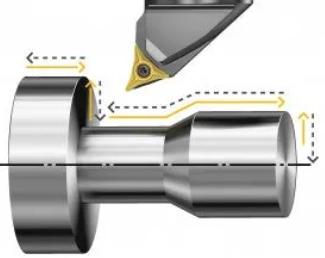
Facing Turning
Facing produces a flat surface perpendicular to the spindle axis. The tool feeds radially across the end of the part, creating a smooth reference face. This is often the first operation to establish a clean datum and ensure the part sits squarely in assembly. For EV battery tray bosses and bushings, facing guarantees leak-proof sealing surfaces. We apply this process daily to meet ISO 9001:2015 standards.

Grooving and Parting
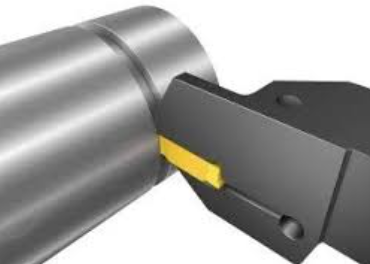
Grooving cuts a narrow channel on the part profile, used for O-ring seats, retaining rings, or undercuts. Parting (cutoff) separates the finished component from the bar stock using a thin blade-like insert. Both require rigid tool holders, high-pressure coolant, and controlled pecking cycles to prevent chip packing. Single-point and full-radius grooving tools allow for intricate internal and external profiles.
Thread Cutting
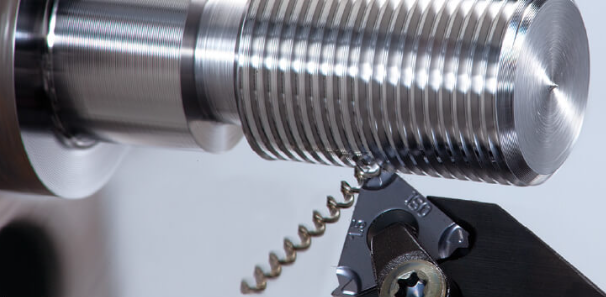
Thread cutting on a CNC lathe synchronizes spindle rotation with precise tool motion to generate external or internal threads. From standard 60° V-threads to ACME and square profiles, multiple light passes ensure dimensional accuracy and surface integrity. Thread whirling attachments further enhance quality in tough alloys. The threaded inserts used in EV battery trays rely on this process for high pull-out strength.
Drilling and Boring
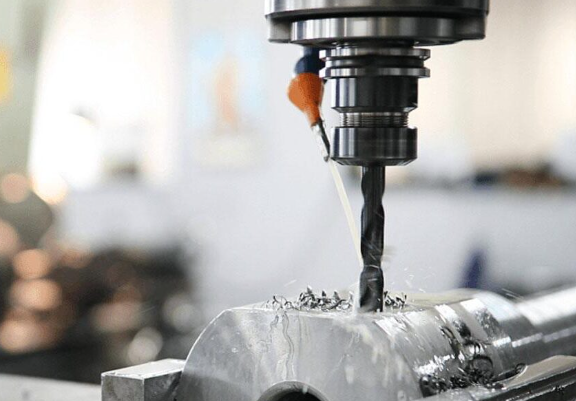
Drilling creates initial holes using a rotating drill fed along the spindle centerline. Boring then enlarges and refines those holes to achieve tight diametral tolerances, concentricity, and outstanding surface finishes. Adjustable boring bars with fine-pitch cartridges are essential for correcting misalignment and hitting true positions. Coolant ports and alignment bushing bores in battery tray components are typical applications.
Taper Turning
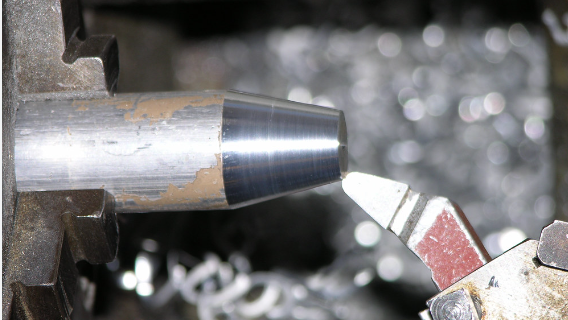
Taper turning creates a conical surface by feeding the tool at a programmed angle. CNC lathes achieve this through precise linear interpolation of X and Z axes, eliminating the need for manual tailstock offsets. Tapers are critical for self-locking fits, alignment dowels, and tool holders. According to CNC Taper Turning Programming Guide, modern CAM systems simplify taper definition and automatically generate collision-free paths.
Conclusion
A thorough understanding of these essential CNC turning processes — straight turning, facing, grooving, threading, boring, and taper turning — enables engineers and machinists to produce high-quality precision parts efficiently. By pairing the right operation with optimized tooling and in-process control, manufacturers can meet the increasing demands of industries like electric mobility. For personalized support on your next turning project, contact our CNC Turning Technical Support Team.
Add: Building 3No.277 Zhen'an Middle Road, Chang'an Town,Dongguan,Guangdong, China
Tel:+86-769-82855591
Copyright © 2019 All Rights Reserved Dongguan Start Precision Technology Co., Ltd. Tel: +86-769-82855591
Add: No. 277 Zhen'an Middle Road, Chang'an Town, Dongguan, Guangdong, China



 中文版
中文版 English