CNC Turning Parts: Flexible Production Adaptability
Date:2026-04-24Article editor:Starting Point PrecisionViews:386Modern manufacturing no longer revolves around rigid, high-volume-only production lines. Today’s market demands rapid response, small batches, and custom geometries without sacrificing precision. This is where CNC turning parts shine, offering a level of flexible production adaptability that traditional methods simply cannot match. By combining computer-controlled accuracy with quick-change tooling and multi-axis capability, CNC turning enables shops to pivot from prototype to production run in hours, not weeks.
The Power of CNC Turning Technology
CNC (Computer Numerical Control) turning uses a lathe to rotate a workpiece while a cutting tool moves linearly to remove material. The process creates cylindrical, conical, and contoured parts with tight tolerances. What makes it truly adaptable is the digital backbone: a part design created in CAD/CAM software is converted directly into machine code. Changing from one part geometry to another often requires only a program switch and a tooling adjustment, eliminating the need for custom jigs or long setup times. For a detailed look at how this technology integrates into production, visit our CNC Turning Services page.
What Makes CNC Turning So Adaptable?
Several features work together to build flexibility into the turning process.
1.Quick Setup and Programming
Offline programming lets operators prepare the next job while the current one runs. Modern lathes store hundreds of programs, allowing instant recall. This slashes changeover downtime and makes short-batch production economically viable. A shop can machine a 10-piece order of steel shafts in the morning and switch to a 500-piece order of aluminum connectors in the afternoon without any loss in precision.
2.Multi-Axis and Live Tooling
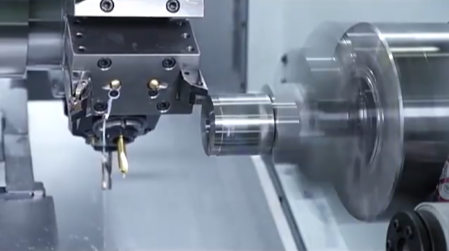
A standard 2-axis lathe handles diameters and faces, but adding a Y-axis and driven tools turns the lathe into a multitasking center. Milling, drilling, and tapping can be performed on the same machine in a single setup. This reduces part handling, improves accuracy, and enables complex geometries that once required multiple machines. An Image clearly shows how a single setup can produce highly intricate turned parts.
3.Material Versatility
CNC turning works with an extensive range of materials: aluminum alloys, stainless steel, titanium, brass, plastics like PEEK and Delrin, and even exotic superalloys. The ability to switch materials quickly without retooling means a manufacturer can respond to diverse customer needs from a single machine.
4.Repeatable Precision with Small and Large Volumes
Once a program is proven, the machine repeats the same toolpath with micrometer-level consistency whether it’s making 1 part or 10,000. This repeatability allows manufacturers to offer flexible production without a quality penalty. Statistical process control data can be collected automatically, ensuring every part meets specifications. According to an industry analysis by Grand View Research on CNC Market, the shift toward automation and flexible production is a primary growth driver in the CNC sector.
Key Advantages for Production Flexibility
The benefits go beyond the machine itself and impact the entire manufacturing workflow:
Reduced Lead Times: Prototypes and small batches are delivered in days rather than weeks, accelerating product development cycles.
Lower Inventory Costs: With the ability to produce on demand, companies can move away from large, costly stockpiles and toward just-in-time manufacturing.
Design Iteration Speed: Design changes are implemented by updating the CAD file and CAM toolpaths, enabling rapid testing and refinement without hard tooling modifications.
Scalability: A single turning center can efficiently run one-off prototypes, bridge tooling, and full production volumes, giving shops enormous operational agility.
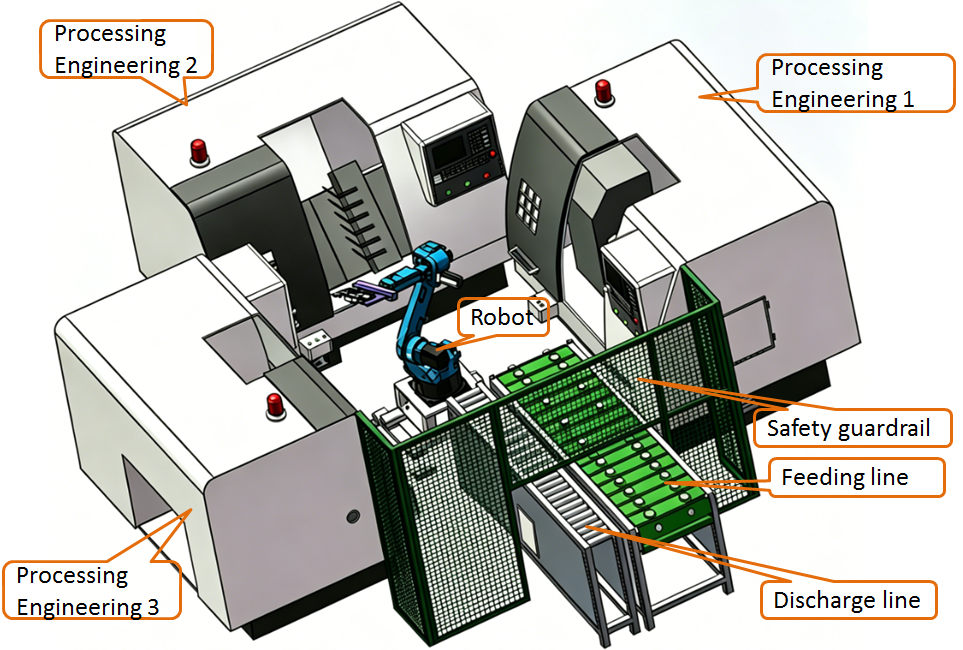
These advantages make CNC turning a cornerstone of flexible manufacturing systems (FMS) that can react to market changes instantly. An Image illustrates how multiple turning centers are integrated to handle varying part families seamlessly.
Real-World Applications
Flexible CNC turning is indispensable across industries that demand high mix and low to medium volumes. The medical sector uses it for bone screws, surgical instruments, and implant trials where each patient may require a slightly different size. The automotive industry relies on it for prototypes of custom shafts, pulleys, and electric vehicle components before committing to mass tooling. Aerospace suppliers produce flight-grade bushings, fittings, and sensor housings in small batches with complete material traceability.
Even startups and inventors leverage this adaptability. A product designer can upload a STEP file and receive functional metal prototypes within a few days, test them, tweak the design, and order another revision just as quickly. This iterative loop is only possible because CNC turning removes the friction of traditional setup.
Conclusion
Flexible production adaptability is not just a buzzword; it is a fundamental requirement for staying competitive in today’s volatile market. CNC turning parts fulfill this need by merging digital precision with mechanical agility. Whether you need a single prototype, a small batch of customized components, or a scalable production ramp-up, turning technology provides the responsiveness and quality that rigid manufacturing systems cannot offer. To start your next project with a partner who understands flexibility, visit our Request a Quote page and experience how adaptable CNC turning can transform your supply chain.
Add: Building 3No.277 Zhen'an Middle Road, Chang'an Town,Dongguan,Guangdong, China
Tel:+86-769-82855591
Copyright © 2019 All Rights Reserved Dongguan Start Precision Technology Co., Ltd. Tel: +86-769-82855591
Add: No. 277 Zhen'an Middle Road, Chang'an Town, Dongguan, Guangdong, China



 中文版
中文版 English