Custom CNC Turning Parts for Chemical Industry
Date:2026-04-24Article editor:Starting Point PrecisionViews:452The chemical industry operates in one of the most punishing environments for mechanical components. From highly corrosive acids and alkalis to extreme temperatures and pressures, every valve stem, fitting, and sensor body must withstand relentless attack while maintaining leak-tight integrity. Custom CNC turning has become the definitive manufacturing method for these critical parts, delivering material versatility, micron-level precision, and the flexibility to produce everything from one-off prototypes to full-scale production runs.
The Importance of Material Selection
Material choice is the first line of defense in chemical processing. Standard steels degrade quickly, so CNC turning centers routinely work with high-performance alloys and engineering plastics that resist corrosion and chemical attack.
Common materials include:
● Stainless Steel 316/316L for general corrosion resistance and chloride environments.
● Hastelloy C276 and C22 for aggressive hydrochloric and sulfuric acid service.
● Titanium Grade 2 and 5 for oxidizing chloride solutions and seawater-cooled exchangers.
● PTFE and PEEK for seals, bushings, and valve seats that demand chemical inertness and low friction.
A dedicated Material Selection Guide helps engineers match the workpiece material to specific chemical concentrations and operating temperatures. CNC turning accommodates these difficult-to-machine materials with optimized cutting parameters, specialized tool coatings, and high-pressure coolant systems.
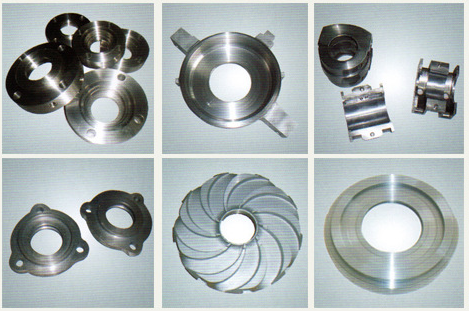
Pump parts for the chemical industry
Precision Machining for Safety and Performance
Chemical processing components are rarely standalone items; they must mate with seals, gaskets, threaded connections, and precise sealing surfaces. Even minor deviations in roundness or surface finish can cause leaks, fugitive emissions, or catastrophic seal failures. CNC turning holds tolerances down to ±0.005 mm and consistently delivers surface finishes of Ra 0.4 µm or finer on critical seal diameters.
Threading operations for chemical fittings demand exact conformity to standards such as NPT, BSP, or SAE. CNC lathes equipped with single-point threading cycles produce burr-free, perfectly formed threads that guarantee pressure-tight assemblies. Compliance with international material and design standards, such as Sulfide stress cracking resistance, is often non-negotiable. Online CNC programming ensures that every thread, O-ring groove, and face seal surface meets these specifications part after part.
Customization for Complex Chemical Processes
No two chemical plants are exactly alike. Process conditions, space constraints, and end-connection requirements create a continuous need for custom geometries. CNC turning delivers this customization without hard tooling. A new part design uploaded as a CAD file is turned into a physical component within days, accelerating the repair of critical equipment and the development of pilot plants.
This responsiveness also supports design optimization. A chemical plant engineer can request a flow-improving contour on a valve plug, test it, tweak the profile, and receive a revised prototype quickly. The same turning center that produced the prototype can then manufacture the entire run of replacement parts, ensuring seamless scalability.
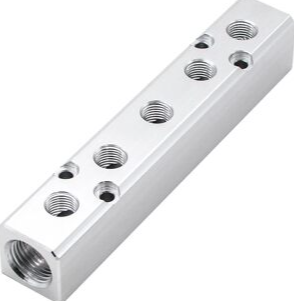
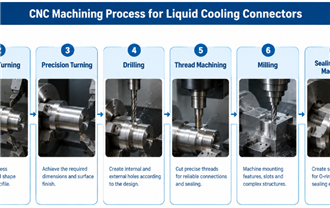
The ability to machine complex geometries in a single setup further enhances flexibility. Multi-axis turning centers with live tooling combine turning, milling, and drilling to produce finished chemical fittings in one clamping. A Image illustrates a manifold block complete with cross-drilled passages, fully machined without refixturing. This reduces cumulative tolerances and eliminates handling errors.
Real-World Applications
Custom CNC turned parts are embedded in virtually every chemical unit operation:
● Valves and Actuators: Stems, plugs, seats, and bushings machined from corrosion-resistant alloys.
● Pumps: Impeller shafts, wear rings, mechanical seal housings, and lantern rings.
● Instrumentation: Thermowell, pressure sensor bodies, and flow meter fittings exposed to aggressive media.
● Reactor Fittings: Nozzle adapters, dip tubes, and flange couplings made to ASME and DIN standards.
A case study describes how an emergency replacement run of PTFE-lined valve stems was completed in two days, allowing a specialty chemical plant to avoid a five-day production shutdown. By reading material and dimension data directly from the customer’s solid model, the machining cell began cutting within hours of order receipt.
Conclusion
Custom CNC turning parts are essential to the safe and efficient operation of the chemical industry. The technology’s ability to handle aggressive materials, maintain exacting tolerances, and rapidly adapt to unique designs gives plant operators and OEMs the reliability and responsiveness they require. To discuss your next project involving chemically resistant machined components, get in touch through our Request a Quote page and let our application engineers deliver the precision and material expertise your process demands.
Add: Building 3No.277 Zhen'an Middle Road, Chang'an Town,Dongguan,Guangdong, China
Tel:+86-769-82855591
Copyright © 2019 All Rights Reserved Dongguan Start Precision Technology Co., Ltd. Tel: +86-769-82855591
Add: No. 277 Zhen'an Middle Road, Chang'an Town, Dongguan, Guangdong, China



 中文版
中文版 English