Steel Turned Parts for Construction Equipment
Date:2026-07-31Article editor:Starting Point PrecisionViews:288In the demanding world of construction equipment, every component must withstand extreme forces, abrasive environments, and relentless operational cycles. From excavator boom pins to hydraulic cylinder rods, the performance and safety of heavy machinery hinge on the quality of their precision machined components. Among these, steel turned parts form the backbone of critical assemblies, ensuring smooth articulation, load transmission, and long-term structural integrity. This article explores the essential aspects of manufacturing these vital components, focusing on material selection, stringent tolerances, non-destructive testing, and surface hardening techniques.
The choice of material for steel turned parts in construction equipment is never arbitrary. Components like pins, bushings, and shafts primarily utilize medium-carbon steels and alloy steels due to their excellent balance of strength, toughness, and wear resistance. Common grades include:
● AISI 1045: A medium-carbon steel offering good weldability and machinability, often used for general-purpose pins and shafts.
● AISI 4140: A chromium-molybdenum alloy steel known for its high fatigue strength and toughness, ideal for heavy-load bearing pins and connectors.
● AISI 8620: A case-hardening steel with good core toughness, frequently specified for bushings and pins that require a hard, wear-resistant surface.
For applications demanding superior corrosion resistance, stainless steel turned parts are indispensable. Environments with high moisture, chemicals, or de-icing salts often necessitate austenitic grades like 304 and 316, or precipitation-hardening grades like 17-4 PH for higher strength. Below is a typical selection of stainless steel turned parts used in construction equipment.
| Stainless Steel Turned Part | Common Grade | Primary Application |
| Hydraulic Piston Rods | 316, 17-4 PH | Cylinder assemblies, corrosive environments |
| Precision Dowel Pins | 304, 316 | Alignment and positioning in hydraulic systems |
| Corrosion-Resistant Bushings | 316L | Pivot points in marine or chemical-exposed equipment |
| Instrumentation Fittings | 304, 316 | Hydraulic and sensor connection points |
| Custom Linkage Pins | 17-4 PH | High-strength, corrosion-resistant articulating joints |
For rotating or sliding applications, such as a pin within a bushing, the clearance or interference fit is paramount. The international tolerance grade f7 is a standard specification for the external diameter of these turned shafts and pins. An f7 tolerance provides a controlled clearance fit, allowing for smooth assembly and lubrication while minimizing unwanted play.
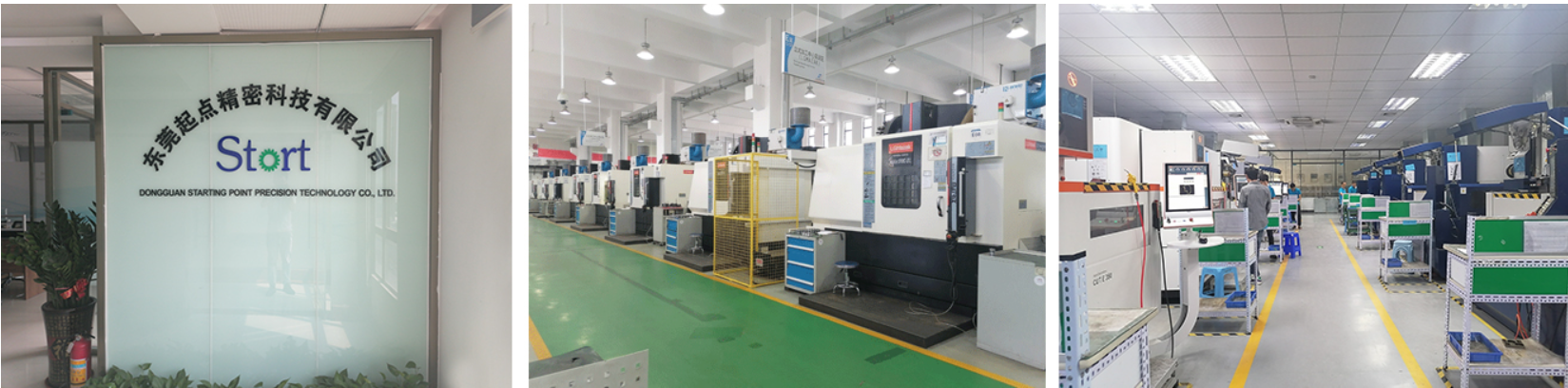
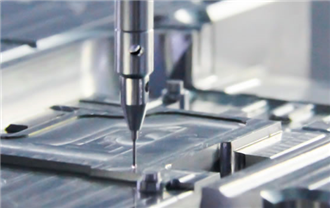
Manufacturing steel turned parts to an f7 tolerance requires advanced CNC turning capabilities. For instance, a 50mm diameter pin might require a tolerance range as tight as 50 mm -0.025 mm / -0.050 mm. Achieving this consistently demands not only precision machinery but also rigorous in-process inspection to account for tool wear and thermal expansion. Our facility, as detailed on our precision equipment page, employs state-of-the-art CNC lathes equipped with in-process gauging to ensure every part meets these exacting dimensional requirements.
Internal defects like voids, cracks, or inclusions within the raw steel can be catastrophic under cyclical loading. This is why ultrasonic flaw detection is a mandatory quality gate for critical steel turned parts. This non-destructive testing (NDT) method uses high-frequency sound waves to penetrate the material. Any discontinuity in the sound path reflects waves back to the receiver, pinpointing the location and size of a hidden flaw.
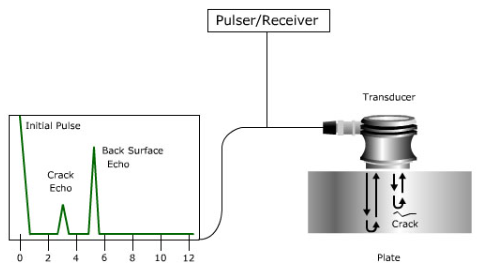
For construction equipment pins and shafts, which often experience multi-axial stress, this testing is crucial. It ensures that the steel turned parts are free from internal defects that could otherwise lead to sudden, unpredictable failure, safeguarding both operators and expensive equipment.
Surface Hardening for Wear and Fatigue Resistance
The high-load, abrasive conditions of construction sites demand exceptional surface durability. Surface quenching, such as induction or flame hardening, is a process applied to many steel turned parts to dramatically increase the hardness of the surface layer while retaining a tough, ductile core. This case-hardening process is ideal for pins and shafts where wear and fatigue are primary failure modes.
Induction hardening is a precise and energy-efficient method that uses electromagnetic fields to rapidly heat the surface of the component, followed by an immediate quench. This creates a hard, martensitic layer—often achieving a hardness of 50-60 HRC—on components like excavator boom pins and track roller shafts. When combined with a subsequent grinding operation to maintain the f7 tolerance, the result is a component that offers both supreme wear resistance and exact dimensional accuracy.
Consider a large excavator's boom-pivot pin. This single component must handle radial loads exceeding 100 tons and oscillate continuously under full load. The starting material is typically a high-strength 4140 alloy steel. The steel turned part is machined to a precise f7 tolerance for a seamless fit with the boom and stick bushings. Before final finishing, the part undergoes full ultrasonic inspection to guarantee internal integrity. A selective induction hardening process then treats the outer diameter, creating a wear-resistant surface capable of withstanding millions of cycles.
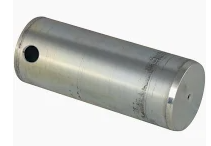
The reliability of construction equipment is undeniably tied to the quality of its steel turned parts. By mastering material science, adhering to tight tolerances like f7, employing rigorous inspection methods like ultrasonic flaw detection, and applying advanced treatments such as surface quenching, manufacturers can produce components that meet the industry's highest demands. As these technologies advance, the performance and reliability of construction equipment will continue to reach new heights.
At Dongguan Start Precision Technology Co., Ltd., we understand these critical requirements. Our commitment to high-precision manufacturing and rigorous quality control ensures we deliver steel turned parts that set the standard for durability and performance.
Please contact us to discuss your manufacturing needs for construction equipment components. Our team of experienced engineers is ready to collaborate on your next project.
1. What is the significance of the 'f7' tolerance for turned parts?
The 'f7' tolerance is an ISO standard for external shafts that creates a clearance fit. It ensures a precise, controlled gap for smooth assembly, proper lubrication, and minimal play, which is essential for rotating or sliding applications like pins in bushings.
2. Why is ultrasonic flaw detection important for these parts?
Ultrasonic flaw detection is a critical non-destructive test that checks for internal defects (e.g., cracks or voids) in the steel. This ensures the structural integrity of the component, preventing sudden catastrophic failures under the extreme loads experienced in construction equipment.
3. How does surface quenching improve a steel turned part's lifespan?
Surface quenching (like induction hardening) creates a very hard, wear-resistant outer layer on the part while maintaining a tough, shock-absorbing core. This combination significantly extends the part's life by resisting abrasion and surface fatigue in harsh working conditions.
4. What materials are most commonly used for these components?
Common materials include medium-carbon steels like AISI 1045 for general use, alloy steels like AISI 4140 for high strength and toughness, and case-hardening steels like AISI 8620 for components that need a hard surface and a strong core.
Add: Building 3No.277 Zhen'an Middle Road, Chang'an Town,Dongguan,Guangdong, China
Tel:+86-769-82855591
Copyright © 2019 All Rights Reserved Dongguan Start Precision Technology Co., Ltd. Tel: +86-769-82855591
Add: No. 277 Zhen'an Middle Road, Chang'an Town, Dongguan, Guangdong, China



 中文版
中文版 English