Low Volume Liquid Cooling Plate Machining
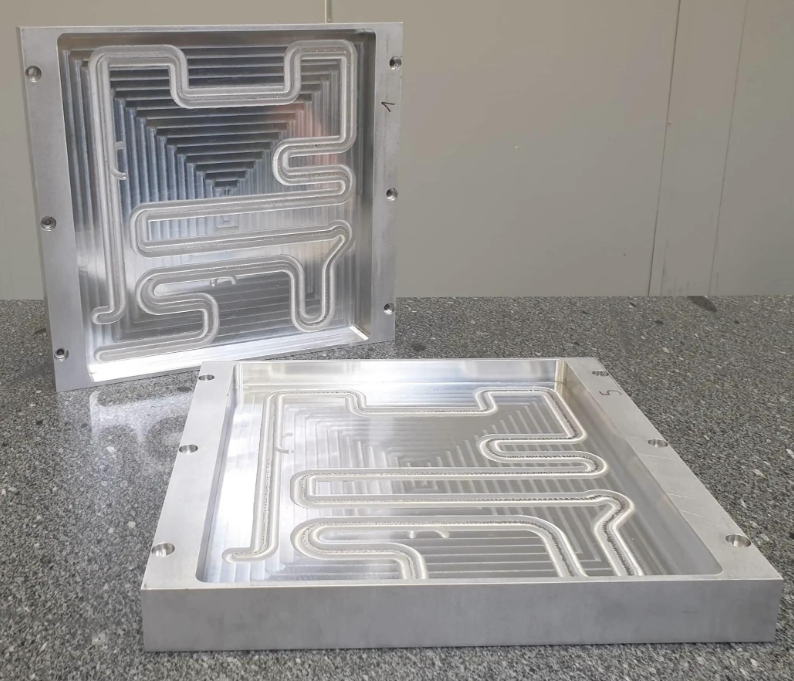
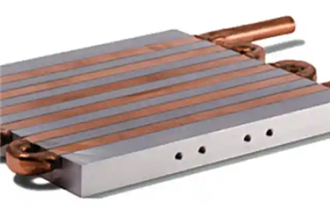
Date:2026-09-16Article editor:Starting Point PrecisionViews:60Low-volume projects require more than simply producing fewer parts. For liquid cooling systems, each prototype or small batch must combine accurate cooling channels, reliable sealing surfaces, precise mounting features, and consistent dimensional control. Liquid Cooling Plate Machining provides a practical way to manufacture custom cooling plates for prototype development, engineering validation, and small-scale production.
Liquid cooling is increasingly used for high-heat electronic systems because coolant can remove heat directly from high-power components. The U.S. Department of Energy has documented liquid-cooled computing platforms using cold plates to transfer heat from processors, while current semiconductor cooling solutions also use cold plates close to high-power chips.
Why Choose Low-Volume Liquid Cooling Plate Machining?
Low-volume CNC production is suitable when a customer needs several prototypes, engineering samples, or an initial production batch before committing to higher quantities.
Key advantages include:
● Faster design verification before mass production
● Flexible material and geometry changes
● No need for expensive high-volume tooling
● Better control of customized channel layouts
● Easy integration of revised CAD designs
● Cost-effective production for prototypes and small batches
For low-volume work, setup, programming, fixturing, material utilization, and inspection can significantly influence the final cost. Careful process planning helps control these factors without sacrificing critical dimensions.
How We Manufacture Liquid Cooling Plates
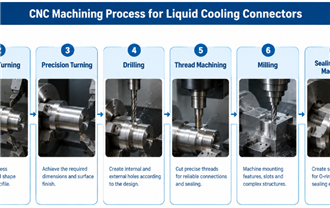
At Start Precision, the machining process can be organized around the functional requirements of the cooling plate:
1. CAD and Drawing Review
We review the 3D model, technical drawing, material, tolerances, channel geometry, ports, mounting holes, and sealing requirements.
2. Material and Datum Preparation
The material and stock dimensions are confirmed before machining. A stable machining datum is established to maintain positional accuracy between major features.
3. Rough CNC Machining
The external profile and primary geometry are rough-machined while leaving controlled stock for finishing.
4. Cooling Channel Machining
CNC milling is used to produce the specified coolant passages. Channel width, depth, corner geometry, and wall thickness are controlled according to the design.
5. Precision Finishing
The thermal contact surface, sealing areas, mounting interfaces, and other critical features are finish-machined.
6. Ports and Mounting Features
Inlet and outlet ports, threaded holes, counterbores, and mounting holes are machined according to the drawing.
7. Deburring and Cleaning
Accessible channels and machined edges are carefully deburred and cleaned to reduce contamination risks inside the cooling path.
8. Inspection and Testing
Dimensions, flatness, hole locations, channel features, and surface conditions are inspected. Leak testing can be included when required by the application.
For related CNC manufacturing information, customers can also review Start Precision's machining capabilities and precision equipment resources.
Materials and Design Considerations
Aluminum is frequently selected when low weight, thermal performance, and machinability are important. Copper may be considered when higher thermal conductivity is required. Material selection should be based on thermal requirements, corrosion compatibility, coolant type, weight, and manufacturing cost.
Designers should also pay attention to:
● Channel depth and wall thickness
● Sealing-groove geometry
● Port locations and thread specifications
● Flatness of the thermal contact surface
● Mounting-hole accuracy
● Internal burr control
● Surface-finish requirements
Unnecessarily tight tolerances can increase machining and inspection costs, so critical dimensions should be clearly identified on engineering drawings. Surface-finish requirements should likewise match the actual functional need.
Case Example: Prototype Cooling Plate
A customer developing a compact electronic cooling assembly required a small batch of custom aluminum cooling plates for engineering evaluation. The design included internal coolant channels, mounting holes, threaded ports, and a controlled contact surface.
The production approach began with CAD review and DFM analysis, followed by datum establishment, rough milling, channel machining, precision finishing, port machining, deburring, cleaning, and dimensional inspection. Leak testing was included as an additional verification step.
This low-volume approach allowed the customer to evaluate the physical cooling plate before moving toward larger production quantities.
Quality Control for Small Batches
Low quantity does not mean reduced quality requirements. Each part should be inspected against the approved drawing and agreed specifications. Inspection may include dimensional verification, flatness measurement, thread inspection, visual examination, and leak testing where required.
For additional technical background, the U.S. Department of Energy provides documented examples of liquid cooling for high-density computing applications.
Conclusion
Low Volume Liquid Cooling Plate Machining is well suited to prototypes, engineering validation, customized thermal systems, and early-stage production. A controlled CNC process can support complex cooling channels, accurate sealing interfaces, precise mounting features, and application-specific designs while maintaining flexibility for design revisions.
Start Precision supports customers from drawing review and process planning through CNC machining, inspection, and delivery.
Contact us to discuss your manufacturing requirements and develop a suitable liquid cooling plate machining solution.
Q1: What is low-volume liquid cooling plate machining?
It is CNC manufacturing of customized liquid cooling plates in relatively small quantities, commonly for prototypes, testing, validation, or initial production.
Q2: Which materials can be used for liquid cooling plates?
Aluminum and copper are common choices, but the appropriate material depends on thermal performance, coolant compatibility, weight, corrosion resistance, and machining requirements.
Q3: Can cooling channels be customized?
Yes. Channel dimensions, routing, ports, mounting features, and sealing areas can be designed according to the customer's CAD model and thermal requirements.
Q4: Can leak testing be included?
Yes. Leak testing can be incorporated when required by the application or engineering specification.
Q5: Is low-volume CNC suitable for prototypes?
Yes. CNC machining is suitable for producing prototype and small-batch cooling plates while allowing design changes before larger-scale production.
Add: Building 3No.277 Zhen'an Middle Road, Chang'an Town,Dongguan,Guangdong, China
Tel:+86-769-82855591
Copyright © 2019 All Rights Reserved Dongguan Start Precision Technology Co., Ltd. Tel: +86-769-82855591
Add: No. 277 Zhen'an Middle Road, Chang'an Town, Dongguan, Guangdong, China



 中文版
中文版 English