Reliable Custom Liquid Cooling Connectors for Bulk Supply
Date:2026-09-14Article editor:Starting Point PrecisionViews:89As high-density electronics, EV systems, data centers, and industrial equipment generate more heat, liquid cooling is becoming an increasingly important thermal-management solution. Direct liquid cooling transfers heat through a circulating coolant loop, bringing the cooling medium closer to high-power components.
At the connection points of these systems, Custom Liquid Cooling Connectors must provide reliable coolant flow, secure sealing, accurate positioning, and repeatable assembly. For bulk purchasing, connector consistency is just as important as individual part quality.
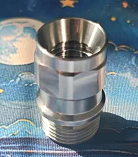
Why Custom Connectors Matter
Standard fittings may not match every cooling-system architecture. Custom CNC-machined connectors can be designed around the actual requirements of the assembly.
Key considerations include:
● Port configuration: Straight, angled, multi-port, or manifold-style designs.
● Sealing structure: O-ring grooves, gasket interfaces, and controlled sealing surfaces.
● Dimensional accuracy: Critical threads, bores, mating diameters, and mounting features.
● Material selection: Aluminum, stainless steel, copper alloys, or other application-specific materials.
● Production volume: Prototype, pilot batch, or recurring bulk production.
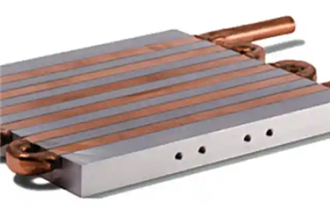
● Assembly compatibility: Connector geometry should match hoses, tubes, valves, cold plates, and manifolds.
For high-power computing, liquid cooling is increasingly relevant because liquid can remove heat more effectively than conventional air-based approaches.
CNC Machining Process
A controlled machining process helps maintain consistency throughout a bulk order.
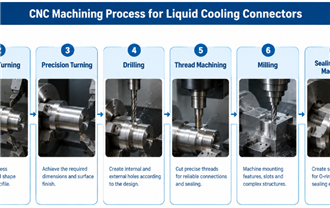
Typical production workflow:
1. Drawing and CAD review – Check dimensions, tolerances, threads, sealing areas, and coolant passages.
Material preparation – Verify alloy, stock dimensions, and material traceability.
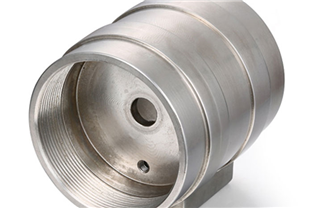
2. CNC turning – Produce cylindrical bodies, threads, bores, and mating diameters.
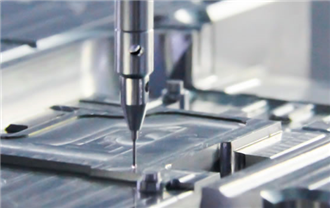
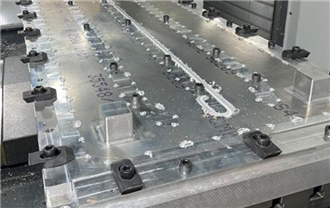
3. CNC milling – Machine flats, mounting features, cross-holes, and complex connector geometry.
4. Deburring and cleaning – Remove machining burrs and contaminants from coolant passages.
5. Surface finishing – Apply the specified treatment when corrosion resistance or appearance requires it.
6. Dimensional inspection – Verify critical dimensions, threads, concentricity, and sealing features.
7. Leak or functional testing – Where specified, validate sealing and coolant-flow performance before shipment.
Equipment & Process Parameters
| Parameter | Typical Manufacturing Focus |
| Machining method | CNC Turning + CNC Milling |
| Materials | Aluminum, stainless steel, copper alloys |
| Critical features | Threads, bores, sealing grooves, ports |
| Inspection | Dimensional and thread inspection |
| Production | Prototype to bulk supply |
| Quality focus | Repeatability, cleanliness, sealing integrity |
For current equipment and precision-machining capabilities, see the Start Precision manufacturing services. The production setup should be selected according to connector geometry, material, tolerance requirements, and production volume.
Quality Control for Bulk Orders
Bulk supply requires more than producing one accurate sample. The manufacturing process must remain stable from the first batch to the final shipment.
Important quality-control checkpoints include:
● Incoming material verification
● First-piece dimensional inspection
● In-process inspection of critical features
● Thread and sealing-surface verification
● Final dimensional inspection
● Cleanliness control for coolant-contacting surfaces
● Batch identification and traceability
This approach is particularly important for liquid cooling assemblies because a dimensional issue at a connector interface can affect sealing, coolant circulation, or system installation.
Factory Visuals and Certification
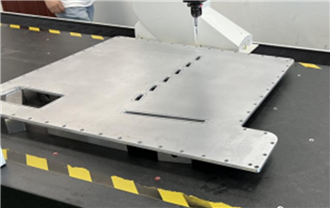
For supplier evaluation, customers should review equipment photos, real workshop images, inspection-area photos, and applicable certification certificates rather than relying only on product renderings.
Suggested image links for the article:
● CNC equipment and machining capability
● Workshop and production environment
● Quality and certification information
These visual resources can help purchasing and engineering teams evaluate manufacturing capability, production organization, and quality-control practices.
Example: Bulk Connector Production
Consider a liquid cooling system manufacturer that needs a customized connector with a threaded inlet, O-ring sealing groove, and precision outlet interface.
The production strategy can be structured as follows:
CAD review → material verification → CNC turning → CNC milling → deburring → cleaning → dimensional inspection → sealing verification → batch packaging.
Instead of optimizing only the first prototype, the process is established around repeatability. This helps maintain consistent connector dimensions across larger production quantities and simplifies downstream assembly.
The growing adoption of direct liquid cooling in high-performance computing further increases the importance of reliable interfaces between cooling components. DOE research and demonstration projects have highlighted liquid cooling as an important approach for managing high-density computing loads.
Conclusion
High-quality Custom Liquid Cooling Connectors combine accurate machining, reliable sealing features, appropriate materials, controlled cleanliness, and consistent production processes. For bulk supply, selecting a CNC manufacturing partner capable of controlling these factors can reduce assembly risk and improve long-term supply stability.
Contact Start Precision to discuss your manufacturing requirements, connector specifications, production volumes, and quality expectations.
Frequently Asked Questions
Custom Liquid Cooling Connectors are application-specific fittings designed to connect coolant lines, cold plates, manifolds, valves, or other components in a liquid cooling system.
Common choices include aluminum, stainless steel, and copper alloys. The appropriate material depends on coolant compatibility, corrosion requirements, mechanical strength, weight, and operating conditions.
Yes. CNC machining processes can support prototype development, pilot production, and recurring bulk orders. Production planning should be based on required annual volume and delivery schedule.
Threads, O-ring grooves, mating surfaces, and port dimensions directly influence connection reliability. Proper dimensional control helps reduce leakage and assembly problems.
Yes. Custom connectors can be manufactured according to 2D drawings, 3D CAD models, specified materials, tolerances, thread standards, and sealing requirements.
A useful RFQ normally includes the CAD file or drawing, material, quantity, critical tolerances, thread specifications, surface treatment, testing requirements, and expected delivery schedule.
Add: Building 3No.277 Zhen'an Middle Road, Chang'an Town,Dongguan,Guangdong, China
Tel:+86-769-82855591
Copyright © 2019 All Rights Reserved Dongguan Start Precision Technology Co., Ltd. Tel: +86-769-82855591
Add: No. 277 Zhen'an Middle Road, Chang'an Town, Dongguan, Guangdong, China



 中文版
中文版 English