Custom Liquid Cooling Plates for Data Centers
Date:2026-09-17Article editor:Starting Point PrecisionViews:11As rack power densities climb beyond 30 kW—and AI clusters push past 100 kW—air cooling hits a hard thermal ceiling. Custom liquid cooling plates for data centers have become the default thermal solution for high-heat-flux CPUs, GPUs, and memory modules. This guide covers why custom plates outperform off-the-shelf cold plates, how they are designed, and what to specify when sourcing.

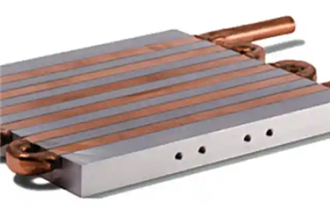
Standard cold plates are built for average racks. Custom plates are engineered around your actual board layout, TIM stack, and coolant chemistry.
● Higher heat flux capacity: Microchannel and skived-fin designs handle 500–1,000 W/cm² locally.
● Lower thermal resistance: Optimized fin density and flow paths cut ΔT between junction and coolant.
● Better PUE: Direct-to-chip liquid cooling can reduce facility cooling energy by 30–50% versus air.
● Form-fit-function: Plates match GPU/CPU keep-out zones, screw patterns, and manifold routing.
● Leak risk control: Fewer fittings and brazed/welded seams reduce failure points.
According to the U.S. Department of Energy, liquid cooling is a key pathway to reducing data center energy intensity. The Open Compute Project also publishes advanced cooling specifications that custom plate designs should align with.
| Parameter | Typical Range | Impact |
| Base material | Copper, aluminum, stainless steel | Thermal conductivity vs. weight/cost |
| Fin geometry | Skived, microchannel, pin-fin | Heat transfer coefficient |
| Flow rate | 0.5–2.0 L/min per plate | Pressure drop and pump sizing |
| Thermal resistance | 0.02–0.08 °C/W | Junction temperature |
| Coolant | PG25, DI water, dielectric | Compatibility and maintenance |
| Flatness | < 0.05 mm | TIM bond line thickness |
● Copper C1100: Best thermal performance; ideal for GPU cold plates.
● Aluminum 6061: Lightweight and lower cost; requires corrosion inhibition.
● Skiving: Cost-effective for high-density fins.
● Vacuum brazing: Leak-tight, high-volume production.
● Friction stir welding: Strong joints for aluminum plates.
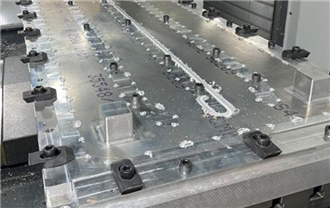
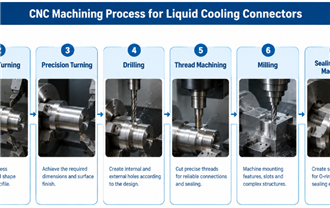
● CNC machining: Prototypes and low-volume custom runs.
For reliability testing standards, refer to ASHRAE TC 9.9 liquid cooling guidelines. For production support, see our custom cold plate manufacturing capabilities.
| Factor | Standard Plate | Custom Liquid Cooling Plate |
| Fit | Approximate | Exact board match |
| Thermal performance | Moderate | Optimized |
| Lead time | Short | Prototype in 2–4 weeks |
| Cost at scale | Low | Competitive at volume |
| Leak testing | Batch | 100% helium leak test |
● AI/GPU server cold plates
● High-density CPU direct-to-chip cooling
● Memory and VRM liquid plates
● Power electronics and IGBT cooling
● Edge data center liquid loops
Custom liquid cooling plates for data centers are no longer optional for AI and HPC deployments. They deliver the thermal headroom, reliability, and efficiency that standard cold plates cannot. Partnering with an experienced manufacturer ensures your design is optimized for both performance and volume production.
Contact us to discuss your manufacturing requirements.
Q: What is the typical lead time for custom liquid cooling plates?
A: Prototypes usually ship in 2–4 weeks; production runs in 6–10 weeks depending on tooling.
Q: Can custom plates use existing facility coolant?
A: Yes, but material and elastomer compatibility must be verified for your PG25 or dielectric fluid.
Q: How do I evaluate thermal performance?
A: Request a thermal resistance curve and pressure-drop data at your target flow rate.
Add: Building 3No.277 Zhen'an Middle Road, Chang'an Town,Dongguan,Guangdong, China
Tel:+86-769-82855591
Copyright © 2019 All Rights Reserved Dongguan Start Precision Technology Co., Ltd. Tel: +86-769-82855591
Add: No. 277 Zhen'an Middle Road, Chang'an Town, Dongguan, Guangdong, China



 中文版
中文版 English