CNC Turning Parts: Purchasing & Engineering Guide
Date:2026-04-22Article editor:Starting Point PrecisionViews:423
1. Engineering Fundamentals of CNC Turning
CNC turning removes material from a rotating workpiece using stationary cutting tools. Key design parameters include:
Maximum diameter & length – Typically up to Ø500mm for standard lathes.
Roundness & cylindricity – Hold ±0.005 mm for high-precision shafts.
Surface finish – Achievable Ra 0.4–3.2 µm.
Undercut & chamfer – Essential for thread relief and assembly.
2. Material Selection for Turned Parts
Common materials and their turning characteristics:
Material | Machinability | Typical Applications |
Aluminum 6061 | Excellent | Fluid fittings, housings |
Stainless 304/316 | Fair (use sharp inserts) | Medical devices, food equipment |
Brass C360 | Very high | Electrical connectors, valves |
Steel 12L14 | Good | Hydraulic studs, pins |
3. Critical Tolerances & GD&T
When specifying turned parts, always define:
Diameter tolerance (e.g., ISO 2768 or custom ±0.01mm)
Concentricity between diameters (≤0.02mm recommended)
Perpendicularity of shoulders to axis
4. Purchasing Checklist for Buyers
To source CNC turning parts efficiently, verify the following with suppliers:
Machine capacity – Swiss-type vs. conventional lathe? Swiss is ideal for long, slender parts.
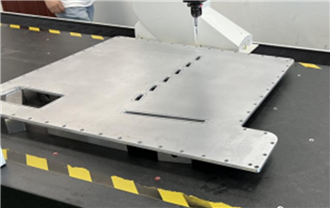
Inspection equipment – Optical comparators, CMM, or air gages? Request first inspection report.
Lead time – Standard 2–4 weeks for medium complexity.
Secondary operations – Milling, grinding, or heat treatment? Ensure in-house or partnered.
For batch quoting, compare at least three vendors.
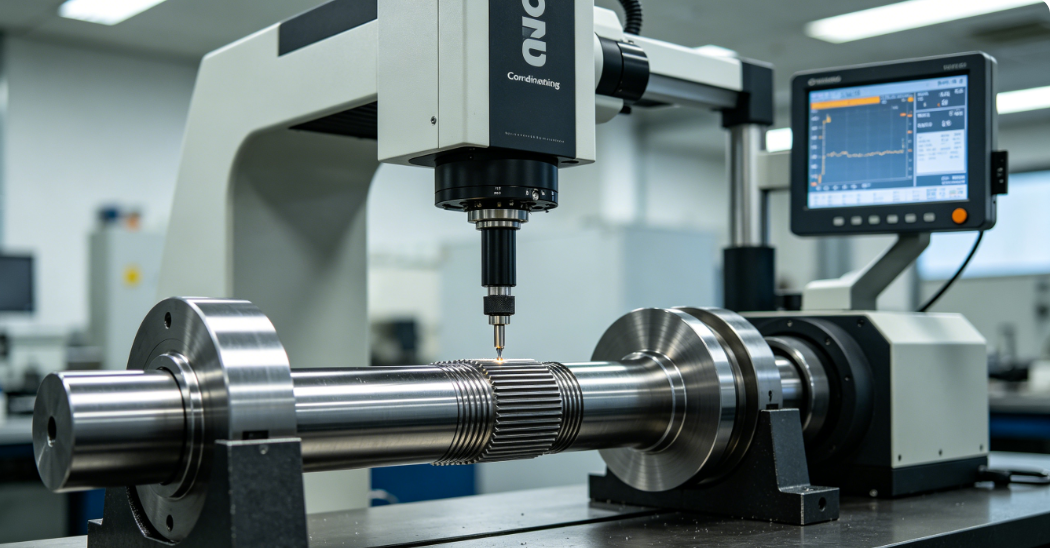
CMM measuring a turned shaft
5. Quality Assurance & Common Defects
Typical turning defects and prevention:
Tapered diameter – Caused by tailstock misalignment; request step‑check reports.
Chatter marks – Reduce tool overhang or adjust spindle speed.
Burr on thread start – Specify secondary deburring or back-chamfer.
6. Cost Reduction Strategies
Engineers and purchasers can lower part costs by:
Relaxing cosmetic surface finish (Ra 1.6 instead of 0.8) – saves 15% cycle time.
Combining turned features into one setup (e.g., both ends machined in one chucking).
Using bar stock rather than cut blanks for high volumes (>500 pcs).
For an interactive cost estimator, visit CNC MACHINING COST CALCULATOR.

CNC Turning Center
Conclusion
Successful CNC turning projects demand collaboration between engineering specifications and smart procurement. Use this guide to define clear requirements, select materials wisely, and partner with suppliers who offer transparent quality data.
Add: Building 3No.277 Zhen'an Middle Road, Chang'an Town,Dongguan,Guangdong, China
Tel:+86-769-82855591
Copyright © 2019 All Rights Reserved Dongguan Start Precision Technology Co., Ltd. Tel: +86-769-82855591
Add: No. 277 Zhen'an Middle Road, Chang'an Town, Dongguan, Guangdong, China



 中文版
中文版 English