Batch Part Machining: How to Balance Efficiency and Quality
Date:2026-06-10Article editor:Starting Point PrecisionViews:436In batch part machining, efficiency and quality are often seen as a trade-off: chasing speed may sacrifice precision, while overemphasizing quality slows down throughput. However, a truly sound production model is not about choosing one over the other, but about designing a system where both reinforce each other.
Root cause analysis shows that 80% of quality problems stem from 20% of unstable processes. Start with FMEA (Failure Mode and Effects Analysis) to identify critical steps such as locating errors, tool wear, or insufficient cooling. Then deploy poka‑yoke devices: asymmetric fixture designs, presence sensors, torque‑monitoring wrenches – making errors hard to occur rather than relying on manual inspection after the fact. Finally, document Standard Operating Procedures (SOP) that lock in optimal parameters (cutting speed, feed rate, tool change frequency), reducing variation caused by operator experience. For more case studies, see poka‑yoke implementation guide.
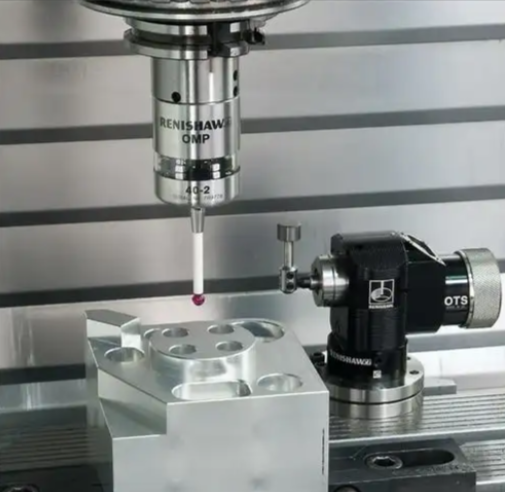
Real‑time monitoring and adaptive machining use sensors (spindle power, vibration, acoustic emission) to automatically adjust feed or trigger alarms before chipping or built‑up edge occurs. For example, when tool wear reaches a threshold, the system automatically changes the tool and compensates length – no need to stop for sampling. Statistical Process Control (SPC) automates measurements of critical dimensions every N parts (using in‑machine probes) and feeds data into control charts. If a trend shift is detected (e.g., five consecutive points rising), early warning prevents batch scrap. First‑article verification is accelerated by on‑machine measurement instead of sending parts to a CMM room – the first piece is automatically inspected and compared to tolerances; if qualified, batch production starts immediately.
Automated loading/unloading with buffering uses robots or gantry systems to feed workpieces, paired with multi‑station pallet pools. Machines can run continuously (including night shifts), and each workpiece carries an RFID tag to trace machining parameters. For mixed production modes, dedicated lines serve high‑volume common parts (efficiency), while flexible cells handle variable‑batch high‑precision parts (quick changeover). Use SMED (Single Minute Exchange of Die) to cut changeover time to under 10 minutes. Cycle time balancing avoids bottlenecks (causing pileups) or excessively fast stations (leading to errors downstream). Simulation software optimizes process splitting and merging.
Batch tool life management replaces “feel‑based” changes with statistical data: determine the maximum tool life that guarantees 97% qualification Rate (e.g., replace every 500 parts) and enforce count‑based changes via program counters. This may seem wasteful, but it avoids reworking 50 parts due to unexpected tool wear. Use high‑precision tool holders such as hydraulic or shrink‑fit holders (runout <0.003 mm) and coated tools to reduce vibration and dimensional drift, while allowing higher cutting speeds and feeds – improving efficiency by 15–30% with better surface finish.
Establish a rapid response mechanism: when a quality anomaly occurs, production, process, and quality personnel analyze it on‑site within 15 minutes (andon system + problem‑solving board) instead of passing blame. Use 5 Whys to find root cause and immediately adjust parameters or fixtures. Build a skill matrix and multi‑skilled workers – train operators not only to push buttons but also to read SPC charts, change/regrind tools, and perform self‑inspections. When process fluctuations happen, they can intervene immediately without waiting for engineers. Finally, design aligned incentives: performance metrics include both output efficiency (parts/hour) and first‑pass yield, preventing workers from hiding minor defects to meet production targets.
A manufacturer of automotive aluminum housings originally used: manual off‑machine clamping + inspection every 20 parts + tool change only after breakage. Results: efficiency 60 parts/shift, reject rate 8%, frequent batch rework. After improvements:
● Switched to dual‑station hydraulic fixture + zero‑point positioning system → clamping time reduced by 70%.
● On‑line measurement of critical hole spacing after each part → automatic tool wear compensation.
● Tool life set at 400 parts (actual limit 550 parts).
● Automatic SPC sampling and cloud upload every 2 hours.
Outcome: efficiency rose to 150 parts/shift, reject rate dropped to 0.5%, and total cost decreased by 22% due to reduced scrap and eliminated rework.
Do not blindly pursue extreme efficiency: beyond a certain inflection point (e.g., 10% higher feed but 50% shorter tool life), total cost increases. Quality is efficiency: time wasted on rework, scrap, and customer complaints is far more valuable than a few seconds saved per cycle. Let data speak: build a process capability archive based on Cpk. For processes with Cpk > 1.33, you can safely increase speed; for Cpk < 1.0, improve first, then boost output. True balance is not a compromise – it is embedding quality into a high‑efficiency process through technical and managerial means. Start with one line or one part family, collect data for one month to find your shop’s Pareto frontier of efficiency and yield, then select the best improvement path.
Q1: Does real‑time monitoring slow down the machining cycle?
No. In‑process measurement adds only a few seconds per part but prevents hours of rework or whole batch rejection. Modern probing routines run at rapid traverse, with data collection in the background.
Q2: How to justify investment in tool life management systems?
Present a cost‑benefit analysis: unexpected tool breakage causes scrap, machine damage, and unplanned downtime. A predictive system typically pays back within 3–6 months through reduced scrap and higher efficiency.
Q3: Does this apply to small batch sizes (e.g., 20–50 pieces)?
Absolutely. The biggest waste in small batches is setup and first‑article inspection. Use quick‑change fixturing and in‑machine verification to shorten ramp‑up – the same principles work even better because you cannot afford any scrap.
Q4: Can legacy CNC machines (over 10 years old) support these methods?
Yes, with retrofits. Add external sensors (spindle power, vibration), install tool breakage detection macros, and connect an SPC data collector. Many older controllers have spare I/O ports for probes. ROI is often higher than buying new machines.
Q5: What KPI should I track first?
Track First‑Pass Yield (FPY) together with Cycle Time per Good Part. If you improve FPY while keeping cycle time stable, you have successfully balanced quality and efficiency.
Add: Building 3No.277 Zhen'an Middle Road, Chang'an Town,Dongguan,Guangdong, China
Tel:+86-769-82855591
Copyright © 2019 All Rights Reserved Dongguan Start Precision Technology Co., Ltd. Tel: +86-769-82855591
Add: No. 277 Zhen'an Middle Road, Chang'an Town, Dongguan, Guangdong, China



 中文版
中文版 English