Steel Turned Parts with Rust Prevention Coatings: A Technical Comparison
Date:2026-08-01Article editor:Starting Point PrecisionViews:304Corrosion remains one of the greatest challenges for precision‑machined components. For steel turned parts used in automotive, aerospace, construction, and medical devices, even superficial rust can lead to dimensional drift, fatigue failure, and costly recalls. Selecting an appropriate anti‑corrosion coating is therefore a strategic decision that balances environmental exposure, service life, and budget. This guide compares four leading technologies – Dacromet, zinc‑nickel electroplating, phosphating+oil, and black oxide – to help engineers and procurement specialists make informed choices.
Dacromet is a water‑based coating containing zinc and aluminium flakes bonded with a chromate binder. Cured at high temperature (≈300 °C), it forms a dense, sacrificial layer that provides exceptional barrier protection. Its hallmark is resistance to neutral salt spray testing for 500+ hours, making it the go‑to solution for heavy‑duty steel turned parts exposed to road salts, humidity, and aggressive chemicals.
| Advantages | Limitations |
| 1. No hydrogen embrittlement – safe for high‑strength steels. | 1. Contains hexavalent chromium (regulatory restrictions in some regions). |
| 2. Stable up to 250 °C. | 2. High curing temperature may affect tempered parts. |
| 3. Excellent adhesion for topcoats. | 3. Matte finish – not suitable for decorative surfaces. |
Zinc‑nickel (Zn‑Ni) alloy plating (typically 12‑15% Ni) is applied via electrolytic deposition. The nickel content enhances passivation, yielding a hard, wear‑resistant surface with salt spray ratings that can exceed 1000 hours when combined with appropriate sealers. This coating is favoured for aerospace actuators, hydraulic fittings, and high‑strength fasteners where reliability is paramount.
| Advantages | Limitations |
| 1. Outstanding corrosion resistance and abrasion resistance. | 1. Higher cost than standard zinc plating. |
| 2. Can be supplemented with trivalent chromate passivates (environmentally friendlier). | 2. Thickness uniformity can be challenging on complex geometries. |
| 3. Good electrical conductivity (if specified). | 3. Requires strict process control to avoid hydrogen embrittlement. |
This two‑step process creates a crystalline phosphate conversion layer (zinc, manganese, or iron phosphate) that is porous and oil‑absorbent. The subsequent oil dip provides a temporary or mild‑duty rust barrier, with salt spray performance typically ranging from 24 to 96 hours depending on the oil grade. It is widely used for internal components, storage protection, and as a primer for paint.
| Advantages | Limitations |
| 1. Very low cost. | 1. Limited corrosion resistance – not suitable for outdoor exposure. |
| 2. Improves paint and lubricant adhesion. | 2. Oil film can attract dirt and is sensitive to temperature. |
| 3. No hydrogen embrittlement risk. | 3. Not a permanent solution; oil may degrade over time. |
Black oxide is a conversion coating that produces a magnetite (Fe₃O₄) surface, often post‑treated with oil or wax. It offers minimal corrosion protection (up to 48 hours salt spray) but provides a sleek, matte black finish with minimal dimensional change. It is common for firearms, optical instruments, and decorative hardware.
| Advantages | Limitations |
| 1. Negligible dimensional change (layer 1‑2 µm). | 1. Very low salt spray resistance (≤48 h). |
| 2. Attractive black finish. | 2. Oil post‑treatment may need frequent reapplication. |
| 3. Inexpensive and simple process. | 3. Not abrasion‑resistant. |
| Coating Technology | Mechanism | Salt Spray (hours) | Relative Cost | Typical Applications |
| Dacromet | Sacrificial Zn‑Al + chromate | 500+ | Medium‑High | Construction equipment, automotive underbody, heavy fasteners |
| Zinc‑Nickel | Electroplated alloy + passivate | 200‑1000+ | High | Aerospace, hydraulics, high‑strength bolts |
| Phosphating+Oil | Conversion layer + oil film | 24‑96 | Low | Internal gears, backup parts, paint base |
| Black Oxide | Magnetite conversion + oil | Up to 48 | Low | Firearms, tooling, decorative trim |
Selecting the right coating for your steel turned parts hinges on the operating environment and required service life:
● Severe outdoor exposure (e.g., construction, marine) → Dacromet or high‑thickness zinc‑nickel.
● High‑stress, safety‑critical (e.g., aircraft landing gear) → Zinc‑nickel with post‑sealer.
● Indoor or short‑term protection (e.g., storage, assembly) → Phosphating+oil or black oxide.
● Budget‑sensitive with moderate exposure → Dacromet offers the best “cost‑per‑hour” protection among premium options.
A manufacturer of excavator cylinders required steel turned parts (piston rods) that withstand high pressure, abrasive wear, and frequent salt‑spray exposure. After evaluating all four technologies, Dacromet was selected because it provided the required 500‑hour salt spray performance without the risk of hydrogen embrittlement, and its cost was substantially lower than zinc‑nickel for the same thickness. In contrast, a smaller component – a drive coupling – for the same machine was plated with zinc‑nickel to achieve even higher corrosion resistance, as its failure would be less catastrophic and the part geometry was simpler to plate uniformly.
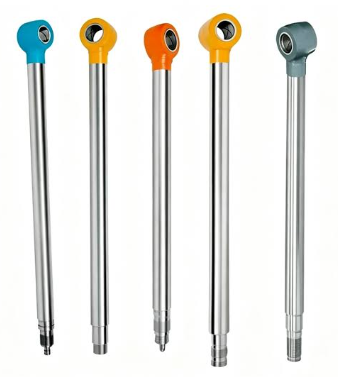
Effective rust prevention for steel turned parts requires a clear understanding of trade‑offs between performance, cost, and environmental constraints. Dacromet delivers proven 500‑hour salt spray resistance; zinc‑nickel offers superior hardness and top‑tier protection; phosphating+oil provides an economical, paint‑ready surface; and black oxide serves aesthetic needs. By aligning coating choice with operational demands, manufacturers can extend component life and reduce warranty claims.
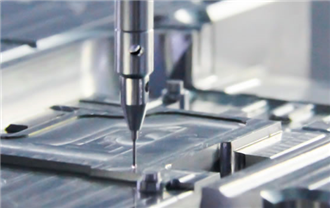
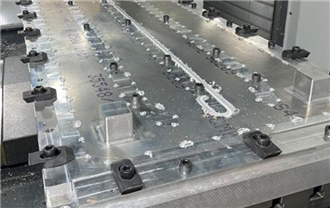
To achieve these coatings, the underlying precision of the turned parts is equally critical. Advanced machining capabilities – such as CNC turning, cylindrical grinding, wire EDM, and surface grinding – ensure that parts meet tight tolerances before coating. For a comprehensive list of precision equipment (including CNC Swiss‑type lathes, high‑precision grinders, and EDM machines), please refer to the Precision Equipment List – these are the very machines that produce the high‑quality steel turned parts that benefit from the coatings discussed above. Partnering with a facility that combines machining excellence with coating expertise streamlines production and guarantees consistent results.
For more technical details on salt spray testing standards, see ASTM B117 and explore Corrosionpedia’s coating guides for further reading.
We invite you to contact us to discuss your manufacturing needs – our team is ready to assist with material, coating, and process optimisation.
Q1: Can Dacromet be applied to heat‑treated steel turned parts without losing strength?
A1: Yes, Dacromet does not cause hydrogen embrittlement, but its curing temperature (~300 °C) may temper some low‑alloy steels. Always verify with your heat‑treatment supplier.
Q2: Is zinc‑nickel plating always better than Dacromet?
A2: Not necessarily. Zinc‑nickel offers higher hardness and can achieve greater salt spray hours, but it is more expensive and risks hydrogen embrittlement. Dacromet is often the more cost‑effective and safer choice for thick, heavy parts.
Q3: How long does phosphating+oil protection last in real outdoor conditions?
A3: Typically less than 6 months in humid, saline environments. It is best used for indoor storage or as a temporary barrier during transit.
Q4: Does black oxide affect the dimensions of steel turned parts?
A4: The conversion layer is only 1‑2 µm thick, so dimensional changes are negligible – suitable for tight‑tolerance parts.
Add: Building 3No.277 Zhen'an Middle Road, Chang'an Town,Dongguan,Guangdong, China
Tel:+86-769-82855591
Copyright © 2019 All Rights Reserved Dongguan Start Precision Technology Co., Ltd. Tel: +86-769-82855591
Add: No. 277 Zhen'an Middle Road, Chang'an Town, Dongguan, Guangdong, China



 中文版
中文版 English