Custom Liquid Cooling Plates Manufacturer
Date:2026-09-15Article editor:Starting Point PrecisionViews:73Thermal loads in EV inverters, data center GPUs, and power modules keep rising. Standard heat sinks often cannot handle high watt density. Custom liquid cooling plates, also called cold plates, solve this by transferring heat into a liquid loop. The right manufacturer balances thermal performance, pressure drop, flatness, corrosion resistance, and cost.
● Fit tight spaces in EV battery packs, servers, and power stacks.
● Optimize channel geometry for heat flux and pressure drop.
● Match coolant chemistry, including glycol, water, or dielectric fluids.
● Integrate fittings, mounting holes, busbars, and sealing features.
● Scale from prototype to repeat production.
A cold plate is not just a metal block. Engineers must define:
● Heat load in W/cm²
● Flow rate in L/min
● Allowable pressure drop
● Flatness and surface finish
● Leak rate target
● Material compatibility
● Mechanical interface and mounting
Standards such as ASME, ASTM, and ISO help guide testing, materials, and quality control.
| Material | Best For | Key Notes |
| Copper C110 | High heat flux | Excellent conductivity; consider plating for mixed-metal systems |
| Aluminum 6061 | Lightweight EV/rail | Good conductivity; anodizing options |
| Stainless 316L | Corrosive fluids | Lower conductivity; robust corrosion resistance |
Copper and aluminum both have trade-offs. The Copper Development Association and material suppliers can provide conductivity and corrosion data.
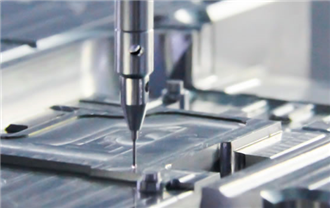
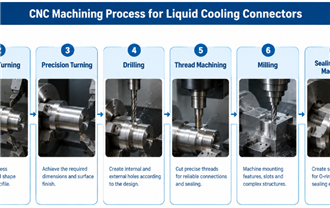
Our workflow is built around design for manufacturing, precision machining, joining, and validation. At Start Precision, we review the thermal target, coolant, space limits, and production volume before cutting metal. The Precision equipment list shows the machining and inspection platforms used for tight-tolerance cold plates.
| Step | What We Control | Output |
| DFM review | Channel width, wall thickness, port location | Optimized design |
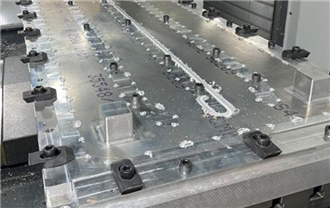
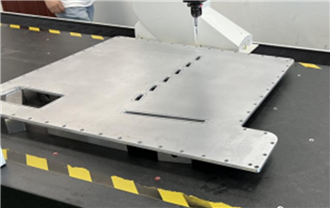
| CNC machining | Flatness, fin geometry, sealing grooves | Tight-tolerance plates |
| Vacuum brazing | Filler alloy, furnace profile | Sealed, strong joints |
| Leak testing | Helium or air decay | Validated fluid path |
| Inspection | CMM, flow, pressure | Traceable quality data |
We focus on leak integrity, flow performance, and dimensional repeatability. Typical checks include:
● Helium leak testing
● Burst pressure testing
● Flow and pressure drop testing
● CMM flatness inspection
● Cleanliness and particle control
A 3 kW EV inverter cold plate used copper for high heat flux and stainless fittings for glycol compatibility. The target was 8 L/min flow, less than 12 kPa pressure drop, and helium leak rate below 1 × 10⁻⁶ mbar·L/s. After CNC machining, vacuum brazing, CMM flatness verification, and helium leak testing, the part met thermal and sealing requirements for prototype builds. This is how a custom liquid cooling plates manufacturer turns a thermal challenge into a repeatable product.
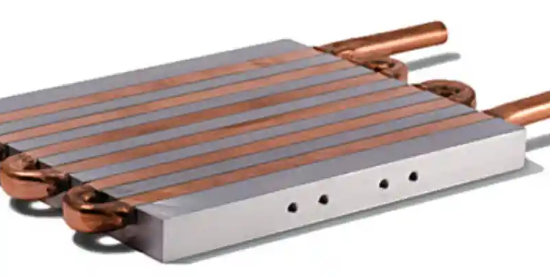
Choosing the right custom liquid cooling plates manufacturer affects thermal performance, reliability, and production cost. From material selection to leak testing, every step must be controlled.
Contact us to discuss your manufacturing needs.
1. What is a custom liquid cooling plate?
It is a machined or brazed metal plate with internal channels that transfer heat from electronics or power devices to a liquid coolant.
2. Which materials are best for cold plates?
Copper is best for high heat flux. Aluminum is lighter and cost-effective. Stainless steel is used for corrosive fluids.
3. How do you verify leak-free performance?
We use helium leak testing, air decay testing, burst pressure testing, and flow/pressure drop checks.
4. Can you support prototypes and mass production?
Yes. The process can start with DFM and prototypes, then scale to repeat production with traceable inspection.
5. What information is needed for a quote?
Provide heat load, flow rate, pressure drop limit, coolant type, material preference, dimensions, leak rate, and annual volume.
Add: Building 3No.277 Zhen'an Middle Road, Chang'an Town,Dongguan,Guangdong, China
Tel:+86-769-82855591
Copyright © 2019 All Rights Reserved Dongguan Start Precision Technology Co., Ltd. Tel: +86-769-82855591
Add: No. 277 Zhen'an Middle Road, Chang'an Town, Dongguan, Guangdong, China



 中文版
中文版 English