Custom Liquid Cooling Connectors for Thermal Systems
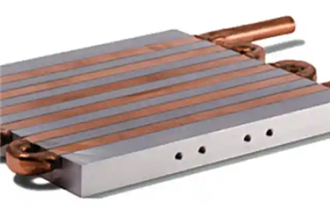
Date:2026-09-15Article editor:Starting Point PrecisionViews:65Liquid cooling systems depend on a continuous and controlled coolant path. While cold plates and heat exchangers receive much of the attention, the connector is equally important because it links individual components and determines how coolant enters, exits, and moves through the system.
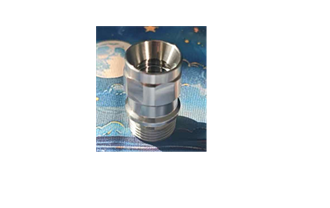
Custom Liquid Cooling Connectors are developed around the actual requirements of a cooling assembly rather than a standard connector size. CNC machining allows manufacturers to control port geometry, threads, sealing areas, mounting dimensions, and internal passages with high dimensional consistency.
These components can be used in:
◆ Data center cooling equipment
◆ EV battery thermal management
◆ Power electronics
◆ Industrial cooling equipment
◆ Laser and laboratory equipment
◆ High-density computing systems
Our production process is organized around the geometry and functional requirements of each connector.
We begin by examining the customer's CAD model and technical drawing. Particular attention is given to:
◆ Connection and port dimensions
◆ Thread specifications
◆ O-ring groove geometry
◆ Critical tolerances
◆ Internal coolant passages
◆ Mounting interfaces
◆ Material and surface treatment
This review helps identify machining risks before material is cut.
The material is selected according to the operating environment. Aluminum is often suitable when low weight and good thermal performance are important. Stainless steel can be considered where higher mechanical strength and corrosion resistance are required. Copper alloys may be selected for applications requiring high thermal conductivity.
Before machining, material specifications are checked against the customer's requirements.
The machining method depends on the connector structure. Rotational components are efficiently produced by CNC turning, while side holes, mounting patterns, slots, and complex features may require CNC milling.
A typical machining sequence can include:
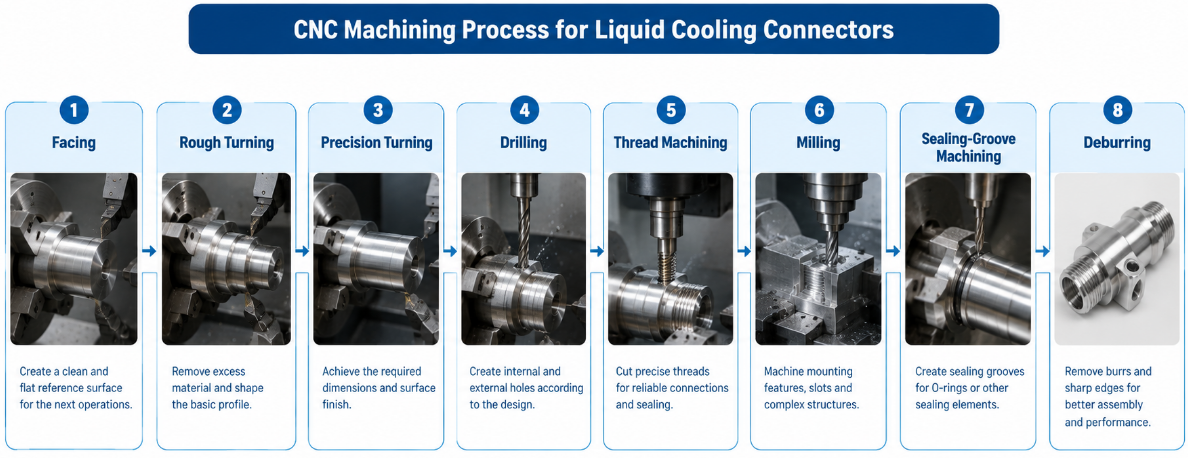
For complicated connector bodies, multiple machining operations are coordinated to maintain the relationship between connection features.
A connector can have excellent dimensional accuracy and still create assembly problems if its sealing features are poorly controlled.
Therefore, we pay particular attention to:
◆ O-ring groove dimensions
◆ Thread accuracy
◆ Mating-surface condition
◆ Port alignment
◆ Burr removal
◆ Edge transitions
The inspection standard is established according to the drawing and intended application.
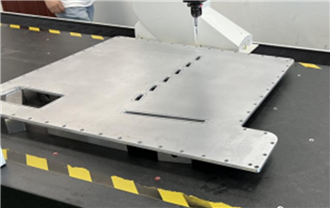
Quality control is integrated into the production workflow. Depending on project requirements, inspection may include dimensional verification, thread inspection, CMM measurement, visual inspection, and functional testing.
For projects involving coolant circulation, additional testing requirements can be discussed before production so that the inspection plan matches the customer's system requirements.
You can learn more about our precision CNC manufacturing capabilities through the Start Precision machining service.
CNC machining provides several advantages for custom cooling connectors:
Design flexibility
Complex ports, grooves, holes, and mounting structures can be manufactured from customer CAD data.
Repeatability
Once the machining process is validated, the same dimensional strategy can be applied to subsequent batches.
Material compatibility
Different metals can be processed according to mechanical, thermal, and environmental requirements.
Prototype to production
The same basic manufacturing approach can support prototypes, small batches, and larger production orders.
For a compact liquid cooling assembly, a customer required an aluminum connector with two threaded interfaces, an O-ring sealing groove, and a precisely positioned side mounting hole.
We first reviewed the connection dimensions and sealing requirements. The main cylindrical geometry was produced by CNC turning, while the side feature was completed by milling. The sealing groove was machined during the precision stage to maintain its dimensional relationship with the connection surface.
After deburring and surface treatment, the connector was inspected for critical dimensions, threads, and overall geometry before shipment.
This workflow demonstrates why connector machining should consider the complete functional relationship between ports, seals, mounting features, and coolant passages, rather than treating every dimension independently.
A well-machined connector provides the physical link between different parts of a liquid cooling system. Accurate threads, controlled sealing features, clean fluid passages, and repeatable dimensions all contribute to dependable assembly.
With customer drawings, material specifications, tolerances, and quantity requirements, a suitable CNC manufacturing process can be developed for both prototype and production applications.
Contact us to discuss your manufacturing needs, technical drawings, material requirements, and custom liquid cooling connector project.
1. What are Custom Liquid Cooling Connectors?
They are application-specific connectors designed to join coolant lines or components within a liquid cooling system, with dimensions and interfaces customized to the assembly.
2. Which materials can be CNC machined for cooling connectors?
Aluminum, stainless steel, and copper alloys are common choices. Material selection depends on mechanical strength, coolant compatibility, corrosion resistance, weight, and thermal requirements.
3. Can you machine O-ring grooves and threaded ports?
Yes. CNC turning and milling processes can produce precision threads, O-ring grooves, ports, mounting holes, and other connector features according to the drawing.
4. Can custom connectors be manufactured from customer drawings?
Yes. A 2D drawing, 3D CAD model, material specification, tolerances, surface treatment, and required quantity provide useful information for process evaluation and quotation.
5. Is CNC machining suitable for prototype and batch production?
Yes. CNC machining can be applied to prototypes, small batches, and repeat production, with the process adjusted according to geometry and required volume.
Add: Building 3No.277 Zhen'an Middle Road, Chang'an Town,Dongguan,Guangdong, China
Tel:+86-769-82855591
Copyright © 2019 All Rights Reserved Dongguan Start Precision Technology Co., Ltd. Tel: +86-769-82855591
Add: No. 277 Zhen'an Middle Road, Chang'an Town, Dongguan, Guangdong, China



 中文版
中文版 English