Turned Parts Manufacturer with DFM Advice
Date:2026-08-01Article editor:Starting Point PrecisionViews:235In the competitive landscape of precision manufacturing, the journey from a concept to a finished component is fraught with potential pitfalls. High material costs, unexpected tooling wear, and designs that are impossible to machine efficiently can erode profit margins. This is where the expertise of a turned parts manufacturer becomes invaluable, particularly when they offer Design for Manufacturability (DFM) guidance. By integrating DFM principles early in the design phase, a skilled partner does more than just produce parts; they actively engineer solutions that enhance performance and drive down costs.

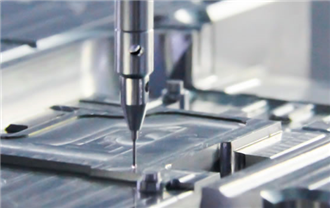
Modern CNC turning workshop with precision lathes
A truly consultative turned parts manufacturer will begin by scrutinizing the part geometry. Sharp internal corners are a common bane in CNC turning. They require specialized tooling with tiny radii, which are fragile, prone to breakage, and slow down production, increasing cycle times. An expert will recommend a minimum internal radius of 0.2mm to 0.5mm, allowing for the use of robust, standard tooling that ensures faster machining and a superior surface finish. While turned parts don't typically require draft angles for ejection, applying the principle of "draft" by avoiding straight walls can simplify tool path strategies. More critically, a top-tier turned parts manufacturer will provide rigorous tolerance analysis. Our advanced equipment, such as the precision CNC lathes, can consistently hold tolerances within ±0.01mm, but we advise relaxing tolerances on non-critical features to save costs.
The following table summarizes key DFM recommendations for turned parts:
| Feature | DFM Advice | Benefit |
| Internal Corners | Specify minimum radius 0.2–0.5mm | Enables standard tooling, reduces cycle time, improves surface finish |
| Non-critical Tolerances | Relax to ±0.1mm where possible | Cuts machining and inspection time without compromising function |
| Straight Walls | Add slight taper or avoid if possible | Simplifies tool path, reduces tool wear |
Beyond geometry, a seasoned turned parts manufacturer can foresee and mitigate manufacturing bottlenecks. Common issues and solutions include:
● Deep‑hole drilling with high length‑to‑diameter ratios – can cause tool deflection and poor hole straightness. We might suggest a gun drilling process or designing the part with a smaller hole to be reamed later.
● Machining hardened materials – while we are equipped with high‑rigidity machines from our Precision equipment list, we may recommend specifying a material in its pre‑hardened state where possible to extend tool life and increase spindle speeds.
● Material selection – a client once insisted on 316 stainless steel for a high‑volume housing. Our DFM analysis showed that 303 stainless steel, which machines much faster and offers similar corrosion resistance for that application, would be a superior choice. This simple switch extended tool life and increased spindle speeds, directly impacting the bottom line.
Consider the case of a medical device manufacturer who approached us for a complex implant component. The initial design featured several undercuts and a ±0.01mm tolerance on a diameter that was not a bearing surface. By collaborating with our engineering team, we suggested eliminating undercuts, redefining tolerances, and switching to a more cost‑effective titanium grade. The results are summarized below:
| Parameter | Original Design | DFM‑Optimized Design | Impact |
| Undercuts | Multiple, requiring custom tooling | Replaced with standard grooves | Eliminated special tooling, reduced cycle time |
| Tolerance | ±0.01mm on all diameters | ±0.01mm on sealing area, ±0.05mm on exterior | Focused precision where needed, saved inspection time |
| Material | High‑cost titanium grade | Cost‑effective biocompatible grade | Reduced raw material cost |
| Result | High cost, lower yield | 15% cost reduction, 20% faster cycle, 99.2% first‑pass yield |
This example clearly demonstrates how a turned parts manufacturer with DFM expertise can deliver tangible savings and improve production efficiency.
The output of this collaborative process is a comprehensive DFM report. This document, provided by a professional turned parts manufacturer, is a roadmap to manufacturing success. It typically includes:
● A detailed analysis of part geometry and identification of potential risks.
● Suggested design modifications with a cost‑benefit analysis for each change.
● Recommended materials and tolerance specifications tailored to your application.
● Optimization of secondary operations (e.g., avoiding unnecessary EDM hole drilling) to minimize additional costs.
This is not just a list of problems, but a strategic guide that empowers your design team to make informed decisions early in the development cycle.
Partnering with a turned parts manufacturer that offers expert DFM advice is a strategic investment. It transforms a vendor relationship into a collaborative partnership focused on innovation and efficiency. The initial time invested in this analysis pays dividends through faster production, higher quality, and substantial cost savings. This proactive approach is the most reliable path from a design on a screen to a high‑performance, reliable part in your assembly.
Ready to optimize your next project? Contact us to discuss your manufacturing needs and discover how our expert DFM advice can help you achieve your production goals.
Frequently Asked Questions
1. What is a DFM report and why is it important?
A DFM report is a detailed analysis from a turned parts manufacturer that reviews your part design for manufacturing efficiency. It identifies potential issues like difficult‑to‑machine features, suggests material alternatives, and provides tolerance recommendations to reduce costs and improve production speed.
2. How can a turned parts manufacturer with DFM advice reduce my project costs?
They analyze your design to suggest cost‑effective materials, optimize tolerances (relaxing them where possible), and simplify complex geometries. These changes often lead to reduced cycle times, longer tool life, and fewer rejects, resulting in savings of 10‑20% or more.
3. What are the most common design mistakes a turned parts manufacturer sees?
The most common issues are overly tight tolerances on non‑critical surfaces, sharp internal corners that require custom tooling, and specifying expensive or difficult‑to‑machine materials for the application. A DFM review catches and corrects these before production begins.
4. How strict are the tolerances you can hold on CNC turned parts?
Using advanced equipment, we can achieve tolerances within ±0.01mm for precision mechanical parts. However, our DFM advice will help you determine which features truly require such high precision to avoid unnecessary costs.
5. What information is typically included in a DFM report?
A comprehensive DFM report includes a detailed analysis of the part geometry, suggested design modifications to improve manufacturability, a list of recommended materials and tolerances, and a cost‑benefit analysis for each proposed change.
Add: Building 3No.277 Zhen'an Middle Road, Chang'an Town,Dongguan,Guangdong, China
Tel:+86-769-82855591
Copyright © 2019 All Rights Reserved Dongguan Start Precision Technology Co., Ltd. Tel: +86-769-82855591
Add: No. 277 Zhen'an Middle Road, Chang'an Town, Dongguan, Guangdong, China



 中文版
中文版 English