CNC Machining Parts: Ensuring Precision with Computer-Aided Inspection for Superior Quality Control
Date:2026-02-06Article editor:Starting Point PrecisionViews:607In the high-stakes world of precision manufacturing, the quality of CNC machined parts is paramount. From aerospace components to medical devices, even a micron-level deviation can lead to catastrophic failure. This is where Computer-Aided Inspection (CAI) transforms quality control from a final checkpoint into an integrated, data-driven process guaranteeing excellence.
Beyond Manual Checks: The CAI Advantage
Traditional manual inspection, while valuable, is time-consuming, subjective, and limited in its ability to capture complex geometric data. CAI systems, utilizing advanced tools like Coordinate Measuring Machines (CMM) laser scanners, and vision systems, automate this process. They create a digital workflow where the as-machined part is compared directly against the original CAD model.
The core benefit is objective, quantifiable data. Instead of "looks good," inspectors have detailed reports with color-coded deviation maps, showing exactly where and by how much a part varies from its design intent. This eliminates human error and provides irrefutable proof of quality.
Key Technologies Powering Modern CAI
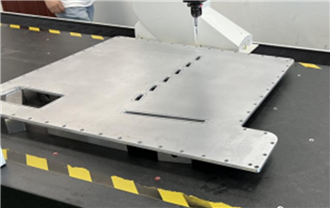
3D Scanning & Non-Contact Inspection: The core workflow is: scanning, modeling, comparison, and reporting. Its key advantages are:
Fast and Comprehensive: It can capture all dimensional information of an entire part within seconds, moving away from the slow, point-by-point measurements of traditional methods.
High-Precision and Non-Destructive: It achieves micron-level accuracy without causing any damage to the workpiece, making it suitable for inspecting precision molds, injection-molded parts, cultural relics, medical implants, and more.
Digitized and Visualized: All results are presented as 3D visual data, facilitating analysis, archiving, and traceability. They can be seamlessly integrated into digital production lines and SPC quality control systems.
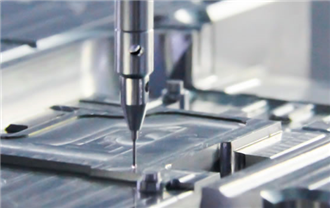
On-Machine Probing: Inspection doesn't have to wait. Probes mounted directly on the CNC machine can measure parts immediately after machining. This allows for real-time corrections, drastically reducing scrap and setup times.
Automated Reporting & SPC:Automated reporting and SPC (Statistical Process Control) serve as "super assistants" in modern quality control. By working together, they make quality control smarter and more efficient.
When automated reporting continuously feeds accurate, real-time data into the SPC system, a transformative effect occurs:
From "reactive judgment" to "proactive prevention": Instead of discovering issues only after defective parts are produced (passive inspection), you receive early warnings before problems arise, allowing you to adjust machinery in advance (active prevention).
Closed-loop feedback and continuous improvement: The system forms an intelligent cycle of "risk detection → warning → manual intervention and adjustment → continuous monitoring," driving ongoing optimization and enhancement of production quality.
The Tangible Benefits for Your Project
Implementing CAI in the production of CNC machining parts delivers direct value:
Unmatched Accuracy: Ensures parts meet the tightest tolerances, critical for industries like medical and defense.
Faster Time-to-Market: Accelerates first-article inspection and provides digital First Article Inspection (FAI) reports compliant with standards like AS9102.
Cost Reduction: Minimizes waste, rework, and the risk of costly field failures.
Enhanced Traceability: Every part has a complete digital inspection record, essential for audit trails and certifications.
The Future: Integrated Digital Threads
The future development trend of CAI is largely dependent on the advancement of the Industrial Internet of Things(IIoT). Inspection data is becoming a vital link in the digital thread, feeding back to design and manufacturing execution systems. This creates a closed-loop process where insights from inspection continuously refine machining parameters, driving toward a "right-first-time, every time" reality.
Conclusion
For mission-critical components, computer-aided inspection is no longer a luxury—it's a necessity. It elevates quality control from a passive verification step to a core, value-adding pillar of the manufacturing process. By partnering with a CNC machining service that leverages full CAI capabilities, you ensure your parts are not just made but validated with the highest level of precision and traceability, build after build.
Add: Building 3No.277 Zhen'an Middle Road, Chang'an Town,Dongguan,Guangdong, China
Tel:+86-769-82855591
Copyright © 2019 All Rights Reserved Dongguan Start Precision Technology Co., Ltd. Tel: +86-769-82855591
Add: No. 277 Zhen'an Middle Road, Chang'an Town, Dongguan, Guangdong, China



 中文版
中文版 English