Precision Turned Parts Manufacturer with Zero-Defect Policy
Date:2026-08-11Article editor:Starting Point PrecisionViews:345In modern manufacturing, a single flawed component can disrupt an entire supply chain, leading to costly recalls and reputational damage. This reality pushes industries toward suppliers who not only promise quality but embed it into every process. A Precision Turned Parts Manufacturer that adopts a zero-defect policy does not treat perfection as an aspiration—it treats it as a baseline requirement. Such a commitment transforms production from a reactive inspection stage into a proactive, data-driven engineering culture.
A zero-defect policy goes beyond final inspection. It integrates quality at every stage: material selection, toolpath optimization, in-process gauging, and environmental controls. For a Precision Turned Parts Manufacturer, this means:
● Statistical Process Control (SPC) used in real-time to detect variations before they become defects. The principles of SPC are well-documented by quality authorities; for instance, the ASQ (American Society for Quality) provides detailed guidelines on implementing SPC that we strictly follow.
● 100% inspection of critical dimensions using advanced metrology equipment, not just random sampling.
● Closed-loop feedback systems that automatically adjust machine parameters to maintain tolerances like ±0.01mm.
● Root-cause analysis for any non-conformance, ensuring permanent corrective action.
This approach significantly reduces scrap rates and rework, ultimately lowering the total cost of ownership for buyers.
Choosing the right partner requires understanding their technical arsenal. Below is a snapshot of essential capabilities that support a zero-defect environment:
| Capability | Description | Benefit for Your Project |
| Multi-Axis CNC Turning | Machines with live tooling for complex geometries in a single setup. | Higher accuracy, faster delivery, reduced handling errors. |
| In-House Tool Grinding | Custom tooling for specific materials and profiles. | Better surface finish, longer tool life, consistent output. |
| Automated Gauging | Probes and vision systems integrated into the machine cycle. | Every part is measured during production, not just after. |
| Material Traceability | Full documentation from mill to finished part. | Critical for aerospace, medical, and automotive compliance. |
| Clean & Controlled Environment | Temperature and humidity control to minimize thermal expansion effects. | Stable dimensions, especially for tight-tolerance work. |
The journey of a defect-free turned part begins with validated raw material. After rigorous incoming inspection, the CNC program—optimized through simulation—guides the cutting tools. During machining, probes verify key features, and any deviation triggers an alert. Following a final wash and deburring, a coordinate measuring machine (CMM) confirms all dimensions against the CAD model. Modern CMM techniques and their role in zero-defect strategies are frequently discussed on Modern Machine Shop, a resource we regularly consult to stay current. Only parts that pass this gauntlet are packaged with a certificate of compliance.
Consider a recent project for a high-pressure fuel pump component. The customer required a run of 50,000 stainless steel bushings with a bore tolerance of +0.01/-0.00 mm and a 16-microinch surface finish. Using our multi-spindle CNC lathes and in-process air gauging, we maintained a process capability (Cpk) of >1.67 throughout the production run. The result: zero customer rejects and a 15% reduction in cycle time compared to their previous supplier. This success stems directly from our integrated quality system, a cornerstone of our identity as a Precision Turned Parts Manufacturer.
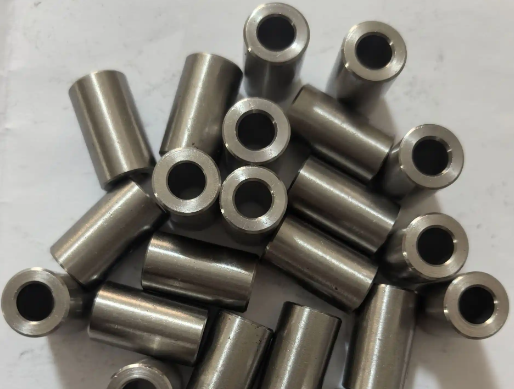
The cost of achieving near-perfect quality is often outweighed by the savings from eliminated scrap, warranty claims, and field failures. Moreover, a supplier with a proven zero-defect track record simplifies your own audits and compliance reporting. It builds a partnership based on trust and predictable outcomes.
Implementing a zero-defect policy requires significant investment in technology, training, and a culture of continuous improvement. If you are looking for a partner who prioritizes your project's success as much as you do, explore the capabilities at Start Precision. Our facility is equipped to handle your most demanding specifications, and our team is ready to translate your drawings into flawless components.
Contact us to discuss your manufacturing needs and discover how our engineering team can contribute to your next project's success.
1. What materials can a Precision Turned Parts Manufacturer work with?
We commonly process a wide range of metals, including stainless steel, aluminum, brass, copper, titanium, and various engineering plastics. Material selection depends on the application's mechanical and environmental requirements.
2. How does a zero-defect policy affect lead times?
While it involves rigorous checks, an efficient system often reduces overall lead time by preventing delays caused by rework or unexpected rejects. The process is streamlined for right-first-time production.
3. Can you handle both prototyping and high-volume production?
Yes, we are equipped for flexible batch sizes. We can produce small quantities for testing and validation, then scale up to high-volume runs (100k+ parts) while maintaining the same stringent quality standards.
4. What certifications does your facility hold?
Our quality management system is aligned with international standards. For specific certification details regarding your industry, please contact our sales team directly.
5. How is part traceability managed?
We implement a comprehensive traceability system that documents material heat numbers, machining parameters, inspection results, and shipment records, ensuring full lifecycle visibility for every batch.
Add: Building 3No.277 Zhen'an Middle Road, Chang'an Town,Dongguan,Guangdong, China
Tel:+86-769-82855591
Copyright © 2019 All Rights Reserved Dongguan Start Precision Technology Co., Ltd. Tel: +86-769-82855591
Add: No. 277 Zhen'an Middle Road, Chang'an Town, Dongguan, Guangdong, China



 中文版
中文版 English