Titanium Precision Components for High Strength‑to‑Weight
Date:2026-08-11Article editor:Starting Point PrecisionViews:190Titanium has long been revered in advanced engineering – not for its scarcity, but for its extraordinary balance of mechanical properties. When machined into titanium precision components, this metal offers a strength‑to‑weight ratio that outclasses steel by nearly 40% while maintaining excellent corrosion resistance. For industries where every gram counts and fatigue life is non‑negotiable, titanium is not just an option; it is a strategic imperative.
Modern design prioritises efficiency. In aerospace, reducing structural mass directly lowers fuel consumption and increases payload. In medical implants, lighter components reduce patient stress and improve biocompatibility. In automotive racing, lower unsprung mass enhances handling. Titanium’s density (4.5 g/cm³) sits between aluminium (2.7) and steel (7.8), yet its ultimate tensile strength often exceeds 900 MPa for common alloys like Ti‑6Al‑4V. This unique combination allows engineers to replace heavier steel parts with slimmer, more agile titanium counterparts without sacrificing safety or durability.
Achieving these benefits demands precision – not just in dimensions, but in metallurgical integrity. Titanium is notoriously difficult to machine due to its low thermal conductivity, high chemical reactivity, and work‑hardening tendency. Successful production of titanium precision components requires:
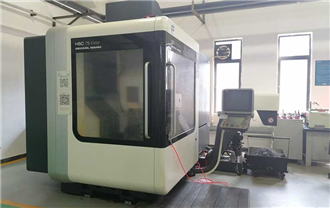
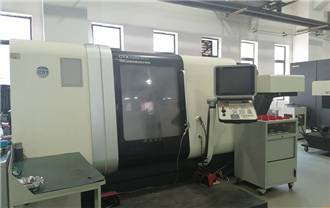
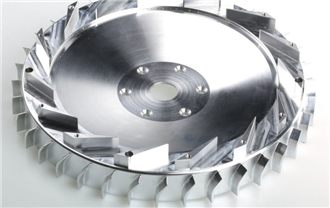
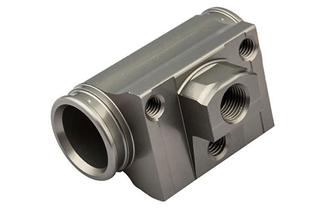
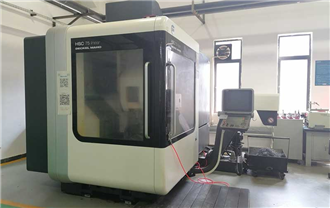
● Advanced CNC multi‑axis milling to maintain tight tolerances (±0.01 mm).
● High‑pressure coolant systems to control heat at the cutting edge.
● Specialised carbide or PCD tooling to minimise built‑up edge.
● Stress‑relief annealing to prevent distortion after roughing.
These processes are not generic; they demand a partner with deep process knowledge. For instance, Start Precision employs adaptive feed‑rate strategies and real‑time tool‑wear monitoring, ensuring every batch meets the strictest aerospace and medical standards.
Different titanium alloys serve different purposes. The table below summarises the most common grades used in high‑strength‑to‑weight components:
| Alloy Grade | Tensile Strength (MPa) | Density (g/cm³) | Typical Applications |
| Ti‑6Al‑4V (Grade 5) | 950–1,100 | 4.43 | Aircraft structural parts, engine mounts, surgical implants |
| Ti‑6Al‑2Sn‑4Zr‑2Mo | 1,000+ | 4.54 | High‑temperature jet engine components (up to 480°C) |
| Ti‑3Al‑2.5V (Grade 9) | 620–700 | 4.48 | Hydraulic tubing, bicycle frames, marine hardware |
| Commercially Pure (Grade 2) | 340–450 | 4.51 | Corrosion‑resistant cladding, heat exchangers |
Data based on ASTM B348 and International Titanium Association specifications.
● Fatigue endurance – Titanium’s high fatigue ratio (0.6–0.7) makes it ideal for cyclic loads, such as landing gear and connecting rods.
● Corrosion immunity – A stable oxide layer resists saltwater, body fluids, and acidic environments, eliminating the need for protective coatings.
● Thermal stability – Many alloys retain strength up to 400°C, outperforming aluminium in engine‑adjacent zones.
● Bio‑compatibility – Non‑toxic and osseointegrative, titanium is the gold standard for permanent implants.
A recent project for an unmanned aerial vehicle (UAV) manufacturer required replacing a steel landing‑gear strut with a titanium equivalent. The original steel part weighed 1.8 kg and showed stress corrosion after 500 cycles. By redesigning the geometry for additive‑plus‑machining and using Ti‑6Al‑4V, the titanium precision component achieved a finished weight of 1.05 kg – a 42% reduction – while passing 2,000‑cycle fatigue tests with no measurable degradation. The project saved over 15% in annual fuel costs for the operator and extended service intervals by 300%.
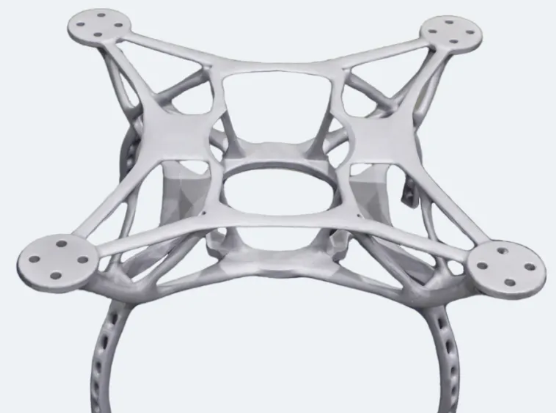
Success with titanium is not merely about selecting the right alloy; it is about controlling every variable from billet to final inspection. Reputable suppliers employ in‑process probing, CMM verification, and non‑destructive testing (ultrasonic and eddy current) to guarantee integrity. When you partner with an experienced workshop like Start Precision, you gain access to a full suite of capabilities – from 5‑axis milling to EDM and surface finishing – all under one quality management system (ISO 13485 and AS9100).
Titanium precision components are the enablers of next‑generation lightweight engineering. Their unmatched strength‑to‑weight ratio, combined with fatigue and corrosion resistance, delivers tangible returns across aerospace, medical, and motorsport sectors. However, realising these benefits hinges on precision manufacturing expertise – from toolpath optimisation to thermal management. By choosing a capable production partner, you transform a costly material into a cost‑effective solution.
Contact us to discuss your manufacturing requirements – our engineering team is ready to review your drawings and suggest the most efficient titanium solution for your performance goals.
Q1: What is the typical lead time for titanium precision components?
A: Lead times vary by complexity and batch size, but standard CNC machining of small to medium volumes (10–500 pcs) usually ranges from 2 to 4 weeks, including material procurement and first‑article inspection.
Q2: Can titanium precision components be welded or joined after machining?
A: Yes, but titanium requires inert gas shielding (GTAW or plasma welding) to prevent contamination. Post‑weld stress relief is often recommended to restore mechanical properties.
Q3: How does the cost of titanium compare to aluminium or steel per part?
A: Titanium material costs roughly 5–10× that of steel and 15–20× that of aluminium. However, the total lifecycle cost – including fuel savings, maintenance reduction, and longer service life – often justifies the premium for high‑performance applications.
Q4: What surface finishes are achievable on titanium precision components?
A: As‑machined surfaces can reach Ra 0.8–1.6 µm. For lower friction or aesthetic requirements, additional processes like electropolishing, anodising, or micro‑bead blasting can achieve Ra <0.4 µm.
Q5: Do you provide material certifications and traceability?
A: Reputable suppliers, including Start Precision, provide full mill test reports, chemical analysis, and mechanical test certificates for every batch, ensuring full traceability to the original ingot.
Add: Building 3No.277 Zhen'an Middle Road, Chang'an Town,Dongguan,Guangdong, China
Tel:+86-769-82855591
Copyright © 2019 All Rights Reserved Dongguan Start Precision Technology Co., Ltd. Tel: +86-769-82855591
Add: No. 277 Zhen'an Middle Road, Chang'an Town, Dongguan, Guangdong, China



 中文版
中文版 English