Brass Precision Turned Components Manufacturer with Multi-Spindle
Date:2026-08-10Article editor:Starting Point PrecisionViews:162In high-volume production of standard brass components—such as threaded inserts, valve cores, and electrical connector pins—the choice of machining platform directly dictates cost, lead time, and consistency. While single-spindle CNC lathes offer flexibility, they become bottlenecks when monthly orders reach hundreds of thousands of pieces. This is where a Brass Precision Turned Components Manufacturer with Multi-Spindle capability transforms operational economics.
Multi-spindle automatic lathes, particularly 6-spindle machines, perform multiple operations concurrently. Unlike single-spindle units that sequence turning, drilling, threading, and knurling one after another, a 6-spindle machine executes these processes in parallel. Each spindle indexes through six stations, with tools acting on all spindles at once. The outcome is a cycle time reduction of up to 80%, translating into a 5-fold increase in output per machine-hour for standard brass parts.
This parallel processing is especially suited for standard components with diameters from 5mm to 42mm, lengths up to 300mm, and tolerances of ±0.01mm. The continuous bar feed, combined with synchronized tool movement, ensures that every finished piece mirrors the first, making statistical process control both simple and reliable.
Our production ecosystem combines dedicated multi-spindle lines with a wide array of supporting precision machinery from our official equipment roster. The following core assets, sourced directly from our Precision Equipment List, handle secondary operations, complex geometries, and finishing tasks that complement our high-speed multi-spindle output.
| Equipment Type | Brand & Model | Primary Application |
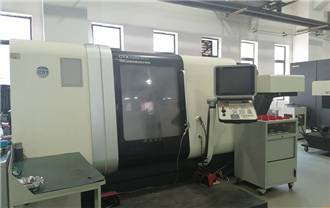
| CNC Turning Center | DMG CTX beta 800 | High-precision turning of complex contours and fine surface finishes |
| CNC Turning Center | TAKISAWA NEX-108 | Medium-to-large diameter turning for higher-volume batches |
| CNC Turning Center | China joined CK6136 | General-purpose turning for standard parts |
| Vertical Machining Center | DMG DMC 835V | Secondary milling, drilling, and tapping on turned components |
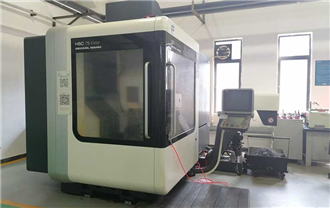
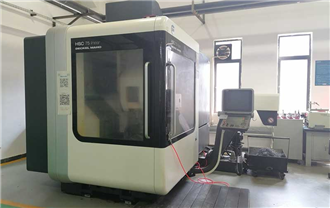
| Five-axis Machining Center | DMG HSC 75 linear | Intricate 3D contours and non-standard features requiring simultaneous 5-axis |
| Additional support equipment | Grinders, EDM, wire-cut | Surface finishing, cavity work, and tool maintenance |
For the complete equipment inventory, please refer to our official precision machining page.
The manufacturing workflow for standard brass turned parts is meticulously streamlined:
1. Material & Tool Selection: We primarily use free-cutting brass (C36000, CZ121) and premium carbide tooling from Sandvik and Walter, ensuring tool life exceeding 8 hours of continuous cutting.
2. Bar Loading & First-Piece Setup: Coiled or straight bars are fed into the multi-spindle machine. The changeover and setup time is a critical factor. Our standardized tooling presetting system reduces changeover time to under 45 minutes for most standard part families—a significant advantage for Just-In-Time (JIT) delivery schedules.
3. 6-Axis Simultaneous Processing: The core efficiency driver. While one spindle faces the bar end, another drills a center hole, a third cuts the outer diameter, a fourth forms the thread, a fifth cuts the chamfer, and the sixth cuts off the finished part. This process is fully enclosed with high-pressure coolant (up to 70 bar) for superior chip evacuation and surface finish.
4. In-Process Gauging: Integrated touch probes and laser sensors verify critical dimensions after each cycle, feeding data back to the CNC for tool wear compensation, maintaining tolerances of ±0.01mm without operator intervention.
5. Secondary Operations: When required, turned parts move to our DMG vertical or five-axis machining centers for cross-drilling, slotting, or complex milling—all performed on the same reliable platform.
This platform is inherently designed for standard parts—those with mature designs and consistent demand, making it an economical alternative to more flexible but slower CNC Swiss-type lathes for simpler geometries.
Consider the production of a brass connector used in medical gas delivery systems. This standard part requires an outer diameter of 12mm, a through-hole, and a UNF 1/2-20 internal thread, with a surface finish of Ra 1.6μm. The order volume was 150,000 pieces.
Initially, production was planned on single-spindle CNC lathes with an estimated cycle time of 120 seconds per part. By switching to a 6-spindle multi-spindle machine, the cycle time was reduced to 24 seconds per part. This led to a 5.3x increase in output. The consistency was so reliable that the need for 100% dimensional inspection was reduced to a robust sampling plan, saving our client over 40% in total manufacturing cost.
For the high-volume production of standard turned components, the strategic deployment of multi-spindle technology is a proven path to significant cost reduction and supply chain security. This capability ensures you can meet surging demand without sacrificing the precision that brass components demand in critical applications.
Contact us to discuss your manufacturing needs. Our engineering team is ready to analyze your drawings and propose the most efficient production strategy.
Q1: What are the primary advantages of multi-spindle machining for brass parts?
A: The main advantages are dramatically reduced cycle times (often 5x faster than single-spindle), exceptional part-to-part consistency due to synchronized operations, and lower per-unit cost for long production runs of standard parts.
Q2: How long does it take to change over a multi-spindle machine for a different standard part?
A: With our standardized tooling and preset systems, changeover and setup time typically ranges from 30 to 60 minutes for standard brass parts within the machine's capacity envelope.
Q3: Is multi-spindle machining suitable for parts other than brass?
A: Yes, it is also highly effective for steel, aluminum, and free-machining alloys. However, brass is an ideal material due to its excellent machinability, which maximizes tool life and machine speed.
Q4: What is the typical tolerance capability for multi-spindle turned components?
A: We can consistently hold tolerances of ±0.01mm (10 microns) on diameter and length, depending on part geometry and material, using integrated in-process gauging.
Add: Building 3No.277 Zhen'an Middle Road, Chang'an Town,Dongguan,Guangdong, China
Tel:+86-769-82855591
Copyright © 2019 All Rights Reserved Dongguan Start Precision Technology Co., Ltd. Tel: +86-769-82855591
Add: No. 277 Zhen'an Middle Road, Chang'an Town, Dongguan, Guangdong, China



 中文版
中文版 English