Robotic Parts Manufacturer for Precision Assemblies: A Practical Workflow
Date:2026-10-21Article editor:Starting Point PrecisionViews:31A robotic parts manufacturer for precision assemblies must treat tolerance stack-up, material stability, and repeatable inspection as one connected system—not isolated shop-floor tasks. Robot joints, end-effectors, sensor housings, and actuator mounts often combine tight fits, thin walls, and mixed materials. The manufacturing plan therefore needs to connect design review, machining strategy, metrology, and assembly documentation before chips are cut.
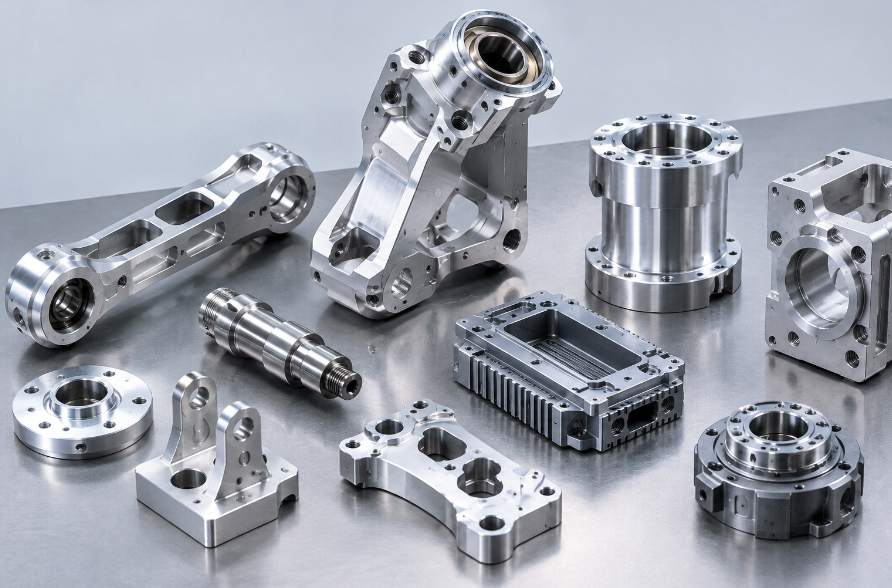
How we build precision into robot parts
● DFM and tolerance review: We check datum schemes, wall thickness, thread depth, surface finish, and assembly interfaces before release.
● Material and process routing: We match alloys, heat treatment, coatings, and cleaning steps to the part’s duty cycle and mating surfaces.
● Machining control: Critical features are planned around stable fixturing, in-process checks, and traceable program revisions.
● Inspection evidence: CMM reports, roughness checks, and functional gauges are tied to lot and serial records where required.
● Assembly support: We align inspection data with mating parts so shims, fits, and torque sequences are not left to guesswork.
For teams reviewing capacity, the Precision equipment list on our precision page documents current machine models and inspection assets. Our homepage outlines the manufacturing services that support these controls.
Process control at a glance
| Stage | What we control | Evidence |
| Design review | Datums, critical features, finish, fit | Marked-up drawing and DFM notes |
| Incoming material | Certifications, hardness, condition | Material certs and incoming log |
| Machining | Fixture stability, tool wear, in-process checks | Setup sheet, inspection records |
| Final inspection | Dimensions, roughness, visual criteria | CMM/height-gauge reports |
| Assembly readiness | Mating fits, cleanliness, traceability | Lot records and serialized data |
Public guidance such as NIST’s robotics program reinforces that repeatable robot performance depends on metrology discipline and documented processes—principles we apply to component-level manufacturing.
What “precision assemblies” means in practice
Precision is not only a ± tolerance on a drawing. It is the ability to repeat a fit across lots. For robotic parts, we focus on:
1. Datum continuity from machining to inspection.
2. Feature capability on bores, bearing seats, mounting flats, and sealing faces.
3. Cleanliness and burr control at assembly interfaces.
4. Traceability so changes in material, tooling, or program revision can be isolated.
When a customer needs model-specific equipment details, we point them to the live Precision equipment list rather than relying on static capability claims. This keeps planning tied to current assets.
Contact us to discuss your manufacturing needs.
FAQ
Q: Do you support low-volume robotic parts and repeat production?
A: Yes. The process plan is scaled from prototype verification to repeat lots with the same inspection logic.
Q: Can you inspect critical bores and mounting faces?
A: Yes. Inspection methods are selected by feature type, tolerance, and access, with records tied to the lot.
Q: How do you handle material certificates?
A: Incoming material is logged against certifications, and lot traceability is maintained through machining and inspection.
Q: Where can I check machine models?
A: See the live Precision equipment list for current equipment details.
Add: Building 3No.277 Zhen'an Middle Road, Chang'an Town,Dongguan,Guangdong, China
Tel:+86-769-82855591
Copyright © 2019 All Rights Reserved Dongguan Start Precision Technology Co., Ltd. Tel: +86-769-82855591
Add: No. 277 Zhen'an Middle Road, Chang'an Town, Dongguan, Guangdong, China



 中文版
 English