Custom Robotic Components for Joint Modules
Date:2026-10-19Article editor:Starting Point PrecisionViews:85Joint modules enable humanoid robots to bend, rotate, and coordinate movement. Custom Robotic Components such as housings, transmission shafts, and mounting flanges must fit accurately within compact assemblies. Their dimensions and interfaces affect alignment, motion transfer, and mechanical stability. Effective manufacturing starts with understanding how these parts work together.
1. Key Components for Humanoid Robot Joints
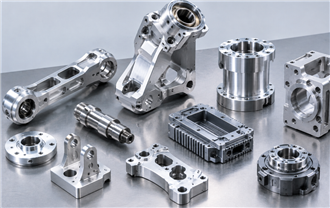
● Joint housings: Support motors, bearings, and reduction mechanisms. Critical features include bearing bores, mounting faces, and internal pockets.
● Transmission shafts: Transfer rotational force through stepped diameters, bearing journals, and coupling features. Diameter accuracy and runout are important.
● Mounting flanges: Connect joints to robot limbs or frames. Hole positions, locating diameters, and face flatness influence assembly alignment.
Aluminum alloys may help reduce moving mass, while steel can suit applications requiring greater strength or wear resistance. Material selection depends on the joint's design and operating loads.
2. How We Manufacture Custom Joint Components
Step 1: Drawing Review
We review CAD models and engineering drawings to identify material specifications, critical dimensions, datum references, bearing fits, and mounting requirements.
Step 2: CNC Milling for Housings
CNC milling produces housing profiles, pockets, mounting faces, and threaded holes. Where practical, related features are machined from consistent reference surfaces to reduce positioning errors.
Step 3: CNC Turning for Shafts
Turning creates stepped diameters, shoulders, and bearing journals. The machining sequence follows the specified datum and fit requirements. Additional finishing can be considered when the drawing calls for it.
Step 4: Flange Machining
We machine flange thicknesses, bolt patterns, locating features, and contact faces according to the approved drawings. Hole locations are checked against the designated reference geometry.
Step 5: Inspection and Deburring
Finished parts are checked for relevant dimensions, hole positions, flatness, shaft runout, and surface finish. Burrs are removed carefully to protect mating surfaces and prevent assembly interference.
3. Material and Manufacturing Considerations
| Component | Common Materials | Critical Features |
| Joint housing | Aluminum alloy, steel | Bearing bores, pockets, mounting faces |
| Transmission shaft | Alloy steel, stainless steel | Journal dimensions, runout |
| Mounting flange | Aluminum alloy, steel | Hole positions, flatness, locating features |
Not every feature requires the same tolerance. Bearing seats and locating surfaces may need tighter controls than non-functional external surfaces. Requirements should be defined by the engineering drawing and intended assembly.
For general dimensional tolerance guidance, consult the ISO 2768 standard information.
4. Manufacturing Example: Humanoid Robot Hip Joint
A humanoid robot hip joint may combine an aluminum housing, a transmission shaft, and a mounting flange. The housing supports the drive mechanism, the shaft transfers motion, and the flange connects the assembly to the robot's frame.
We begin by reviewing the mating interfaces and establishing machining datums. After milling the housing, turning the shaft, and machining the flange, we verify critical dimensions against the drawings. This coordinated approach helps identify potential fit and alignment issues before assembly.
5. Custom CNC Machining Support
Humanoid robot designs differ in joint geometry, load requirements, and installation space. Custom machining allows components to follow specific mechanical interfaces rather than relying on standard dimensions.
Explore Start Precision and its precision machining equipment list to learn more about manufacturing capabilities.
Contact us to discuss your manufacturing needs. Share your drawings, materials, tolerances, and order quantities to begin evaluating your project.
Frequently Asked Questions
1. What are common components in humanoid robot joints?
Typical parts include housings, transmission shafts, bearing supports, mounting flanges, and protective covers.
CNC milling is suitable for housings and flanges, while CNC turning is commonly used for shafts. Grinding may be needed for specified precision surfaces.
Yes. CAD models and engineering drawings help establish geometry, materials, tolerances, and inspection requirements.
Provide drawings, material specifications, surface finish requirements, critical tolerances, order quantity, and delivery expectations.

Add: Building 3No.277 Zhen'an Middle Road, Chang'an Town,Dongguan,Guangdong, China
Tel:+86-769-82855591
Copyright © 2019 All Rights Reserved Dongguan Start Precision Technology Co., Ltd. Tel: +86-769-82855591
Add: No. 277 Zhen'an Middle Road, Chang'an Town, Dongguan, Guangdong, China



 中文版
 English