
Custom Brass CNC Machining for High Thermal Conductivity
Date:2026-11-20Article editor:Starting Point PrecisionViews:1081. Introduction: Why Thermal Performance Matters in Brass CNC Machining
In modern industrial equipment, controlling heat is not simply a matter of selecting a conductive metal. Component geometry, contact quality, fluid movement, and machining accuracy all influence thermal performance. Custom brass CNC machining provides an effective manufacturing approach for producing specialized metal components that transfer heat, distribute cooling fluids, and maintain dimensional stability under demanding operating conditions.
From compact electronic cooling assemblies to industrial heat exchanger connections, brass components can help engineers balance thermal performance, mechanical strength, corrosion resistance, and production efficiency. The key is to match the brass alloy and machining design to the actual operating environment.
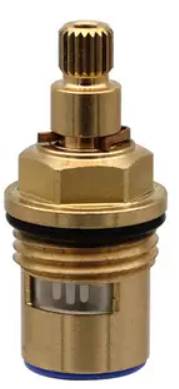
2. Understanding Brass Thermal Conductivity in Industrial Applications
Brass is primarily an alloy of copper and zinc. Its thermal conductivity varies according to chemical composition, alloy grade, and material condition.
For engineering reference, C36000 free-cutting brass has a typical thermal conductivity of approximately 115 W/(m·K). This makes it suitable for certain heat-transfer applications, although it conducts heat less effectively than pure copper.
Why do manufacturers still choose brass?
● Machinability: Its excellent cutting characteristics allow intricate geometries, threaded connections, and precision channels to be manufactured efficiently.
● Mechanical reliability: Brass offers a useful balance of strength and dimensional stability.
● Corrosion resistance: Appropriate grades perform well in many industrial environments.
● Design flexibility: CNC turning and milling can produce integrated structures with multiple functional features.
The material decision should consider the complete thermal assembly rather than conductivity alone.
3. Which Components Require High Thermal Conductivity?
High thermal conductivity is particularly valuable when a component must transfer heat away from a concentrated source or distribute thermal energy across an assembly.
| Component | Typical application | Main thermal requirement |
| Brass thermal blocks | Electronic cooling assemblies | Transfer heat from contact surfaces |
| Heat sink bases | Industrial control equipment | Spread concentrated heat |
| Cooling manifolds | Liquid cooling systems | Distribute cooling fluid |
| Heat exchanger connectors | HVAC and industrial equipment | Support heat exchange connections |
| Sensor housings | Temperature monitoring devices | Maintain consistent thermal response |
| Valve bodies | Hot and cold fluid systems | Withstand operating temperature changes |
| Thermal interface components | Electronic equipment | Reduce contact thermal resistance |
For example, a thermal block installed between a power electronic module and a cooling assembly must provide sufficient contact area and a short heat-transfer path. A cooling manifold, by contrast, must prioritize passage geometry and fluid distribution.
This distinction is important because different components require different engineering solutions.
4. Heat Dissipation: How Component Geometry Influences Performance
Heat dissipation depends on more than the conductivity of the metal. The shape and dimensions of a machined component determine how effectively heat moves from its source toward the surrounding environment.
Custom brass CNC machining can produce several useful structural features:
● Expanded contact surfaces: Increase the effective area available for heat transfer.
● Machined grooves: Accommodate thermal interface materials or improve assembly positioning.
● Thin structural sections: Reduce heat-transfer distance where mechanical requirements permit.
● Precision mounting faces: Improve contact consistency between connected components.
● Integrated connection features: Simplify installation within thermal management assemblies.
Consider a brass mounting block used in industrial electronic equipment. If its mating surface is uneven, microscopic air gaps may form between the block and the heat source. Because air is a relatively poor conductor, these gaps can significantly increase thermal resistance.
Therefore, machining flatness, surface finish, and assembly pressure should be considered together during component development.
5. Fluid Channels: Designing for Stable Cooling Flow
In liquid-cooled equipment, the internal passage is just as important as the external shape of a component.
A CNC-machined brass manifold can distribute coolant between multiple outlets, while a compact connector can link separate cooling circuits.
Important design factors include:
● Channel diameter: Influences flow velocity and pressure drop.
● Passage arrangement: Helps prevent uneven coolant distribution.
● Internal surface quality: Affects friction and flow resistance.
● Wall thickness: Maintains structural integrity under operating pressure.
● Port positioning: Ensures accurate assembly and reliable sealing.
For complex manifolds, multi-axis machining can help create angled passages and accurately positioned connection features.
6. Thermal Resistance: The Importance of Machining Accuracy
Thermal resistance measures how strongly a component opposes heat transfer. For a simple solid structure, it can be estimated using:
Where:
○ Rth = Thermal resistance (K/W)
○ L = Heat transfer distance (m)
○ k = Thermal conductivity (W/m·K)
○ A = Effective cross-sectional area (m²)
This equation explains why component dimensions matter. A shorter conduction path and larger effective area generally reduce thermal resistance.
However, the resistance between two assembled surfaces must also be considered. Poor flatness, surface contamination, and insufficient contact pressure can create additional thermal barriers.
For custom brass components, engineers should therefore specify:
1. Critical surface flatness.
2. Required dimensional tolerances.
3. Contact surface finish.
4. Assembly and fastening conditions.
Material properties and manufacturing precision must work together to achieve the intended thermal performance.
7. CNC Equipment and Manufacturing Capabilities
Different component geometries require different machining strategies. Milling is suitable for blocks and channels, turning is effective for cylindrical connectors, and five-axis machining supports complex angled features.
The Start Precision precision equipment list includes:
| Equipment | Model |
| Five-axis machining center | DMG HSC 75 linear |
| Vertical machining center | DMG DMC 835V |
| Vertical machining center | Mazak VCN-510C |
| Vertical machining center | HAAS VF3 |
| Horizontal machining center | HAAS EC400 |
| CNC turning center | DMG CTX beta 800 |
These machines provide different manufacturing options for complex geometries, precision milling, and turned components. Explore additional CNC machining processes and manufacturing capabilities.
8. How to Prepare a Custom Brass CNC Machining Project
Before production, provide the manufacturer with sufficient technical information to evaluate the component.
● Material grade and applicable standards.
● 2D drawings and 3D CAD files.
● Required thermal conductivity.
● Operating temperature and working pressure.
● Fluid type and flow requirements, if applicable.
● Critical dimensions and surface finish.
● Prototype quantity and expected production volume.
One important material consideration is that C36000 contains lead. Applications involving drinking water or restricted substances require an appropriate compliant alloy and verification.
For detailed alloy information, refer to the Copper Development Association's C36000 technical specifications.
Conclusion
Custom brass CNC machining is not simply about producing accurate metal shapes. It involves coordinating material selection, heat-transfer geometry, fluid channel design, and contact surface quality.
For cooling manifolds, thermal blocks, industrial connectors, and heat exchanger components, these factors determine whether the finished part meets its intended thermal and mechanical requirements.
Contact us to discuss your manufacturing requirements. Share your engineering drawings, material specifications, and project expectations with our team to explore suitable precision machining solutions.
Frequently Asked Questions (FAQs)
Q1: Is brass suitable for high thermal conductivity components?
Yes. Brass is suitable for selected thermal management applications where conductivity must be balanced with machinability, mechanical properties, and corrosion resistance.
Q2: What is the thermal conductivity of C36000 brass?
C36000 has a typical thermal conductivity of approximately 115–116 W/(m·K) near room temperature. Actual properties should be confirmed for the specified material condition.
Q3: Which brass components are commonly used for heat dissipation?
Typical examples include thermal mounting blocks, heat exchanger connectors, cooling fittings, sensor housings, and fluid distribution components.
Q4: Can brass CNC machining produce internal cooling channels?
Yes. CNC drilling and milling can produce internal passages, cross-holes, threaded ports, and custom manifold structures.
Q5: How can thermal resistance be reduced?
Optimize the heat-transfer distance and effective area, select an appropriate alloy, and improve the flatness and contact quality of assembled surfaces.
Q6: Is brass better than copper for heat transfer?
Copper generally offers higher thermal conductivity. Brass may be preferable when machining efficiency, mechanical requirements, and overall component cost are important.
Q7: What files are needed for a custom brass machining quotation?
Normally, manufacturers need 2D engineering drawings, 3D CAD models, material requirements, tolerances, surface finish specifications, and estimated quantities.






Add: Building 3No.277 Zhen'an Middle Road, Chang'an Town,Dongguan,Guangdong, China
Tel:+86-769-82855591
Copyright © 2019 All Rights Reserved Dongguan Start Precision Technology Co., Ltd. Tel: +86-769-82855591
Add: No. 277 Zhen'an Middle Road, Chang'an Town, Dongguan, Guangdong, China



 中文版
 English
