
Custom Brass CNC Machining for Small Batches
Date:2026-11-28Article editor:Starting Point PrecisionViews:42Custom brass CNC machining is an ideal manufacturing solution for businesses that need small quantities of precision metal components without committing to expensive mass production. From functional prototypes to specialized industrial parts, CNC machining offers design flexibility, consistent accuracy, and shorter production cycles. With the right machining strategy, even small batches can achieve excellent dimensional consistency, surface quality, and reliable performance.
1. Why Choose Brass CNC Machining for Small Batches?
Brass is a copper-zinc alloy widely used in precision manufacturing because of its excellent machinability, corrosion resistance, electrical conductivity, and attractive appearance.
For small-batch projects, brass offers several practical advantages:
● Excellent machinability: Supports efficient milling, turning, drilling, and threading.
● Dimensional accuracy: Suitable for components with detailed geometries and precise fitting requirements.
● Corrosion resistance: Performs well in many industrial and indoor environments.
● Good conductivity: Useful for electrical connectors and electronic components.
● Attractive appearance: Can be polished or plated for decorative applications.
Unlike traditional production methods that may require dedicated tooling, CNC machining works directly from CAD drawings, making it particularly suitable for customized, low-volume manufacturing.
2. Common Applications of Custom Brass CNC Parts
Small-batch brass components are used across various industries where precision and functionality matter.
| Application | Typical Components | Key Requirements |
| Electronics | Electrical terminals, connectors | Conductivity, precision |
| Automotive | Bushings, fittings, adapters | Dimensional stability |
| Industrial equipment | Valve components, threaded fittings | Corrosion resistance |
| Medical equipment | Precision connectors, instrument components | Accuracy, surface quality |
| Consumer products | Decorative fittings, custom hardware | Appearance, finishing |
Choosing the correct brass grade is essential. C36000 is commonly selected for its excellent machinability, while C26000 may be considered when greater formability is required. Lead-free alternatives should be evaluated when regulatory or application requirements demand them.
For additional technical information, consult the Copper Development Association's brass resources.
3. How We Manufacture Small-Batch Brass CNC Parts
At Start Precision, we approach custom machining projects through a structured manufacturing workflow designed to balance precision, efficiency, and production flexibility.
Step 1: Drawing Review and Design Evaluation
We review customer CAD files, 2D drawings, dimensions, tolerances, thread specifications, and surface finish requirements. Our engineering team evaluates machining accessibility and identifies potential design improvements before production.
Step 2: Brass Material Selection
We select suitable brass materials according to the component's mechanical properties, working environment, and application requirements. Material specifications are confirmed before machining.
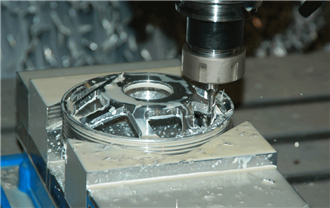
Step 3: CNC Milling and Turning
Depending on component geometry, we use CNC milling, turning, and other precision machining processes.
Our equipment includes:
| Equipment | Brand and Model |
| Five-axis machining center | DMG HSC 75 Linear |
| Vertical machining center | DMG DMC 835V |
| Vertical machining center | Mazak VCN-510C |
| Vertical machining center | HAAS VF3 |
| CNC turning center | DMG CTX beta 800 |
| CNC turning center | TAKISAWA NEX-108 |
These machines support a range of precision machining requirements, including complex geometries, multiple machining operations, and customized component production.
Explore our precision machining capabilities and equipment list.
Step 4: Deburring and Surface Finishing
After machining, parts are inspected for burrs, sharp edges, and surface imperfections. Depending on the application, finishing options may include polishing, nickel plating, chrome plating, and other specified surface treatments.
Step 5: Dimensional Inspection and Quality Control
We check critical dimensions against customer drawings and verify important features before shipment. Inspection requirements are established according to the project's tolerances and quality expectations.
4. How to Reduce Costs When Ordering Small Batches
Small quantities do not have to mean unnecessarily high unit costs. A few practical decisions can make custom brass CNC machining more economical.
● Optimize part geometry: Avoid unnecessarily deep pockets and complex internal features.
● Choose standard material sizes: Appropriate stock dimensions can reduce material waste.
● Combine machining operations: Design features that can be completed in fewer setups.
● Specify realistic tolerances: Apply tight tolerances only where functionality requires them.
● Plan repeat orders: Consistent drawings and specifications simplify future production.
A detailed drawing and clear technical requirements help manufacturers provide a more accurate quotation and production plan.
5. Why Work with Start Precision?
Start Precision provides precision manufacturing services covering CNC milling, CNC turning, five-axis machining, grinding, wire cutting, and EDM.
Our manufacturing capabilities support customized mechanical components for automotive, medical, electronics, automation, and other industrial applications.
Whether you need a few prototype components or a small production batch, we focus on understanding the drawing, selecting appropriate manufacturing processes, and maintaining consistent quality throughout production.
6. Start Your Custom Brass CNC Machining Project
Successful small-batch manufacturing starts with the right engineering evaluation and a reliable production partner. From material selection and machining planning to finishing and inspection, every stage contributes to the final component's performance.
Contact us to discuss your manufacturing requirements. Send us your drawings, material specifications, required quantities, and quality expectations. Our team will evaluate your project and help identify a suitable machining solution.
Frequently Asked Questions
Q1: Is CNC machining suitable for small-batch brass production?
Yes. CNC machining does not require dedicated production molds, making it suitable for prototypes, customized components, and small production runs.
Q2: Which brass grade is best for CNC machining?
C36000 is a popular choice for machining efficiency. However, the best grade depends on mechanical requirements, environmental conditions, and applicable regulations.
Q3: Can you manufacture brass parts from customer drawings?
Yes. Custom components can be manufactured according to customer-provided CAD files, 2D engineering drawings, and technical specifications, subject to manufacturing feasibility.
Q4: What surface finishes are available for brass CNC parts?
Options may include polishing, nickel plating, chrome plating, and other finishes depending on the component's functional and cosmetic requirements.
Q5: What information is needed for a small-batch CNC machining quotation?
Typically, manufacturers need 2D drawings or 3D CAD files, material grade, order quantity, tolerance requirements, surface finish specifications, and delivery expectations.
Q6: How can I ensure consistent quality across multiple batches?
Use approved drawings, consistent material specifications, documented inspection requirements, and repeatable machining processes to maintain production consistency.





Add: Building 3No.277 Zhen'an Middle Road, Chang'an Town,Dongguan,Guangdong, China
Tel:+86-769-82855591
Copyright © 2019 All Rights Reserved Dongguan Start Precision Technology Co., Ltd. Tel: +86-769-82855591
Add: No. 277 Zhen'an Middle Road, Chang'an Town, Dongguan, Guangdong, China



 中文版
 English
