
Custom Brass CNC Machining with Deburring
Date:2026-11-24Article editor:Starting Point PrecisionViews:78Custom brass CNC machining is an effective solution for manufacturing precision components that require dimensional accuracy, excellent machinability, and a clean surface finish. However, machining accuracy alone is not enough. Burrs around holes, slots, and sharp edges can affect assembly, product appearance, and component performance. Combining custom brass CNC machining with professional deburring helps ensure that every component meets its functional and cosmetic requirements.
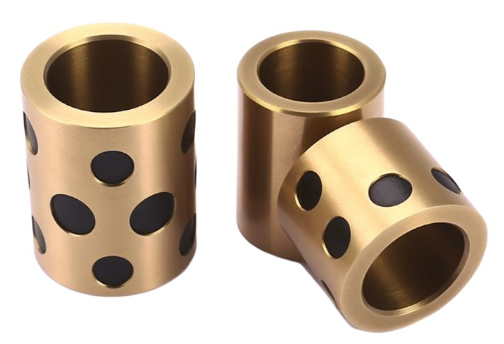
1. Why Is Deburring Important in Brass CNC Machining?
Brass is widely used in precision manufacturing because of its machinability, corrosion resistance, and attractive appearance. Nevertheless, cutting, drilling, milling, and turning can leave unwanted burrs on machined edges.
Without proper deburring, these defects may cause several problems:
● Assembly difficulties: Burrs can interfere with threaded connections and component fitting.
● Dimensional inconsistency: Raised material around holes and edges may affect measurements.
● Surface defects: Sharp edges and machining residue can reduce the overall appearance.
● Functional risks: Burrs may affect sealing surfaces, electrical contacts, or moving interfaces.
For this reason, deburring should be considered an essential part of the manufacturing process rather than an optional finishing operation.
2. Our Custom Brass CNC Machining and Deburring Process
At Start Precision, manufacturing quality starts with understanding the customer's drawings, material specifications, and application requirements. Our production approach focuses on controlling machining accuracy and edge quality throughout the process.
Step 1: Drawing Review and Material Selection
We first review 2D drawings and 3D models to identify critical dimensions, tolerances, hole positions, threads, and edge requirements.
Brass alloy selection depends on the intended application. For example:
● C360 brass: Suitable for many precision-turned components.
● C260 brass: Commonly selected when ductility and forming characteristics are important.
● Other brass grades: Evaluated according to mechanical, environmental, and functional requirements.
Step 2: Precision CNC Milling and Turning
After confirming the material, we select suitable machining methods according to component geometry.
Our available equipment includes:
| Equipment | Brand and Model |
| Five-axis machining center | DMG HSC 75 linear |
| Vertical machining center | DMG DMC 835V |
| Vertical machining center | Mazak VCN-510C |
| Vertical machining center | HAAS VF3 |
| CNC turning center | DMG CTX beta 800 |
| CNC turning center | TAKZAWA NEX-108 |
These machines support the production of complex geometries, precision holes, threaded features, and custom brass components.
Step 3: Burr Removal and Edge Finishing
Deburring is a critical stage in achieving consistent component quality.
We determine the appropriate edge-finishing approach according to the part geometry, brass grade, burr location, and drawing specifications.
Typical deburring considerations include:
● Removing burrs around drilled holes and cross-holes.
● Cleaning edges after CNC milling and turning.
● Removing sharp projections from slots and grooves.
● Maintaining specified chamfers and edge breaks.
● Protecting functional surfaces and precision dimensions during finishing.
Depending on the part design, manual finishing, brushing, or suitable mechanical deburring methods may be considered. Critical dimensions are protected throughout the operation.
Step 4: Quality Inspection
After machining and deburring, components should be inspected against the original engineering requirements.
Our quality-control considerations include:
| Inspection Item | Quality Objective |
| Dimensional inspection | Verify critical dimensions and tolerances |
| Hole and thread inspection | Ensure correct assembly compatibility |
| Edge inspection | Check for remaining burrs and sharp edges |
| Surface inspection | Identify scratches and machining defects |
| Final verification | Confirm compliance with drawing requirements |
3. Common Applications of Custom Brass CNC Machined Parts
Custom brass components are used in various industries where precision, conductivity, corrosion resistance, or appearance matters.
Typical applications include:
● Electrical connectors and terminal components.
● Precision brass fittings and threaded adapters.
● Valve components and fluid-control parts.
● Electronic equipment housings and inserts.
● Industrial machinery components.
● Decorative hardware and customized metal parts.
For these applications, proper deburring helps improve assembly consistency and the reliability of finished components.
4. How to Improve Brass Part Quality Through Better Design
Good manufacturing results begin with good engineering design.
We recommend considering the following points before production:
1. Specify which edges require chamfers or radius transitions.
2. Identify functional surfaces that must remain free from scratches.
3. Mark critical holes, threads, and mating dimensions.
4. Define acceptable burr conditions in technical drawings.
5. Avoid unnecessarily sharp internal corners where practical.
6. Communicate polishing, plating, and other finishing requirements in advance.
Early communication between the customer and manufacturer helps reduce unnecessary finishing operations and improves production efficiency.
For additional technical information about brass machining, see the Copper Development Association's brass machining research.
5. Why Choose Start Precision for Custom Brass CNC Machining?
Start Precision provides precision CNC manufacturing solutions supported by multi-axis machining, CNC milling, turning, and grinding capabilities.
Our manufacturing resources include DMG, Mazak, and HAAS equipment, supporting a range of customized precision machining requirements.
We focus on:
● Reviewing engineering drawings before production.
● Selecting suitable machining processes for different geometries.
● Controlling critical dimensions and machining quality.
● Considering burr removal and edge requirements during process planning.
● Supporting customized manufacturing projects according to customer specifications.
Explore our precision machining capabilities and learn more about our manufacturing services and solutions.
6. Start Your Custom Brass CNC Machining Project
Whether you need precision brass connectors, threaded fittings, electrical components, or other customized parts, machining accuracy and edge quality should be considered together.
Share your engineering drawings, material requirements, tolerances, and deburring specifications with our team.
Frequently Asked Questions (FAQ)
Q1: Why is deburring necessary for custom brass CNC machining?
Deburring removes unwanted material left by cutting and drilling. It helps improve assembly, edge safety, surface quality, and dimensional consistency.
Q2: Which brass grades are suitable for CNC machining?
C360 is commonly used for precision turning because of its excellent machinability. C260 and other brass alloys may be suitable depending on ductility, strength, and application requirements.
Q3: Can deburring affect the dimensions of brass components?
Yes. Excessive material removal can change edge geometry or affect critical dimensions. Deburring methods should therefore be selected according to the engineering drawing and inspection requirements.
Q4: How do you control burrs around small holes?
Burr control starts with appropriate cutting tools, machining parameters, and toolpaths. Suitable secondary finishing and inspection are then used to address remaining burrs.
Q5: Can Start Precision manufacture customized brass components?
Yes. Start Precision offers CNC milling, turning, and multi-axis machining capabilities for customized precision components. Customers can provide drawings and technical requirements for project evaluation.






Add: Building 3No.277 Zhen'an Middle Road, Chang'an Town,Dongguan,Guangdong, China
Tel:+86-769-82855591
Copyright © 2019 All Rights Reserved Dongguan Start Precision Technology Co., Ltd. Tel: +86-769-82855591
Add: No. 277 Zhen'an Middle Road, Chang'an Town, Dongguan, Guangdong, China



 中文版
 English
