Rapid Prototyping Supplier | Design Iteration Components & Precision Prototyping Services
Date:2026-06-17Article editor:Starting Point PrecisionViews:372In the high-stakes world of product development, speed and precision are not just advantages; they are prerequisites for success. The journey from a conceptual sketch to a fully functional product is fraught with challenges, and the efficiency of your design iteration process often dictates market leadership. This is where a strategic partnership with a dedicated rapid prototyping supplier becomes invaluable, transforming potential bottlenecks into seamless pathways to innovation.
Design iteration is the heartbeat of engineering excellence. It's a cyclical process of creating, testing, analyzing, and refining a product. Each loop aims to eliminate flaws, enhance functionality, and optimize manufacturability. However, traditional manufacturing methods are often too slow and costly for this dynamic process, creating a significant drag on development timelines.
Rapid prototyping services shatter these barriers by enabling the swift production of physical parts directly from 3D CAD data. This capability allows engineers to move beyond digital simulations and interact with tangible models. Whether you are testing form, fit, and function or conducting user experience studies, having a physical prototype in hand provides invaluable insights that drive superior design iteration.
A prototype is only as good as the data it provides. If the component does not accurately reflect the final design's specifications, the entire validation process is compromised. This is why choosing a supplier that prioritizes precision prototyping is non-negotiable. It's not just about creating a part; it's about creating a part that mirrors the exact geometry, tolerances, and material properties of the final product.
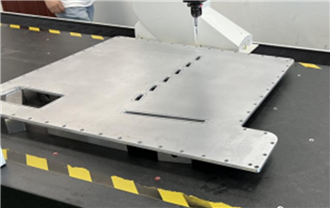
For instance, a leading rapid prototyping supplier like Start Precision leverages advanced manufacturing technologies to achieve tolerances within ±0.002mm. This level of accuracy ensures that every design iteration provides reliable data, allowing you to make informed decisions with confidence.
Precision Prototyping Services: A Technological Arsenal
Modern precision prototyping leverages a suite of advanced manufacturing technologies. A versatile supplier will offer a range of services to match the specific needs of your project, from simple visual models to complex, functional test pieces.
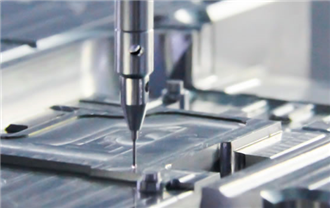
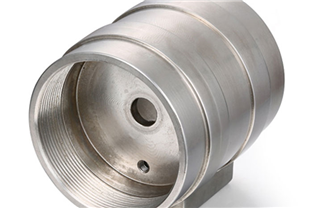
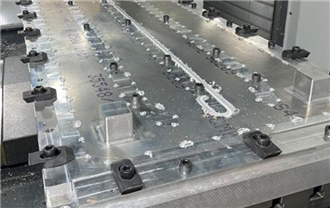
● CNC Machining (Milling & Turning): This subtractive process uses computer-controlled tools to carve parts from solid blocks of metal or plastic. It is renowned for its high precision, excellent material properties, and ability to produce parts that are nearly identical to final production components. This makes it ideal for functional testing and bridge tooling.
● 5-Axis Machining: For parts with complex geometries and undercuts, 5-axis CNC machining is indispensable. It allows for the creation of intricate components in a single setup, ensuring superior accuracy and surface finish, which is critical for aerospace, medical, and automotive applications.
● Wire EDM (Electrical Discharge Machining): For extremely hard materials or parts requiring intricate cuts and tight tolerances, Wire EDM is the process of choice. It uses electrical sparks to erode material, creating precise features with an excellent surface finish, essential for components like mold cores and dies.
● EDM & Surface Grinding: These processes are crucial for achieving ultra-precise dimensions and superior surface finishes. Surface and cylindrical grinding, for example, can bring critical features to their final specification with micron-level accuracy.
A great rapid prototyping supplier does more than just make parts; they help you navigate the complexities of manufacturing. They can offer a "one-stop" shop that not only prototypes your design but also provides valuable feedback on design for manufacturability (DFM). This proactive approach helps identify potential issues early in the design iteration cycle, preventing costly delays in the production phase.
By streamlining the transition from prototyping to full-scale production, these partners ensure that your path to market is as efficient as possible. This is particularly valuable when sourcing custom non-standard parts, where experience and advanced capabilities are paramount. The ability to handle the entire process—from raw material procurement to finished product inspection—reduces lead times and simplifies supply chain management.
In today's fast-paced manufacturing environment, efficient design iteration enabled by a capable rapid prototyping supplier is a competitive necessity. By leveraging advanced technologies like CNC machining, 5-axis milling, and Wire EDM, you can accelerate development, reduce risk, and bring superior products to market faster. Partnering with a company like Start Precision , which combines technical expertise with a commitment to quality, provides the assurance needed to turn innovative concepts into reality.
1. How does rapid prototyping accelerate design iteration?
Rapid prototyping accelerates design iteration by drastically shortening the time needed to produce physical parts. Instead of waiting weeks for tooling, you can receive a prototype in days. This allows for more frequent testing, analysis, and refinement cycles, enabling you to identify and fix design flaws early in the development process, ultimately saving time and development costs.
2. What is the difference between a prototype and a precision prototype?
A basic prototype is often used to visualize a concept and may have loose tolerances. A precision prototype is manufactured to exact specifications (e.g., within ±0.002mm) using materials and processes similar to those used in final production. This ensures that the prototype can be used for rigorous functional testing, assembly validation, and performance analysis, providing data that is truly representative of the final product.
3. Can you produce multiple iterations or just a single prototype?
Yes, a full-service rapid prototyping supplier can produce multiple iterations. The very nature of rapid prototyping is about agility. Based on the results of testing one iteration, you can update your CAD file and quickly have a new, modified prototype manufactured. This "trial-and-error" process is refined into a methodical improvement cycle, crucial for perfecting a design before committing to mass production.
4. What types of files are needed for a rapid prototyping project?
The most common and preferred file format is a 3D CAD model, such as a STEP (.stp) or IGES (.igs) file. For simpler requests, a 2D drawing with dimensions and tolerances (like a PDF) can also be used. For complex, organic shapes, an STL file might be acceptable. It's always best to consult with your supplier, like Start Precision , to confirm their preferred formats and software compatibility.
5. Is rapid prototyping only for plastic parts?
No, modern rapid prototyping services cover a wide range of materials, including various metals (aluminum, steel, titanium, copper alloys) and plastics. Advanced machining and EDM technologies allow for the creation of high-precision metal prototypes essential for the aerospace, automotive, and medical sectors, ensuring that your functional prototype behaves exactly like the final product.
Add: Building 3No.277 Zhen'an Middle Road, Chang'an Town,Dongguan,Guangdong, China
Tel:+86-769-82855591
Copyright © 2019 All Rights Reserved Dongguan Start Precision Technology Co., Ltd. Tel: +86-769-82855591
Add: No. 277 Zhen'an Middle Road, Chang'an Town, Dongguan, Guangdong, China



 中文版
中文版 English