Custom CNC Machining Parts for Textile Machinery
Date:2026-06-17Article editor:Starting Point PrecisionViews:317The textile industry operates at ever‑increasing speeds, with yarn tension, friction, and thermal stress challenging every moving part. Off‑the‑shelf components rarely survive long in such harsh environments. That is why custom CNC machining parts for textile machinery have become the standard for mills seeking higher uptime and consistent fabric quality. From ring spinning frames to air‑jet looms and warp knitting machines, tailored CNC solutions deliver exact geometry, superior wear resistance, and rapid lead times—often outperforming original OEM equivalents.
Each production stage imposes unique mechanical demands. Generic parts cannot address the specific wear patterns, dynamic balance requirements, or chemical exposures found across different equipment. Our custom CNC capabilities cover the full spectrum:
● Spinning machinery – rings, travellers, spindles, rollers, and comber cylinders for ring, rotor, and open‑end spinning. For instance, a high‑speed rotor needs precise dynamic balancing (G2.5 grade) to avoid vibration, while a drafting roller requires surface roughness ≤ Ra 0.4 µm for consistent sliver quality.
● Weaving machinery – air‑jet nozzles, profiled reeds, heald frame connectors, and rapier grippers. Jet loom nozzles demand micron‑accurate orifices for optimal air consumption, while cam profiles for dobby shedding need complex 5‑axis contours to reduce impact noise.
● Knitting machinery – cams (cam tracks), needle cylinders, sinker rings, and guide bars for circular and warp knitting. The triangular cam paths on a circular knitting machine must be machined with extreme smoothness to prevent needle bounce at 1,200 RPM.
● Dyeing & finishing machinery – jet nozzles, heat exchanger covers, expansion rollers, and impellers for stenters. These often require 316L stainless steel to resist acidic dyes and high‑temperature steam.
● Chemical fiber & nonwoven lines – traverse shafts, grooved winder drums, metering pump drive shafts, and doffer bases. Winding drums with intricate helical grooves are a classic example of our multi‑axis milling expertise.
Beyond these, we routinely produce custom shafts, gears, bearing housings, linear guides, and hydraulic manifolds that fit virtually every brand—from Rieter, Truetzschler, and Murata to Picanol, Tsudakoma, and Mayer & Cie. Whether you supply a worn sample, a 2D drawing, or a 3D STEP file, we reverse‑engineer and upgrade the design for extended service life.
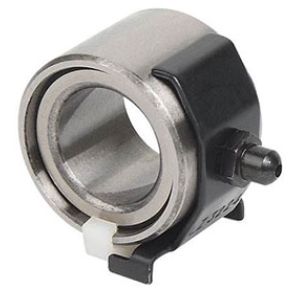
Roller shaft for Spinning machinery
Selecting the right material is half the battle. We machine:
● Tool steels (D2, O1) for high‑wear cutters and friction surfaces.
● Stainless grades (304, 17‑4PH) for corrosion‑prone dyeing components.
● Aluminium 7075 for lightweight reciprocating parts.
● Engineering plastics (PEEK, Acetal) for non‑marring thread guides.
Post‑machining treatments like nitriding, hard anodising, and DLC coatings can triple part longevity. Explore our surface finish options for textile parts to match your specific operating conditions. We also recommend reviewing ISO 13528 wear‑test standards –ISO textile machinery guidelines provide baseline criteria for acceptance.
Every hour of unplanned stoppage costs mills thousands of dollars. Custom parts cut these losses by:
● Perfect fit – eliminating shimming or on‑site modification.
● Dynamic balance – multi‑axis milling ensures symmetrical mass distribution, vital for spindles and rotors.
● Just‑in‑time delivery – rapid prototyping and digital inventory allow you to keep safety stock without overcapitalising.
Our 5‑axis CNC centres also enable complex internal oil channels and undercut geometries that improve lubrication retention—features rarely found in mass‑produced alternatives. Additionally, we use IoT‑enabled toolpath monitoring to adjust feed rates in real time, minimising thermal distortion and guaranteeing that every batch matches the first‑article inspection report.
Reliability depends on thorough inspection. Each custom part undergoes:
● CMM verification of critical dimensions.
● Surface roughness testing (Ra ≤ 0.8 µm for yarn‑contact areas).
● Non‑destructive testing (dye penetrant or ultrasonic) for internal defects.
Our facility holds AS9100D and ISO 9001:2015 certifications, ensuring full traceability from raw material certificates to final shipping.
Whether you operate ring spinning frames, air‑jet looms, circular knitting machines, or dyeing ranges, custom CNC machining parts for textile machinery deliver measurable gains in productivity, fabric quality, and cost‑per‑part. From single prototypes to high‑volume production, our engineering team collaborates with you from design to delivery. Request a free feasibility assessment today and discover how tailored precision can transform your maintenance strategy.
Q1: Can you machine parts for specific brands like Rieter, Picanol, or Murata?
Absolutely. We reverse‑engineer or work from your original drawings to produce drop‑in replacements that often outperform the original in wear life.
Q2: What is the typical lead time for a custom spinning or weaving part?
Standard lead times are 3–7 business days, with expedited options for emergency breakdowns.
Q3: Do you offer coating or heat treatment for high‑wear components like travellers and nozzles?
Yes. We provide nitriding, anodising, hard‑chrome plating, and DLC coatings in‑house or through certified partners.
Q4: How do you ensure interchangeability with existing machinery?
We use CMM and fitment gauges, and every shipment includes a full inspection report with critical dimension data.
Q5: Is there a minimum order quantity (MOQ)?
No MOQ – we produce single prototypes for trial as well as large production runs up to 10,000+ units.
Add: Building 3No.277 Zhen'an Middle Road, Chang'an Town,Dongguan,Guangdong, China
Tel:+86-769-82855591
Copyright © 2019 All Rights Reserved Dongguan Start Precision Technology Co., Ltd. Tel: +86-769-82855591
Add: No. 277 Zhen'an Middle Road, Chang'an Town, Dongguan, Guangdong, China



 中文版
中文版 English