Stainless Steel Turning Parts for High-Temperature Use
Date:2026-07-24Article editor:Starting Point PrecisionViews:257In industrial heating equipment, heat treatment furnaces, and thermal processing lines, the reliability of metallic components directly governs operational safety and throughput. Stainless Steel Turning Parts manufactured through precision CNC turning have become the standard choice for load-bearing elements exposed to extreme temperatures. Their consistent dimensional accuracy, sound material integrity, and controlled surface finish make them indispensable for sustaining long-term high-temperature performance.
For environments reaching 1100°C, grade 310S (UNS S31008) is the prime candidate for Stainless Steel Turning Parts. This austenitic alloy contains approximately 25% chromium and 20% nickel, forming a tenacious chromium-oxide layer that resists scaling and carburization far better than 304 or 316 grades. Detailed material data is outlined by AZoM. When turned to tight tolerances, 310S Stainless Steel Turning Parts deliver the creep strength and structural stability that critical furnace hardware demands.
Managing thermal expansion is critical for Stainless Steel Turning Parts. The coefficient of thermal expansion for 310S is approximately 17.5 µm/m·°C — a 200 mm long part grows nearly 3.5 mm when heated to 1000°C. Without controlled clearance, seizure or distortion is inevitable. Experienced designers incorporate calculated expansion gaps, and CNC turning shops hold diameters and lengths within microns to preserve the intended fit at operating temperature. This interplay between design foresight and manufacturing exactness is where quality Stainless Steel Turning Parts truly excel.
Even the most heat-resisting alloys gradually develop an oxide layer. On 310S Stainless Steel Turning Parts, a smooth turned surface reduces nucleation sites for thick, irregular scale. The AZO Matrials offers further insight into scaling resistance. Many manufacturers apply a passivation treatment or a controlled pre-oxidation to form a thin, adherent scale that protects the substrate. During scheduled maintenance, light glass-bead blasting can remove loose deposits without compromising the dimensional precision of the turned component.
A practical illustration is the fabrication of furnace support brackets. In a continuous annealing line, brackets must carry heavy loads at 1050°C without distortion. Originally cast brackets failed prematurely from thermal fatigue cracking. The engineering team replaced them with 310S Stainless Steel Turning Parts, designed with generous fillets and an optimized grain flow. Partnering with a specialized machining source such as Start Precision allowed the team to achieve a surface roughness below Ra 0.8 µm, which enhanced oxidation resistance and simplified cleaning. This successful shift explains why more thermal equipment OEMs now specify precision turned components.
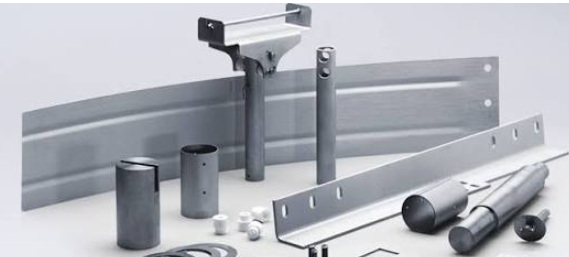
Selecting the right alloy and precision turning methodology defines the service life of high-temperature assemblies. By combining 310S metallurgy with rigorous CNC machining, Stainless Steel Turning Parts meet the strictest demands for thermal stability, expansion control, and scale resistance. Engaging capable manufacturing partners ensures that your furnace hardware performs reliably under the most extreme conditions.
Contact us at Start Precision to discuss your manufacturing needs.
Frequently Asked Questions
Q1: What maximum temperature can 310S stainless steel turning parts withstand?
A: 310S turning parts can operate continuously at 1100°C in air, thanks to the high chromium and nickel content that forms a protective, self-renewing oxide scale.
Q2: How is thermal expansion managed in turned components for furnaces?
A: Designers calculate clearance based on the alloy’s expansion coefficient, and CNC turning holds the machined dimensions to tight tolerances so the parts move freely without seizing during heating cycles.
Q3: Can oxide scale be completely prevented on stainless steel turning parts?
A: It cannot be entirely prevented, but a smooth turned finish (typically Ra ≤ 0.8 µm) reduces scale adhesion, and periodic passivation or light blasting effectively removes loose scale.
Q4: What post-machining treatments improve high-temperature performance?
A: Passivation, bright annealing, or controlled pre-oxidation creates a uniform chromium-oxide layer, significantly enhancing scaling resistance and extending part life.
Add: Building 3No.277 Zhen'an Middle Road, Chang'an Town,Dongguan,Guangdong, China
Tel:+86-769-82855591
Copyright © 2019 All Rights Reserved Dongguan Start Precision Technology Co., Ltd. Tel: +86-769-82855591
Add: No. 277 Zhen'an Middle Road, Chang'an Town, Dongguan, Guangdong, China



 中文版
中文版 English