Titanium Precision Components for High Strength-to-Weight
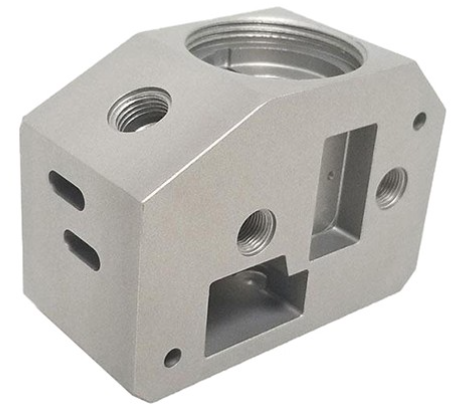
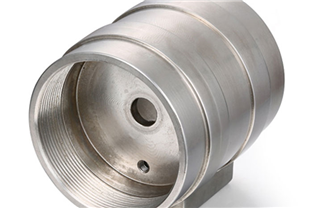
Date:2026-07-25Article editor:Starting Point PrecisionViews:240In demanding engineering fields, every gram of weight matters, yet structural integrity cannot be compromised. Titanium precision components have become the gold standard for achieving an exceptional strength-to-weight ratio—often double that of steel and far superior to aluminum. This property enables lighter, faster, and more fuel-efficient aircraft, durable medical implants, and high-performance automotive parts. However, harnessing titanium’s full potential requires manufacturing excellence that goes far beyond standard machining.
Titanium is notoriously difficult to machine. Its low thermal conductivity traps heat at the cutting edge, accelerating tool wear, while its high chemical reactivity causes galling and built-up edge. Additionally, titanium’s work-hardening tendency demands rigid, high-torque machines and sophisticated cooling strategies. These challenges are well documented in the ASM International Materials Handbook.Producing reliable titanium precision components therefore calls for a combination of advanced equipment, experienced programmers, and stringent process control—factors that distinguish top-tier manufacturers from the rest.
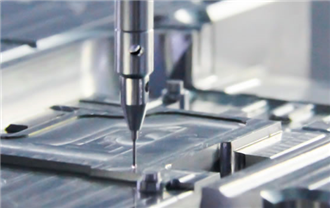
To consistently produce titanium precision components with tolerances within ±0.01mm, workshops must invest in world-class machinery. For instance, five‑axis machining centers like the Germany DMG HSC 75 linear excel at creating complex curved surfaces, oblique holes, and hollowed‑out features in a single setup—reducing errors and lead times. Complementing this, vertical machining centers such as the Japan LGMazak VCN‑510C and United States HAAS VF3 provide versatile milling capacity, while CNC turning centers like the Germany DMG CTX beta 800 and Japan TAKZSAWA NEX‑108 deliver precise cylindrical geometries.
For secondary operations, slow wire cutting machines (e.g., Japan Seibu M50B and Sodick ALN400Gs) and EDM spark machines (e.g., MAKINO EDGE3 and Sodick AD30Ls) enable intricate details and tight internal features. Grinding equipment, including flat profile and cylindrical grinders, ensures superior surface finishes. This comprehensive equipment list, detailed on the precision equipment page, demonstrates the capability to handle the entire production chain of titanium precision components under one roof.

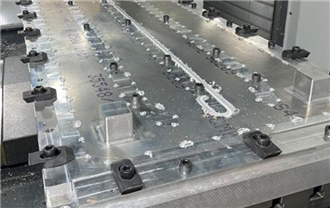
Advanced CNC workshop equipped for titanium machining
Consider the case of a critical aerospace actuator housing. Originally designed in steel, the component weighed 4.2 kg and required complex internal fluid passages. By switching to a titanium alloy and utilizing a DMG HSC 75 linear 5‑axis machine, engineers consolidated several milling and drilling operations into a single setup. The subsequent use of a Sodick AD30Ls EDM machine produced cooling channels with zero burrs. The final titanium precision component weighed only 2.5 kg—a 40% reduction—while exceeding all fatigue and pressure test requirements. This real‑world example underscores how the right combination of equipment and expertise transforms material advantages into tangible product gains.
Given the critical nature of these parts, rigorous quality control is non‑negotiable. Accredited facilities adhere to international standards such as ISO 9001 and AS9100 for aerospace. In‑process inspections, CMM verification, and material traceability ensure every batch meets the strictest specifications. The commitment to certified quality is evidenced by visible certifications on the workshop, providing customers with complete confidence in the supply chain.
The production of high‑quality titanium precision components is not merely about owning advanced machines—it requires deep process knowledge, skilled technicians, and a culture of continuous improvement. By leveraging state‑of‑the‑art equipment like the DMG and HAAS lines, and adhering to certified quality systems, manufacturers can deliver components that push the boundaries of strength‑to‑weight performance.
Contact us to discuss your manufacturing needs and learn how our capabilities can turn your most challenging designs into reliable, high‑performance parts.
Q1: What tolerances can be consistently achieved on titanium precision components?
A: With proper tooling and rigid machines, we routinely hold tolerances within ±0.01mm on critical features.
Q2: How does titanium’s strength‑to‑weight ratio compare to other materials?
A: Titanium alloys typically offer a specific strength (strength/density) 50‑60% higher than steel and nearly double that of aluminum, making it ideal for weight‑sensitive applications.
Q3: Which industries most commonly require titanium precision components?
A: Aerospace (airframes, engines), medical (implants, surgical instruments), automotive (motorsport, high‑performance), and defense are the primary sectors.
Q4: What surface finishes are achievable on titanium parts?
A: Depending on the process, we can achieve Ra 0.4‑0.8 µm through milling, and even finer with grinding or polishing.
Q5: Do you provide material certifications and full traceability?
A: Yes, all titanium materials come with mill certificates, and we maintain full traceability from raw stock to finished part.
Add: Building 3No.277 Zhen'an Middle Road, Chang'an Town,Dongguan,Guangdong, China
Tel:+86-769-82855591
Copyright © 2019 All Rights Reserved Dongguan Start Precision Technology Co., Ltd. Tel: +86-769-82855591
Add: No. 277 Zhen'an Middle Road, Chang'an Town, Dongguan, Guangdong, China



 中文版
中文版 English