Precision CNC Parts Machining for Hydraulic Systems: Key Components, Materials & Tolerances
Date:2026-05-12Article editor:Starting Point PrecisionViews:462Precision CNC parts machining is the foundation of reliable hydraulic system manufacturing. Hydraulic components such as valve bodies, pump housings, manifolds, and pistons require micron-level accuracy, flawless surface finishes, and zero leakage under extreme pressure (up to 700 bar). This article explains why Precision CNC parts machining outperforms conventional methods, which components benefit most, and how to guarantee quality through international standards.
1. Why Hydraulic Systems Need Precision CNC Parts Machining
Hydraulic fluid power systems rely on tight clearances (often 0.003–0.015 mm) between moving parts. Any deviation causes internal leakage, power loss, or catastrophic failure. Precision CNC parts machining guarantees:
Repeatable tolerances of ±0.005 mm or better.
Surface roughness Ra ≤ 0.4 µm for dynamic seals.
Complex internal geometries (cross‑drilled galleries, angled ports).
High‑volume consistency with zero drift.
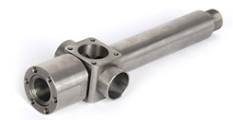
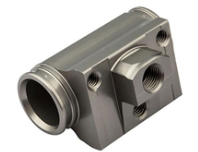
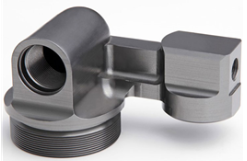
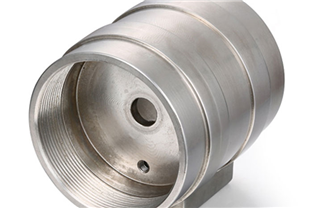
The following hydraulic components are almost exclusively manufactured using Precision CNC parts machining:
Valve spools & bodies – require cylindrical roundness < 2 µm and diametral clearance of 0.003–0.008 mm.
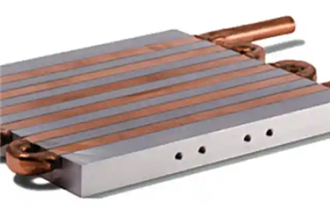
Hydraulic manifolds – complex channel intersections with deburred edges for laminar flow.
Pump gears & housings – tight tooth profiles and bore concentricity.
Cylinder barrels & pistons – honed surfaces and exact outer diameters.
For reference, see this guide on hydraulic manifold design.
Material selection directly affects machinability, corrosion resistance, and cost. Preferred alloys include:
Stainless steel (303, 304, 316, 17‑4 PH) – for marine or chemical environments.
Carbon steel (4140, 8620, 1045) – high strength and wear resistance.
Aluminum (6061‑T6, 7075‑T6) – lightweight manifolds (max 210 bar).
Brass / bronze (C360, C932) – low‑friction bushings and wear rings.
Always follow the ISO 4413:2010 hydraulic fluid power standard for material compatibility.
Hydraulic applications demand some of the strictest GD&T callouts in the machining industry. Typical requirements from Precision CNC parts machining include:
Bore roundness ≤ 2 µm
Diameter tolerance IT5 (e.g., 12.000 ±0.004 mm)
Perpendicularity between valve bore and port face ≤ 5 µm
Surface finish Ra 0.2–0.8 µm on sealing lands
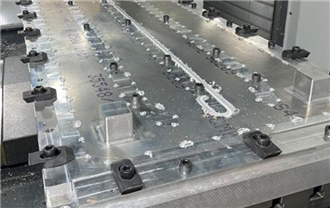
CNC lathes and 5‑axis milling centers with in‑process probing and tool wear compensation ensure these specs are met repeatedly.
To guarantee zero defects, reputable CNC shops deploy:
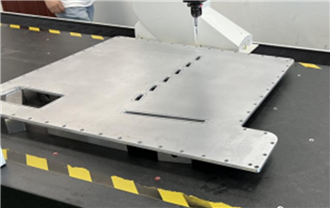
CMM (Coordinate Measuring Machine) – full 3D form and position inspection.
Laser micrometers & air gauges – non‑contact measurement of bores.
Hydrostatic pressure testing – up to 1.5× working pressure with no leakage.
Surface roughness testers – verifying Ra values on sealing surfaces.
The NIST Manufacturing Engineering Laboratory provides metrology best practices.
Partnering with an experienced Precision CNC parts machining shop reduces assembly failures, extends hydraulic component life, and cuts warranty costs. Key advantages:
ISO 9001:2015 or AS9100D certified processes.
In‑house finishing (anodizing, electropolishing, passivation).
Just‑in‑time delivery with full traceability.
To discuss your hydraulic part project, visit our contact page .
Precision CNC parts machining is indispensable for producing reliable, high‑efficiency hydraulic systems. From tight‑tolerance valve spools to complex manifolds, advanced CNC technology combined with strict quality control ensures components withstand extreme pressures and harsh operating conditions. By adhering to standards like ISO 4413 and using state‑of‑the‑art metrology, manufacturers deliver hydraulic parts that maximize performance and safety.
For more technical articles on Precision CNC parts machining for hydraulics, check our industry blog .
Add: Building 3No.277 Zhen'an Middle Road, Chang'an Town,Dongguan,Guangdong, China
Tel:+86-769-82855591
Copyright © 2019 All Rights Reserved Dongguan Start Precision Technology Co., Ltd. Tel: +86-769-82855591
Add: No. 277 Zhen'an Middle Road, Chang'an Town, Dongguan, Guangdong, China



 中文版
中文版 English