Precision Turned Parts Manufacturer for Value Engineering
Date:2026-07-29Article editor:Starting Point PrecisionViews:296In the current industrial landscape, original equipment manufacturers (OEMs) face relentless pressure to reduce costs without compromising quality. While many look to offshore suppliers for immediate savings, a more sustainable strategy lies in value engineering—a systematic method to improve the "value" of goods or services by examining function. For machined components, partnering with the right Precision Turned Parts Manufacturer is the cornerstone of this approach. Value engineering is not about cutting corners; it is about optimizing the entire manufacturing ecosystem, from material selection to the final machining path.
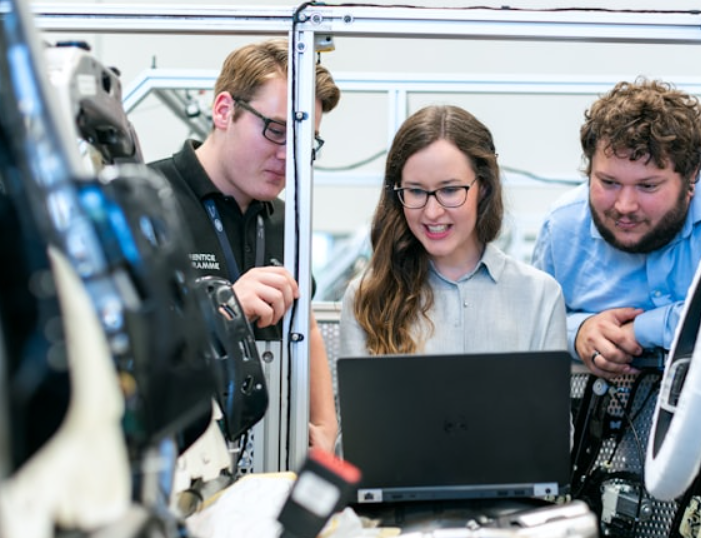
For a Precision Turned Parts Manufacturer, two levers offer the most significant return: path consolidation and material substitution.
● Path Consolidation refers to reducing the number of setups and operations a part undergoes. Complex geometries often require turning, milling, and grinding. Instead of transferring a part between different machines, which introduces tolerance drift and increases lead time, a manufacturer can program a single, advanced Five-axis precision machining center to perform multiple operations in one clamping. This reduces labor hours, minimizes fixture costs, and drastically lowers the risk of non-conformance.
● Material Substitution is the strategic replacement of an existing material with a cost-effective alternative that meets or exceeds all functional requirements. For instance, replacing a costly, difficult-to-machine alloy steel with a pre-treated carbon steel or moving from a solid bar to a near-net shape tube can slash raw material costs by 20% or more. A knowledgeable Precision Turned Parts Manufacturer will conduct a rigorous analysis of mechanical properties, wear resistance, and environmental conditions to validate the substitution.
When value engineering principles are correctly applied, the typical result is an annual cost reduction of 10% to 15% on the total cost of ownership for a component. This figure is not arbitrary; it represents the combined savings from lower material costs (5–8%), reduced cycle times due to path consolidation (3–5%), and decreased scrap rates (2–3%). For a high-volume production run, these percentages translate directly to the bottom line, making the manufacturer a strategic partner rather than a simple vendor.
Adopting value engineering requires a structured, collaborative process between the OEM and the Precision Turned Parts Manufacturer. The following four steps outline this effective procedure:
1. Cross-Functional Kick-off: Assemble a team including design engineers, manufacturing engineers, and the supplier's technical sales team. Review the current part print and usage data.
2. Functional Analysis: Define the part's core functions. Distinguish between "primary" (must-have) and "secondary" (nice-to-have) features.
3. Brainstorming & Feasibility: Explore alternative materials and machining strategies. For path consolidation, this involves mapping the existing process vs. a proposed "one-hit" process.
4. Prototyping & Validation: Machine sample batches using the new parameters, conduct rigorous quality checks, and implement the change in a phased rollout to mitigate risk.
The success of any value engineering initiative is predicated on the manufacturer's equipment. A modern Precision Turned Parts Manufacturer will possess a fleet of advanced machinery capable of the required tolerances.
| Equipment Item | Brand / Model | Key Parameter / Application |
| 5-Axis Machining Center | Germany DMG HSC 75 linear | Complex curved surfaces and oblique hole drilling. |
| Vertical Machining Center | Japan LGMazak VCN-510C | High-speed milling and drilling of prismatic parts. |
| CNC Turning Center | Germany DMG CTX beta 800 | Precision turning of shafts and complex rotational parts. |
| CNC Turning Center | Japan TAKZSAWA NEX-108 | High-volume, tight-tolerance turning production. |
| Slow Wire Cutting | Japan Sodick ALN400Gs | Ultra-precise EDM for intricate internal features. |
| Surface/Profile Grinder | China MICCO 350 | Achieving final surface finishes and tolerances within ±0.002mm. |
For a complete list of machinery, including quantities, visit the detailed Precision Equipment List.
To learn more about cutting-edge CNC machining technologies, please refer to the authoritative industry media Modern Machine Shop.
Consider a recent case for a hydraulic valve body. The OEM was using a 416 stainless steel bar for its corrosion resistance. However, We recommended a switch to a 17-4 PH stainless steel in the H1150 condition. While the material cost per pound was comparable, the 17-4 PH offered superior machinability, reducing cycle time by 18%. Concurrently, they consolidated the process: instead of turning on a lathe and then transferring to a milling machine for cross-holes, they used the live tooling on their DMG CTX beta 800 to complete the part in a single setup. The results: a 13.5% reduction in total cost, a 20% improvement in lead time, and no compromise on the 25-year durability requirement.
Value engineering is a powerful, ongoing methodology that drives competitiveness. It shifts the conversation from simple price negotiation to collaborative problem-solving. By focusing on path consolidation and smart material alternatives, a specialized Precision Turned Parts Manufacturer can consistently deliver annual savings in the 10-15% range. The critical success factor is to choose a partner with the technological capability and engineering expertise to execute these strategies.
We invite you to contact us to discuss your manufacturing requirements and explore how our precision engineering can enhance your product's value.
Q1: How long does the value engineering analysis process typically take?
A: The initial analysis and feasibility study for path consolidation and material substitution usually takes 1 to 6 weeks. This includes material testing and initial sample runs.
Q2: Is material substitution always suitable for high-stress or high-temperature applications?
A: Not always. However, a competent Precision Turned Parts Manufacturer will perform a thorough engineering review, including Finite Element Analysis (FEA), to ensure the substituted material meets all safety and performance standards for your specific application.
Q3: Can path consolidation be applied to existing parts without redesigning them?
A: Yes, in many cases. It simply involves re-engineering the manufacturing process. Using a more capable CNC machine with multi-axis and live tooling can often consolidate operations on an existing part design.
Q4: What is the minimum order quantity to justify path consolidation?
A: While beneficial for high-volume runs, path consolidation reduces setup time and scrap, making it valuable even for medium volumes (e.g., 1,000+ parts per year). The actual ROI is calculated on a case-by-case basis.
Add: Building 3No.277 Zhen'an Middle Road, Chang'an Town,Dongguan,Guangdong, China
Tel:+86-769-82855591
Copyright © 2019 All Rights Reserved Dongguan Start Precision Technology Co., Ltd. Tel: +86-769-82855591
Add: No. 277 Zhen'an Middle Road, Chang'an Town, Dongguan, Guangdong, China



 中文版
中文版 English