China CNC Machining Factory for Tooling & Fixture Manufacturing
Date:2026-07-10Article editor:Starting Point PrecisionViews:283In modern production environments, tooling and fixtures are not mere accessories—they are the foundation of repeatable quality and operational throughput. The geometric accuracy, surface finish, and thermal stability of jigs, pallets, and gauge pins directly dictate final part conformity and cycle efficiency. CNC machining has long been the go‑to solution for producing these critical components, yet the real differentiator lies in a factory’s intrinsic ability to design, program, and manufacture its own tooling entirely in‑house.
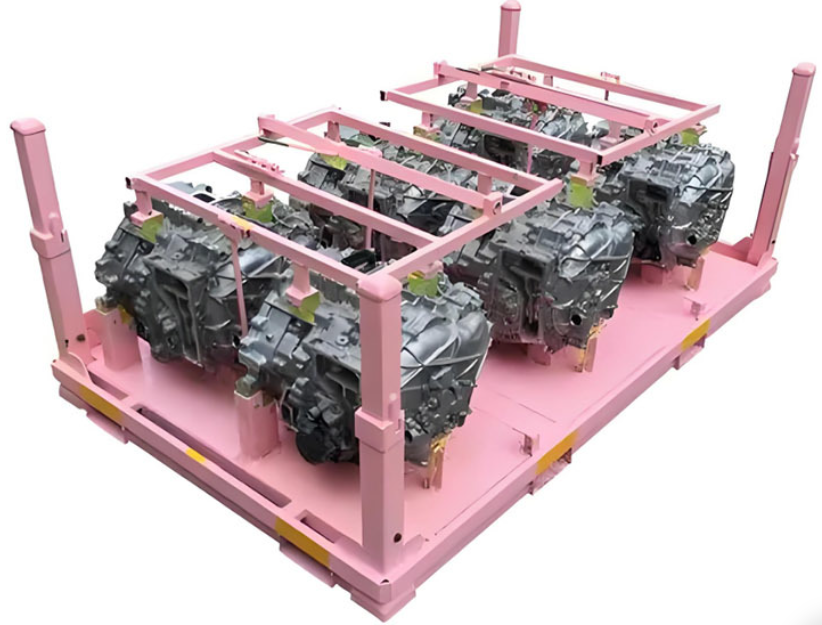
When a workshop controls the entire tool‑making chain—from conceptual CAD models to final metrology—it unlocks substantial advantages. Outsourced tooling often introduces weeks of logistical latency and communication gaps. In contrast, an integrated approach slashes preparation lead times by 40‑60%, enabling engineering changes to be implemented overnight. More importantly, self‑developed fixtures are precisely matched to the specific machine kinematics and workpiece materials, resulting in significantly improved machining consistency—a vital requirement for industries such as aerospace, medical implants, and electric vehicle powertrains, where tolerances routinely fall within ±5 μm.
A dedicated tooling facility must be equipped with versatile, high‑rigidity machine tools. The following table lists the primary assets in our modern CNC toolroom, directly sourced from our factory floor, highlighting their capabilities for producing hardened steels (up to HRC 62), aluminum, and engineered polymers.
| Equipment Name | Brand | Model | Key Application |
| Five-axis machining center | Germany | DMG HSC 75 linear | Complex contours, oblique holes |
| Vertical Machining Center | Germany | DMG DMC 835V | High-speed 3-axis milling |
| Vertical Machining Center | Japan | LGMazak VCN-510C | General precision parts |
| Horizontal machining center | USA | HAAS EC400 | High-volume palletized work |
| CNC turning center | Germany | DMG CTX beta 800 | Shaft and rotation parts |
| Slow wire EDM | Japan | Sodick ALN400Gs | Burr-free internal splines |
| Discharge spark machine | Japan | MAKINO EDGE3 | Deep cavities, fine details |
| Flat profile grinding machine | China | MICCO 350 | Surface finish < 0.5 µm |
This machinery is complemented by a temperature‑controlled inspection room housing a coordinate measuring machine (CMM) with a probing error of 0.9 μm. For a complete overview of our manufacturing capabilities, please visit our official homepage.
The journey from raw stock to a production‑ready fixture follows a structured methodology:
1. Design & Simulation – Using NX CAM, we generate toolpaths with adaptive roughing and high‑speed finishing strategies. Finite element analysis (FEA) validates clamping force distribution to avoid part distortion.
2. Material Preparation – Pre‑hardened tool steels (e.g., H13, S7) are stress‑relieved via vacuum heat treatment and cryogenic conditioning, ensuring dimensional stability over decades of use.
3. Machining & Finishing – 5‑axis roughing leaves 0.2 mm stock for semi‑finishing, followed by finishing passes using solid carbide endmills (≤ 0.5 μm surface roughness). Wire EDM erodes internal splines and narrow slots with burr‑free edges.
4. In‑Process Inspection – Critical locating surfaces are measured at multiple stages. A CMM checks GD&T callouts (flatness, perpendicularity, true position) against model baselines. All data is recorded in SPC charts to monitor capability indices (Cpk ≥ 1.67).
5. Final Validation – A trial run on the production machine verifies repeatability using a standard workpiece. Any deviation triggers immediate rework or program adjustment—a luxury only possible with in‑house control.
This rigorous sequence guarantees that every fixture delivered generates identical results across thousands of cycles, directly reducing scrap and rework costs.
A tier‑1 automotive supplier required a modular pallet system for machining differential housings on a 5‑axis line. The primary challenge was maintaining a critical bore‑to‑bore angle within ±0.01° over a 600 mm span. By leveraging our in‑house design team and the DMG HSC 75 linear 5‑axis center, we iterated the fixture layout in three days—a process that would have taken two weeks with an external vendor. The final hardened steel pallet achieved a Cpk of 1.67 on all location features. More importantly, the preparation time for new batch changeovers dropped from 14 days to only 6 days, enabling the customer to respond swiftly to demand fluctuations.
Another instance involved medical titanium bone screws: our team engineered a zero‑point clamping vise with hardened locating pins, all produced internally using the Mazak VCN-510C and Sodick wire EDM. The setup time per batch fell from 45 minutes to 12 minutes, and misalignment‑related scrap plummeted from 3.2% to 0.4%. These outcomes underscore that autonomous tooling is not a cost—it is a productivity multiplier.
Our factory operates three shifts, with a monthly capacity exceeding 200 complex tooling sets and standard lead times of 5‑10 working days. We maintain ISO 9001:2015 and AS9100D certifications, aligning our quality management with international aerospace standards . Regular internal audits follow ASTM E‑4 practices for force verification.
Workshop panorama – View CNC cell layout
These demonstrate our commitment to a clean, organized, and methodical production environment—critical for achieving micron‑level precision day after day.
In‑house tooling and fixture manufacturing is a strategic lever that transforms a conventional CNC job shop into a responsive, consistency‑driven partner. By eliminating external dependencies, we compress setup cycles, enhance part‑to‑part uniformity, and give our customers the agility to scale production without compromising quality. When every fixture is born from the same floor where it will be used, the feedback loop is instantaneous, and improvements are continuous.
We invite serious manufacturers to evaluate how our integrated approach can stabilize your long‑term operations. Contact us to discuss your long‑term manufacturing needs.
Q1: How does in‑house tooling specifically shorten preparation lead times?
By owning the entire design‑to‑production pipeline, we eliminate quoting, shipping, and third‑party scheduling delays. Engineering changes can be implemented within hours, and rework is completed overnight, reducing typical 14‑day external cycles to 5‑6 days.
Q2: What materials are suitable for CNC‑machined fixtures?
We commonly machine pre‑hardened tool steels (H13, S7, A2), stainless steels (17‑4PH), aluminum 7075‑T6, and engineering plastics (PEEK, Ultem). Material selection is based on wear resistance, thermal expansion, and required hardness.
Q3: How do you guarantee consistency across high‑volume production runs?
Our fixtures are designed with redundant locating points, zero‑point clamping, and hardened bushings. Combined with in‑process CMM checks and SPC tracking, we maintain a Cpk > 1.67 for all critical dimensions, ensuring minimal variation over extended runs.
Q4: Which certifications does your factory hold?
We are certified to ISO 9001:2015 (quality management) and AS9100D (aerospace), with documented traceability for all materials and processes. We also comply with internal standards based on ASTM and DIN guidelines.
Add: Building 3No.277 Zhen'an Middle Road, Chang'an Town,Dongguan,Guangdong, China
Tel:+86-769-82855591
Copyright © 2019 All Rights Reserved Dongguan Start Precision Technology Co., Ltd. Tel: +86-769-82855591
Add: No. 277 Zhen'an Middle Road, Chang'an Town, Dongguan, Guangdong, China



 中文版
中文版 English