Stainless Steel Turning Parts for Heavy-Duty Shafts
Date:2026-07-20Article editor:Starting Point PrecisionViews:250In the demanding world of heavy machinery, the reliability of power transmission systems hinges on a single, critical component: the heavy-duty shaft. These robust cylinders form the backbone of industrial turbines, marine propulsion systems, and mining equipment. The performance and safety of these applications are directly tied to the manufacturing quality of stainless steel turning parts. Producing such components is not merely a subtractive process; it is a precise science that transforms raw materials into engineered marvels capable of withstanding immense stress and fatigue.
The Critical Role of Material and Heat Treatment
The selection of the appropriate stainless steel grade is the first and most crucial decision. For heavy-duty shafts, martensitic or precipitation-hardening stainless steels are often preferred for their excellent combination of corrosion resistance and high tensile strength. However, raw material properties are rarely optimized for machining. This is where the heat treatment process, specifically quenching and tempering, becomes indispensable.
Our process involves a precise tempering cycle to achieve a final hardness of HRC28~32. This specific range is not arbitrary; it is the 'sweet spot' where the material offers maximum toughness and wear resistance without becoming too brittle or too soft, thereby ensuring long-term structural integrity under cyclic loading.
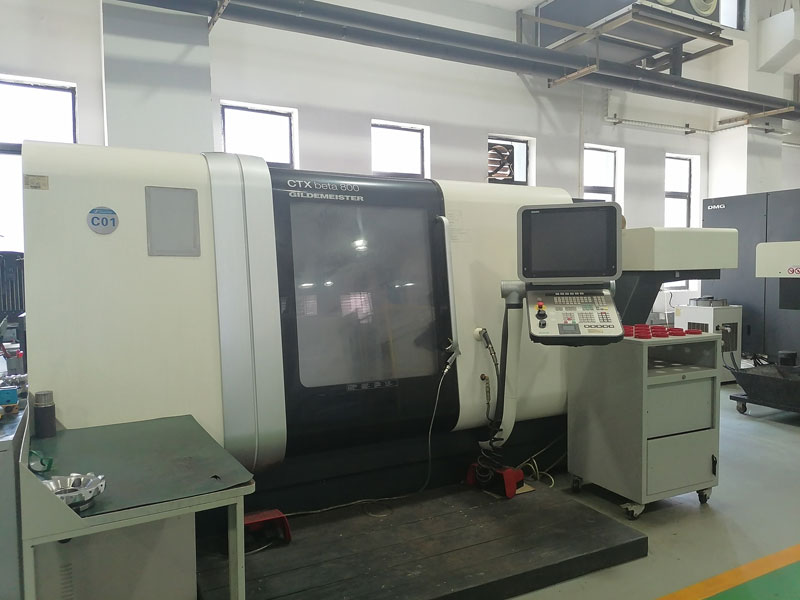
With the material at its optimal hardness, the turning process begins. Our workshop is equipped with a versatile lineup of modern CNC turning centers, each selected for specific strengths in handling heavy-duty shaft production. For complex geometries and exceptional thermal stability, we utilize the DMG CTX beta 800 from Germany, renowned for its rigid construction and precision spindle. For high-efficiency roughing and finishing of medium-to-large batches, the Japanese TAKISAWA NEX-108 offers outstanding speed and accuracy. Additionally, for cost-effective production of standard shaft sizes, we employ the Chinese CK6136 (from Joined Machinery), which provides reliable performance for less demanding tolerances.
The process is divided into roughing and finishing passes. Roughing removes the majority of the material efficiently. The finishing pass is where the component's true precision is defined. Achieving a runout (total indicator reading) of ≤0.02mm on a 600mm long shaft is a significant engineering challenge. It demands exceptional machine tool stability, perfect workholding, and the use of advanced toolpath strategies to compensate for tool deflection and thermal expansion. We achieve this through a combination of steady rests and follow rests, which provide crucial support and minimize vibration, a common cause of geometric errors in long, slender parts. The final dimensional accuracy is verified using high-precision micrometers and bore gauges, ensuring every feature meets the tight design tolerances.
Dimensional accuracy is only half the battle. The internal integrity of the shaft is paramount. Microscopic flaws invisible to the naked eye can grow into catastrophic cracks under fatigue loading. To ensure our stainless steel turning parts are flawless, we integrate rigorous Non-Destructive Testing (NDT) into our quality assurance workflow.
Specifically, we employ Magnetic Particle Inspection (MPI) for ferritic stainless steels. This process involves magnetizing the part and applying a fine magnetic particle solution. Any surface or near-surface discontinuities will cause a leakage field, attracting the particles and forming a visible indication. This inspection is a critical gatekeeper, ensuring that every shaft leaving our facility is free from detrimental cracks, seams, or inclusions that could compromise its performance in the field.
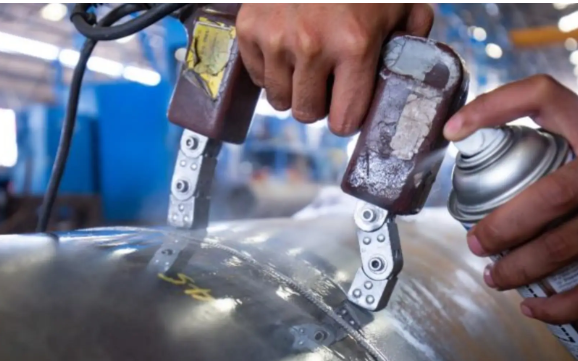
Magnetic Particle Inspection (MPI)
Advanced Equipment and Process Capabilities
Our commitment to precision is supported by our state-of-the-art manufacturing facility. Below is a snapshot of our key capabilities, highlighting the primary equipment used for your heavy-duty shaft projects:
| Equipment / Parameter | Specification / Capability |
| Primary CNC Lathes | DMG CTX beta 800, TAKISAWA NEX-108, CK6136 |
| Max. Turning Diameter | Up to φ800mm |
| Max. Turning Length | Up to 3,000mm |
| Standard Shaft Size | φ80 × 600mm |
| Dimensional Tolerance | IT6 Grade (and better) |
| Runout (TIR) | ≤ 0.02mm |
| Hardness Range (Tempered) | HRC28~32 |
| NDT Capabilities | MPI, Ultrasonic Testing (UT) |
Recently, a leading marine engineering firm approached us with a critical challenge. Their propeller shafts, traditionally sourced overseas, were failing prematurely due to excessive vibration, traced back to runout issues. They required a replacement batch of φ80×600mm stainless steel shafts with a maximum allowable runout of 0.02mm and a specific hardness of HRC28~32 to improve wear resistance.
By utilizing the TAKISAWA NEX-108 for its high-speed finishing capability and implementing a specialized steady-rest setup, we consistently achieved a runout of <0.015mm. The post-machining MPI inspection revealed no surface imperfections, and the parts were delivered ahead of schedule. This case exemplifies our ability to not just meet, but exceed, the most stringent technical requirements.
Our dedication to quality management is formalized through our certifications. We operate under a strict ISO 9001:2015 quality management system, which governs everything from material procurement to final inspection. Our NDT procedures are performed by certified level-II inspectors in accordance with ASTM standards.
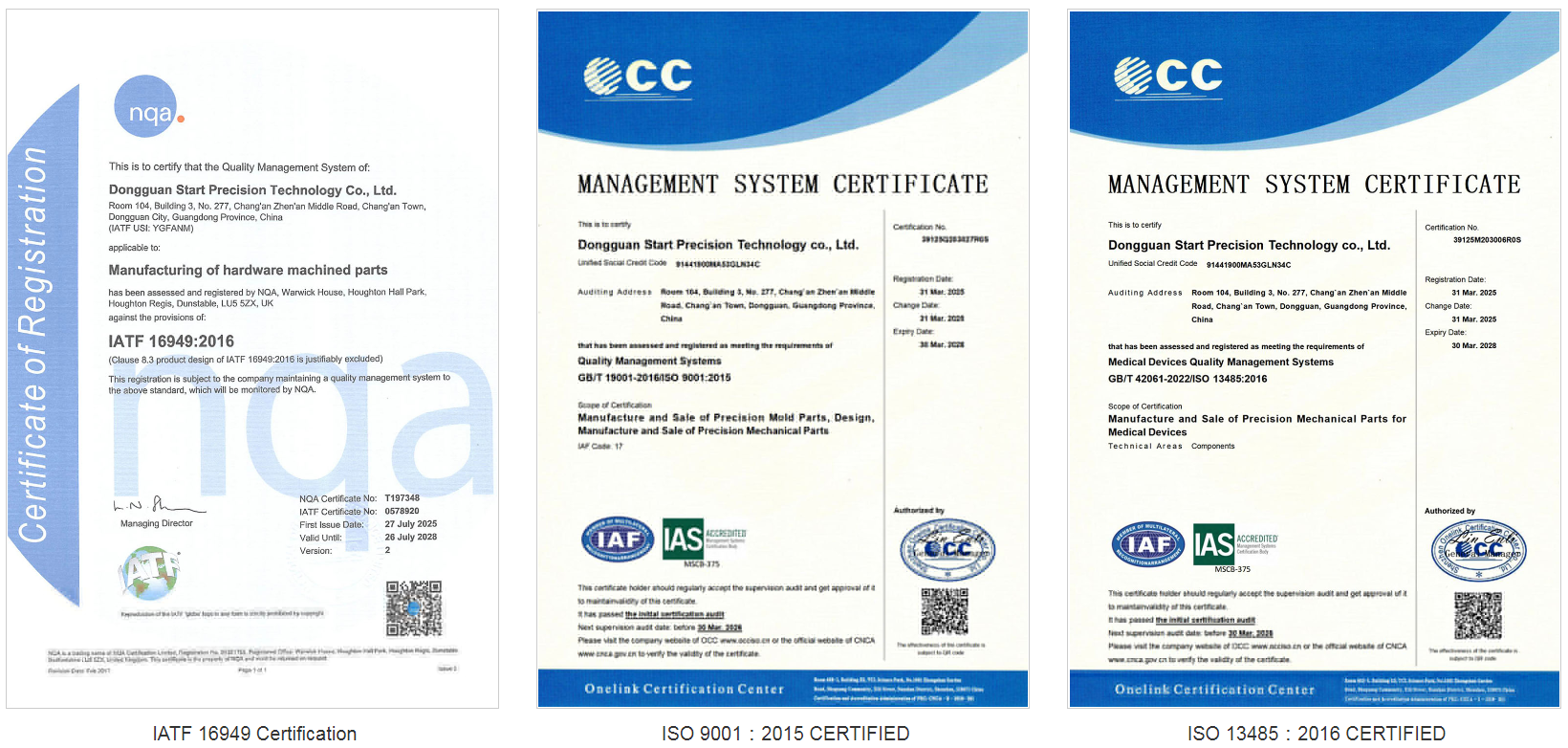
A photo of our ISO 9001:2015 certificate or other relevant quality certifications
Conclusion
Manufacturing stainless steel turning parts for heavy-duty shafts is a complex interplay of material science, advanced machining, and uncompromising quality control. From the precise control of tempering to achieve HRC28~32, to the rigorous maintenance of a ≤0.02mm runout, and the final verification through NDT, each step is critical. Our expertise in handling challenging geometries like the φ80×600mm shaft, backed by state-of-the-art equipment (including the DMG, TAKISAWA, and CK6136 models) and a skilled team, ensures we deliver components that set the standard for reliability and performance in the most demanding industrial environments.
Contact us to discuss your manufacturing requirements. We are eager to partner with you on your next precision engineering project.
1. Why is the hardness range HRC28~32 critical for heavy-duty shafts?
This specific range provides an optimal balance of high tensile strength, resistance to wear, and sufficient toughness to absorb shock loads. A hardness below this may lead to premature wear, while above it can increase brittleness and the risk of catastrophic failure.
2. What is the purpose of Magnetic Particle Inspection (MPI) on these shafts?
MPI is a non-destructive testing method used to detect surface and sub-surface discontinuities like cracks, seams, or laps. It ensures the structural integrity of the shaft by identifying flaws that could lead to failure under operational stress, confirming the part is defect-free.
3. What types of stainless steel are best suited for this application and why?
Martensitic grades like 410, 420, or precipitation-hardening grades like 17-4PH are commonly used. They are chosen for their high strength, good corrosion resistance, and ability to be through-hardened via heat treatment, making them ideal for heavy-duty, high-stress applications.
Add: Building 3No.277 Zhen'an Middle Road, Chang'an Town,Dongguan,Guangdong, China
Tel:+86-769-82855591
Copyright © 2019 All Rights Reserved Dongguan Start Precision Technology Co., Ltd. Tel: +86-769-82855591
Add: No. 277 Zhen'an Middle Road, Chang'an Town, Dongguan, Guangdong, China



 中文版
中文版 English