China CNC Machining Factory: Supply Chain Integration
Date:2026-07-11Article editor:Starting Point PrecisionViews:266In precision manufacturing, the quality of a finished part is determined long before the first chip is cut. At our China CNC machining factory, we have built a closed-loop supply chain that begins with rigorously vetted raw material suppliers and ends with fully traceable, high-tolerance components. This article explains our integration strategy, from material certification to real-time production monitoring, and why it matters for your long-term sourcing stability.
We do not buy materials on the spot market. Instead, we maintain long-term agreements with tier-1 mills and distributors, including Baosteel, Nippon Steel, and Alcoa, all of whom comply with ASTM and ISO material standards. Every incoming coil, bar, or billet is accompanied by a mill test report (MTR) and a unique heat number. Our quality team verifies chemical composition and mechanical properties using a handheld XRF analyzer and tensile testing – data that is permanently linked to each work order.
This approach eliminates the “mystery metal” problem and ensures that a 316L stainless steel flange ordered today will have the exact same corrosion resistance as one shipped six months ago. For critical aerospace and medical components, we also offer full material pedigree, including third-party lab validation when required.
Our sourcing workflow follows a five-step gate process:
1. Supplier Audits – Annual on-site assessments of supplier quality systems, production capacity, and environmental compliance.
2. Incoming Inspection – Dimensional, chemical, and hardness checks per ASTM E18 / E8.
3. Barcode Tagging – Each batch receives a unique QR code that ties to our ERP system.
4. Inventory Rotation – FIFO (first-in-first-out) with controlled humidity and temperature to prevent corrosion.
5. Lot Traceability – Every finished part is stamped with a laser-etched data matrix code that references the original heat number, machining parameters, and inspection results.
This digital thread allows us to recall specific batches within minutes – a critical capability for industries like automotive and defense. For a recent EV battery housing project, we reduced material-related rejects from 2.1% to 0.3% by switching to a supplier with tighter grain-size control, demonstrating the power of proactive sourcing.
Our machine park includes 45 units of 5-axis and 4-axis CNC machining centers from DMG MORI, Mazak, and Haas. Key specifications for our flagship precision machining equipment see full model list at our equipment page:
| Parameter | Specification |
| Max. workpiece size | 1,200 × 800 × 600 mm |
| Spindle speed | up to 20,000 rpm |
| Positioning accuracy | ±0.004 mm (JIS B6338) |
| Repetability | ±0.002 mm |
| Tool magazine | 60 – 120 tools |
| Coolant pressure | 70 bar (through-spindle) |
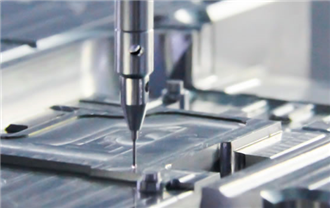
We combine these machines with in-process probing (Renishaw OMP400) and adaptive feed control, achieving surface finishes down to Ra 0.4 µm on hardened steel. Our machining processes cover milling, turning, EDM, wire EDM, and cylindrical grinding, with post-process CMM inspection on a Zeiss Contura.
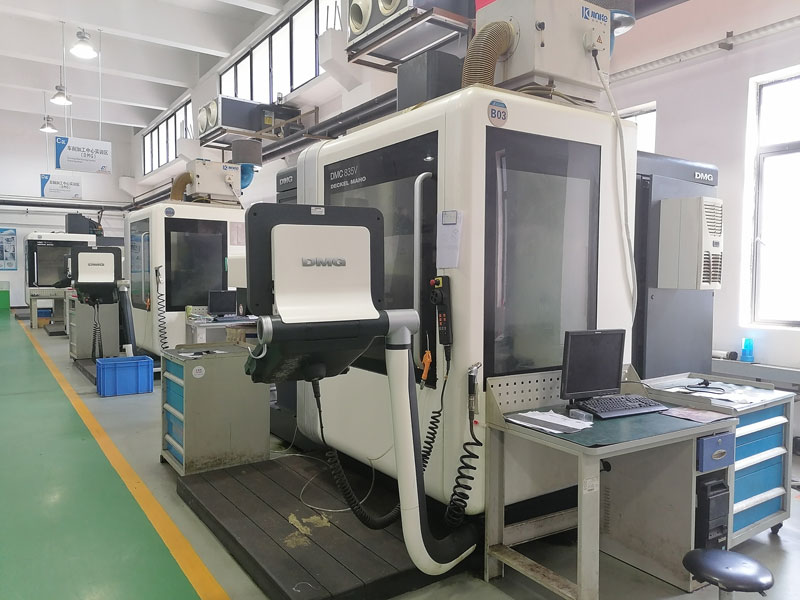
With 24/7 operation across two shifts, our monthly capacity exceeds 1,200 tons of machined parts. The integrated supply chain directly feeds this throughput: we maintain a 30-day buffer stock of commonly used alloys (6061-T6, 7075, 17-4PH, P20, S136) and a just-in-time replenishment system for specialty materials. This has shortened our average lead time from 4 weeks to 18 calendar days for prototype batches and 10 days for repeat orders.
We operate under ISO 9001:2015 and IATF 16949:2016 (automotive) certifications, with AS9100D for aerospace in progress. Our quality management system mandates 100% first-article inspection (FAI) per AS9102 and statistical process control (SPC) for every production run. All calibration standards are traceable to national institutes (NIST). You can view our certificate gallery here – we update it with each surveillance audit.
A German Tier-1 supplier needed 5,000 forged steel steering knuckles per month with a 4-week rolling forecast. They had experienced batch-to-batch hardness variations from previous vendors. By collaborating with our raw material partner to use a single electric-arc furnace melt source, we stabilized hardness within ±2 HRC across all deliveries. Combined with our 5-axis machining and automated deburring, we achieved a Ppk of 1.67 on critical bore diameters – and reduced logistics cost by consolidating material shipments with finished goods.
When you partner with a China CNC machining factory that treats material sourcing as a core competency, you gain:
● Risk mitigation – no last-minute substitution of lower-grade alloys.
● Regulatory compliance – full documentation for FDA, REACH, and RoHS.
● Cost predictability – fixed material pricing through quarterly contracts.
● Faster root-cause analysis – traceability links defects directly to supplier batches.
At our factory, we view every component as a promise. From the mill to the machining center to your assembly line, we control the variables that others overlook. We invite you to explore our full production capabilities and see how our integrated model delivers consistency at scale.
Contact us to discuss your long-term manufacturing needs. Our engineering team is ready to review your drawings, recommend material grades, and propose a supply chain plan that aligns with your forecast.
Q1: What material certifications do you provide with each order?
We supply mill test reports (MTRs) per EN 10204 3.1 or 3.2, plus our own incoming inspection reports. For critical applications, we can arrange independent third-party lab testing.
Q2: How do you handle material shortages or price volatility?
We maintain strategic stockpiles of high-turnover alloys and have backup suppliers pre-qualified. We also use fixed-price purchase orders with quarterly renegotiation to shield clients from sudden market spikes.
Q3: Can you source exotic or custom alloys?
Yes. We work with specialty foundries for Inconel, Monel, Titanium Grade 5, and tool steels. Lead times for custom melts range from 6–8 weeks, with full chemistry verification.
Q4: What is your typical MOQ for raw material procurement?
We do not impose an MOQ on machined parts, but for cost-efficiency, we recommend ordering material in standard mill sizes (e.g., 3-meter bars). We can also split batches for prototyping.
Q5: How do you ensure traceability when mixing different material lots?
Our ERP system assigns unique batch IDs to each incoming lot. During production, every machining cell scans the barcode on the raw material, and the finished part’s data matrix code carries that batch ID permanently. No mixing occurs without digital records.
Add: Building 3No.277 Zhen'an Middle Road, Chang'an Town,Dongguan,Guangdong, China
Tel:+86-769-82855591
Copyright © 2019 All Rights Reserved Dongguan Start Precision Technology Co., Ltd. Tel: +86-769-82855591
Add: No. 277 Zhen'an Middle Road, Chang'an Town, Dongguan, Guangdong, China



 中文版
中文版 English