China CNC Machining Factory for Aluminum Alloy Machining
Date:2026-07-15Article editor:Starting Point PrecisionViews:260In the rapidly evolving field of precision manufacturing, selecting the right partner for aluminum alloy components is critical to performance, lead time, and cost. A China CNC machining factory that specialises in aluminium offers not only competitive pricing but also advanced technological capabilities—provided it masters the unique metallurgical challenges of this versatile material. This article explores the part types commonly machined, shares proven processing experiences, and details the strict metallurgical controls that separate mediocre workshops from world-class suppliers.
Aluminium alloys (especially 6061, 7075, and 2024) are favoured for their high strength‑to‑weight ratio, corrosion resistance, and thermal conductivity. A professional China CNC machining factory routinely produces:
◆ Aerospace structural frames – ribs, spars, and bulkheads with tolerances as tight as ±0.01 mm.
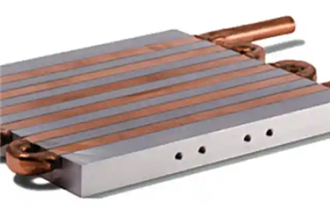
◆ Automotive powertrain housings – transmission cases, motor mounts, and EV battery heat sinks.
◆ Medical instrument bodies – surgical handpieces and imaging components with complex curved surfaces.
◆ Robotics and automation arms – lightweight yet rigid linkages and end‑effector mounts.
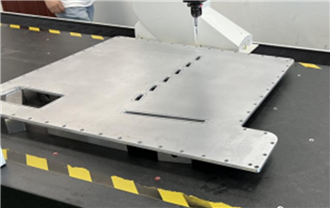
◆ Electronic enclosures – waveguide cavities and shielding cases with thin walls (<1 mm).
These parts demand not just 3‑axis milling, but often 5‑axis simultaneous machining to eliminate multiple setups and ensure geometric consistency—a capability that defines a high‑end China CNC machining factory, such as the one we operate at Start Precision.
Over years of processing thousands of aluminium alloy batches, our production team has distilled three core experiences:
◆ Chip evacuation: Aluminium tends to form long, stringy chips that wrap around tools. We apply high‑pressure through‑spindle coolant (70 bar) and specialised chip‑breaker geometries to break chips into manageable “C” or “6” shapes, reducing tool breakage and improving cycle time by 18‑22%.
◆ Tool material selection: While carbide tools are standard, we extensively use DLC‑coated micro‑grain carbide end mills for 7075‑T6. This coating reduces built‑up edge and extends tool life by 3× compared to uncoated tools, especially at higher cutting speeds.
◆ Surface finish strategy: To achieve Ra 0.4 µm or better, we combine high‑speed finishing passes with constant scallop height toolpaths, eliminating secondary polishing on most non‑sealing surfaces.
Aluminium alloy processing is not merely about cutting—it’s about preserving the material’s microstructure. Start Precision implements rigorous controls:
◆ Material certification: All incoming stock (e.g., 6061‑T651 plates) must meet ASTM B209 or AMS 4027, with mill test reports validating chemical composition and temper.
◆ Stress relief: For large thin‑wall parts, we perform thermal stress relief (180°C for 6 hours in a vacuum furnace) to minimise distortion after roughing, reducing warpage by up to 70%.
◆ Coolant management: We maintain a 6‑8% semi‑synthetic emulsion at pH 8.2‑8.8 to prevent galvanic corrosion, with daily titration checks.
◆ Residual stress measurement: Using X‑ray diffraction on critical samples, we verify that machining‑induced stresses stay within ±30 MPa, ensuring dimensional stability.
These practices align with aerospace quality standards like AS9100D, which we strictly follow.
The backbone of any capable China CNC machining factory is its machine park. Based on our precision equipment list, we deploy:
◆ 5‑axis machining centres with spindle speeds up to 24,000 rpm and positioning accuracy of ±4 µm – ideal for impellers, blisks, and free‑form surfaces.
◆ High‑speed linear‑motor mills with rapid traverse and 1.2 g acceleration – perfect for light‑cutting operations on thin‑walled components.
◆ EDM wire cutters capable of producing micro‑slots and intricate internal features down to 0.1 mm width.
All machines are equipped with real‑time tool condition monitoring and adaptive feed control, ensuring consistent quality across production runs. For detailed model specifications and additional equipment, please visit our equipment page.
A trustworthy China CNC machining factory operates under internationally recognised quality systems. Our facility holds ISO 9001:2015 and AS9100D (aerospace) certifications, with regular NADCAP audits for special processes like anodising and non‑destructive testing. We maintain a real‑time SPC dashboard on the shop floor, tracking CpK values for critical dimensions—over 98% of our production achieves CpK > 1.67.
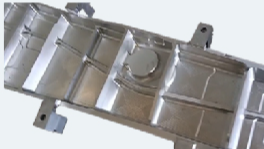
Recently, we partnered with a European UAV manufacturer to produce 200 sets of 7075‑T6 wing‑rib assemblies, each 450×120×25 mm with 18 cooling channels (∅3 mm) and 20 threaded holes (M4×0.7). The challenge: maintain flatness ≤0.02 mm across the entire rib. By applying our stress‑relief protocol and using a custom vacuum fixture, we achieved first‑article inspection pass with flatness of 0.015 mm. The entire batch was delivered three weeks ahead of schedule, reducing the client’s assembly time by 30% due to improved part consistency. Material properties of 7075 were cross‑checked with MatWeb data to validate our machining strategy.
Choosing the right China CNC machining factory for aluminium alloy projects is a strategic decision. It requires not only advanced multi‑axis equipment and skilled programmers but also deep metallurgical knowledge—from grain structure preservation to residual stress management. The combination of rigorous process controls, real‑time monitoring, and certified quality systems ensures that every part meets or exceeds design intent, whether for aerospace, automotive, or medical applications.
Contact us to discuss your long‑term manufacturing needs – we welcome challenging tolerances, complex geometries, and high‑mix/low‑volume orders. Let our engineering team propose a tailored solution for your next project.
Frequently Asked Questions (FAQ)
Q1: What aluminium alloys are best suited for CNC machining?
A: 6061‑T6 (general purpose), 7075‑T6 (high strength), and 2024‑T3 (fatigue‑resistant) are the most common. We also machine 5052 and 5083 for marine applications.
Q2: How do you prevent burr formation on thin‑wall aluminium parts?
A: We use climb milling with sharp micro‑grain tools, apply a light finishing pass (0.1‑0.2 mm radial), and often employ a cryogenic mist to stiffen the thin wall momentarily.
Q3: What is your typical lead time for prototype quantities?
A: For 1‑10 pieces, 5‑7 business days; for 100‑500 pieces, 2‑3 weeks, depending on complexity and surface treatment requirements.
Q4: Can you handle anodising or other post‑machining finishes?
A: Yes, we offer in‑house Type II (sulfuric) and Type III (hard coat) anodising, plus chromate conversion and powder coating, all under the same quality management system.
Q5: Do you provide material test reports and dimensional inspection certificates?
A: Absolutely. Every shipment includes a full inspection package, including CMM reports, material certs, and, upon request, first‑article inspection (FAI) per AS9102.
Add: Building 3No.277 Zhen'an Middle Road, Chang'an Town,Dongguan,Guangdong, China
Tel:+86-769-82855591
Copyright © 2019 All Rights Reserved Dongguan Start Precision Technology Co., Ltd. Tel: +86-769-82855591
Add: No. 277 Zhen'an Middle Road, Chang'an Town, Dongguan, Guangdong, China



 中文版
中文版 English