Precision Measurement of CNC Machining Parts: Techniques & Tools
Date:2026-02-15Article editor:Starting Point PrecisionViews:541In the realm of CNC machining, the difference between a successful part and scrap metal is often measured in microns. As industries like aerospace and medical devices demand tighter tolerances, the role of precision measurement has shifted from a final quality check to an integral part of the manufacturing process itself. This article explores the essential techniques and tools used to verify the dimensional accuracy of CNC machined parts.
The Philosophy: Cut, Probe, Cut
Traditionally, parts would be machined and then sent to a quality control room for inspection on a Coordinate Measuring Machine (CMM). While CMMs remain the gold standard for final validation, modern shops are moving toward a "cut-probe-cut" strategy. This technique involves machining a feature slightly under size, using a probing system to measure it while still on the machine, and then automatically adjusting tool offsets for the final finishing pass. This real-time feedback loop significantly reduces scrap rates and ensures process stability.
Key Measurement Tools in CNC Machining
1. Machine Tool Probes (In-Process Inspection)
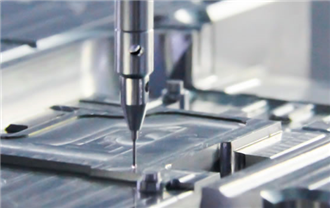
The most dynamic tool in precision measurement is the spindle-mounted probe. These devices transform a machining center into a measurement machine.
Touch-Trigger Probes: These are used for workpiece setup and feature measurement. High-accuracy variants utilize strain-gauge technology to minimize triggering errors caused by machine acceleration, offering unbeatable 3D measurement capability and repeatability as tight as 0.25 μm .
Scanning Probes: Utilizing technologies like SPRINT™, these probes can scan complex contours rapidly, providing high-density 3D data to verify form and surface condition.
2. Coordinate Measuring Machines (CMMs)
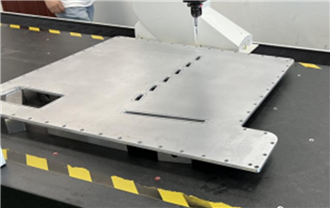
For off-line verification, CMMs provide the highest level of accuracy. Using tactile sensors (touch probes) or optical sensors (lasers), they meticulously map the geometry of a part. Research confirms that CMMs deliver exceptional consistency, with studies showing standard deviations below 0.0035 mm across various materials, making them indispensable for critical components.
3. Laser Tool Setters and Gauging Systems
Precision isn't just about the part; it's about the tool that makes the part. Next-generation blue laser tool setters offer repeatability of ±0.1 μm (2σ), allowing for high-speed detection of tool wear or breakage. Dual-method gauging systems also allow for rapid shop-floor verification of part dimensions without tying up a CMM.
Understanding Metrology Data
Collecting measurements is only half the battle. Modern software platforms connect data from probes, CMMs, and tool setters to provide a holistic view of the manufacturing process. By analyzing this data, manufacturers can identify sources of process variation—such as thermal growth or fixturing inconsistencies—and correct them at the source. Adherence to standards like ISO 2768 ensures that the interpretation of these measurements is consistent globally, defining acceptable limits for linear dimensions and geometric features like flatness and symmetry.
Conclusion
Precision measurement in CNC machining is an ecosystem of interconnected tools. By integrating in-process probing with high-accuracy offline verification, manufacturers can achieve the tight tolerances required for modern engineering, ensuring every part meets its design intent.
Add: Building 3No.277 Zhen'an Middle Road, Chang'an Town,Dongguan,Guangdong, China
Tel:+86-769-82855591
Copyright © 2019 All Rights Reserved Dongguan Start Precision Technology Co., Ltd. Tel: +86-769-82855591
Add: No. 277 Zhen'an Middle Road, Chang'an Town, Dongguan, Guangdong, China



 中文版
中文版 English