OEM CNC Turning Parts with Custom Specifications: Precision Engineering for Your Unique Needs
Date:2026-04-14Article editor:Starting Point PrecisionViews:428In today’s competitive manufacturing landscape, off-the-shelf components often fall short of meeting specific design requirements. That’s where OEM CNC turning parts with custom specifications come into play. These parts are machined using computer numerical control (CNC) lathes, allowing manufacturers to produce complex geometries with tight tolerances, exactly as you demand.
What Are OEM CNC Turning Parts?
OEM (Original Equipment Manufacturer) CNC turning parts are components produced for integration into larger assemblies, such as automotive systems, medical devices, aerospace structures, or industrial machinery. Unlike standard parts, custom-spec turning parts are engineered to your unique drawings – whether it’s a certain material, thread type, surface finish, or dimensional tolerance.
Why Choose Custom Specifications?
Custom specifications ensure that every part fits perfectly, functions reliably, and lasts longer. Key benefits include:
● Design freedom – Create non-standard shapes, internal bores, or eccentric features.
● Material optimization – Choose from stainless steel, aluminum, brass, titanium, engineering plastics, and more.
● Tight tolerances – Achieve ±0.005 mm or better, critical for high-stress applications.
● Reduced assembly costs – Integrate multiple features into one turned part.
The CNC Turning Process for Custom Parts
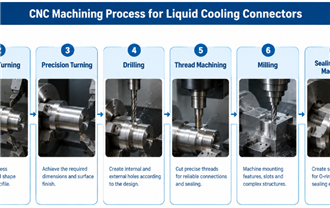
Modern CNC lathes use rotating workpieces and stationary cutting tools to remove material. For custom orders, the workflow includes:
1. CAD/CAM programming – Your 2D or 3D model is converted into machine code.
2. Toolpath simulation – Avoid collisions and optimize cycle time.
3. Live tooling & sub-spindles – Mill cross-holes, flats, or slots in one setup.
4. In-process inspection – Laser or probe checks ensure specs are met.
Quality Control Measures
Reputable OEM suppliers follow ISO 9001:2015 or AS9100D (aerospace) standards. Typical QC steps:
● First-article inspection (FAI) with CMM reports.
● Statistical process control (SPC) for high-volume runs.
● Surface roughness testing (Ra 0.4 μm achievable).
Applications Across Industries
● Automotive – Transmission shafts, sensor housings.
● Medical – Bone screws, surgical instrument handles.
● Robotics – Joint pins, actuator shafts.
● Energy – Valve bodies, connector nuts.
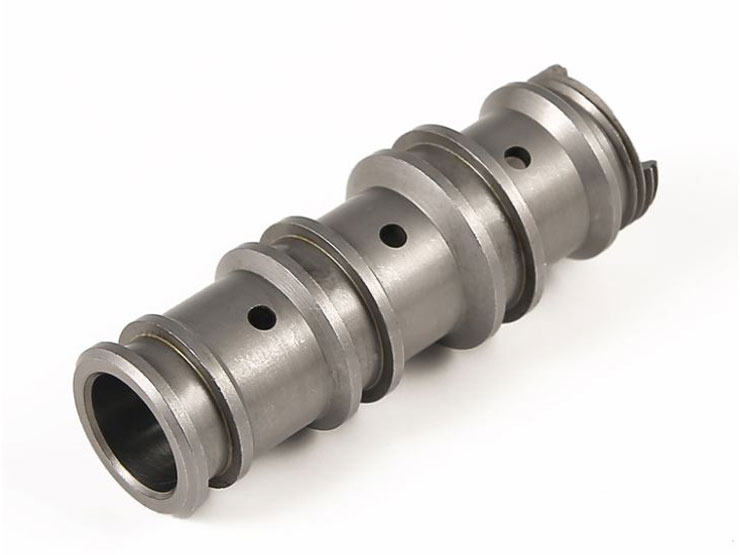
Example of custom CNC turned parts
How to Source OEM CNC Turning Parts with Custom Specs
When requesting a quote, provide:
● Material grade and hardness.
● Dimensional drawing with tolerances.
● Required surface finish (e.g., anodizing, passivation).
● Annual or order quantity.
A reliable partner will offer DFM (Design for Manufacturing) feedback to reduce costs. For a detailed guide on material selection, check out.
For technical standards on turning tolerances, refer to ISO 2768-1.
Conclusion
Investing in OEM CNC turning parts with custom specifications gives you full control over quality, performance, and lead times. Whether you need a prototype or high-volume production, modern CNC turning shops can deliver complex geometries with repeatability. Start by sharing your CAD file – and turn your design into reality.
Add: Building 3No.277 Zhen'an Middle Road, Chang'an Town,Dongguan,Guangdong, China
Tel:+86-769-82855591
Copyright © 2019 All Rights Reserved Dongguan Start Precision Technology Co., Ltd. Tel: +86-769-82855591
Add: No. 277 Zhen'an Middle Road, Chang'an Town, Dongguan, Guangdong, China



 中文版
中文版 English