Precision CNC Turning Parts Machining: Strict QC for High-Quality Turning Components
Date:2026-05-19Article editor:Starting Point PrecisionViews:421CNC turning precision parts machining requires extreme accuracy, consistent repeatability, and rigorous quality control. Manufacturers that prioritize strict QC ensure every precision turning component meets exact specifications, reducing defects and improving performance.This article explains how strict quality control enhances CNC turning parts, covering key processes, inspection methods, and why these measures matter for industries like aerospace, automotive, and medical devices.
Without strict QC, even minor deviations in CNC turning can lead to part failure. Precision turning components often have tolerances as tight as ±0.005 mm. Strict QC guarantees:
◆ Dimensional accuracy
◆ Surface finish quality
◆ Material integrity
◆ Repeatability across large batches
Strict quality control for CNC turning precision parts begins with
1. Incoming Material Inspection – every raw material batch (aluminum, stainless steel, brass, titanium, engineering plastics) is tested for chemical composition, hardness, and surface integrity using a spectrometer and hardness testers; only certified materials that meet ISO or ASTM standards enter production.
2. In‑Process Monitoring follows – modern CNC lathes equipped with automatic tool compensators, broken tool detectors, and real‑time laser sensors measure critical dimensions at predefined intervals (e.g., every 5–10 parts); operators also perform manual checks using calibrated digital calipers and micrometers to catch any deviation before it propagates.
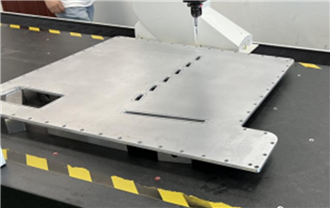
3.Final Inspection with Advanced Equipment completes the process – each batch undergoes 100% or statistically sampled verification using CMMs (coordinate measuring machines), optical comparators, and surface roughness testers; every precision turning component is compared against the engineering drawing with tolerance reports documented.
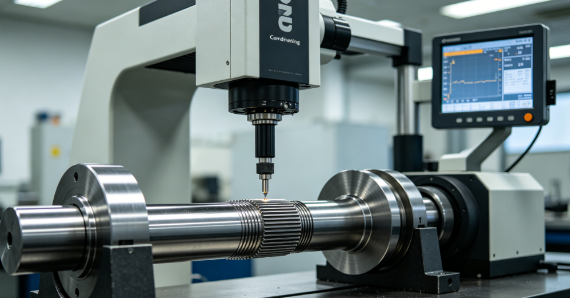
Figure: A CMM verifying multiple dimensions on a precision turning component
This three‑step QC chain ensures zero defects, consistent repeatability, and full traceability for every shipped part.
Benefits of Choosing a Supplier with Strict QC
| Benefit | Description |
|---|---|
| Zero defects | Eliminates non-conforming parts before shipping |
| Longer tool life | Consistent machining reduces tool wear |
| Lower costs | Less scrap and rework |
◆ Automotive: Engine shafts, bushings, connectors
◆ Medical: Surgical instrument handles, implantable pins
◆ Aerospace: Hydraulic fittings, landing gear parts
Precision CNC turning parts machining with strict QC delivers reliable, high-accuracy turning components. Always partner with manufacturers who document every inspection step and use calibrated equipment. This ensures your project meets design intent without compromise.
Q1: What materials can be used for CNC turning precision parts?
A1: Common materials include aluminum 6061, stainless steel 303/304, brass C360, titanium grade 5, and engineering plastics like PEEK or Acetal.
A2: We use digital calipers, micrometers, bore gauges, and CMMs. Typical turning tolerance is ±0.01 mm, with high-precision capability down to ±0.002 mm.
A3: Yes. Strict QC applies equally to prototype quantities (5–50 pcs) and mass production (10,000+ pcs). Sampling plans adjust based on order size.
A4: We supply inspection reports (FAIR – First Article Inspection Report), material certificates, and, upon request, SPC (Statistical Process Control) charts.
Add: Building 3No.277 Zhen'an Middle Road, Chang'an Town,Dongguan,Guangdong, China
Tel:+86-769-82855591
Copyright © 2019 All Rights Reserved Dongguan Start Precision Technology Co., Ltd. Tel: +86-769-82855591
Add: No. 277 Zhen'an Middle Road, Chang'an Town, Dongguan, Guangdong, China



 中文版
中文版 English