Low Volume Machining for Robotics & Automation: Precision Parts for Smart Systems
Date:2026-03-12Article editor:Starting Point PrecisionViews:488The robotics and automation industry demands components that are precise, durable, and often customized for specific applications. Unlike consumer products that may require millions of identical units, robotic systems frequently need low volume machining for specialized parts—whether for prototyping new designs, building custom end‑effectors, or producing limited runs of replacement components. This guide explores how low volume CNC machining supports innovation in robotics and automation, from material selection to quality assurance.
1. Why Robotics Relies on Low Volume Machining
Robotics engineers face unique challenges:
● Rapid iteration: New designs require multiple test cycles before finalization.
● Customization: Each robot cell may need unique grippers, mounts, or fixtures.
● Performance validation: Parts must be tested under real‑world conditions before committing to mass production.
Low volume machining bridges the gap between concept and deployment.
2. Critical Components Produced by Low Volume Machining
Typical robotic and automation parts made through precision machining include:
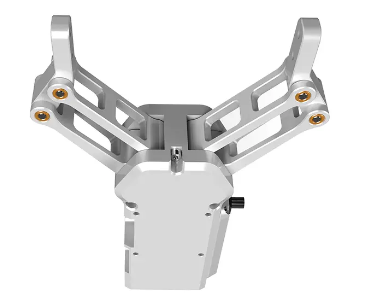
● End‑effector jaws and fingers – custom‑shaped grippers for handling specific parts.
● Sensor mounts and housings – precision brackets that ensure accurate sensor alignment.
● Joints and linkages – load‑bearing components requiring tight tolerances.
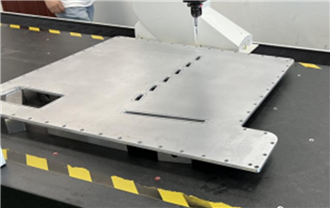
● Base plates and frames – rigid structures that maintain system stability.
3. Material Selection for Robotic Components
Material choice directly impacts robot performance, weight, and longevity:
● Aluminum 7075 – high strength‑to‑weight ratio for moving parts.
● Stainless Steel 316 – corrosion resistance for food‑grade or medical robotics.
● Titanium – exceptional strength and biocompatibility for advanced applications.
● Engineering Plastics (PEEK, Acetal) – lightweight, wear‑resistant, and electrically insulating.
For material property comparisons, visit MatWeb .
4. Machining Strategies for Complex Geometries
Robotics parts often feature intricate shapes that demand advanced machining techniques:
5‑Axis CNC Machining – produces complex contours and undercuts in a single setup.
Multi‑Fixture Milling – maintains tight tolerances across multiple part faces.
Turn‑Mill Centers – combine cylindrical and prismatic features efficiently.
For industry insights, Robotics Business Review offers valuable case studies.
5. Achieving Tight Tolerances for Precision Motion
Robotic systems rely on precise movement; component tolerances directly affect accuracy:
● Bearing fits – typically ±0.005 mm to ensure smooth rotation.
● Mounting interfaces – hole patterns must align perfectly with mating parts.
● Surface finish – critical for sliding surfaces and sealing areas.
6. Surface Treatments and Coatings
Robotic components often require surface enhancement to withstand harsh environments:
● Hard Anodizing – increases wear resistance for aluminum grippers.
● Electroless Nickel Plating – provides uniform corrosion protection.
● PTFE Impregnation – reduces friction on sliding surfaces.
External resources like Products Finishing cover the latest coating technologies.
Anodized aluminum robotic gripper
7. Quality Assurance for Critical Automation Parts
Reliability in automation demands rigorous inspection:
● CMM Inspection – verifies critical dimensions and geometric tolerances.
● Laser Scanning – compares entire part surfaces to CAD models.
● Hardness Testing – confirms material properties meet specifications.
Read our quality control protocols for detailed information. Industry standards are maintained by ASTM.
8. Benefits of Low Volume Machining for Robotics
● Speed: Prototype parts in days, not weeks—ideal for iterative design.
● Cost‑effectiveness: No expensive tooling; perfect for limited runs.
● Material flexibility: Test with production‑intended materials from the start.
● Scalability: Validate designs before committing to high‑volume production.
Conclusion
Low volume precision machining is the backbone of robotics and automation development. From custom grippers to structural frames, machined components enable engineers to build smarter, more reliable systems with confidence. By partnering with an experienced machining service and following best practices in design and material selection, you can accelerate your robotics projects from concept to reality.
Ready to machine parts for your next automation project? Contact our engineering team or request a quote through our machining services page.
Add: Building 3No.277 Zhen'an Middle Road, Chang'an Town,Dongguan,Guangdong, China
Tel:+86-769-82855591
Copyright © 2019 All Rights Reserved Dongguan Start Precision Technology Co., Ltd. Tel: +86-769-82855591
Add: No. 277 Zhen'an Middle Road, Chang'an Town, Dongguan, Guangdong, China



 中文版
中文版 English