Low Volume Precision Parts Machining for Complex Geometries
Date:2026-02-26Article editor:Starting Point PrecisionViews:553In the world of advanced manufacturing, complexity is no longer a barrier—it is an opportunity. As product designs become more sophisticated, the demand for low volume precision parts machining for complex geometries has surged. Engineers and innovators require components with intricate features, tight tolerances, and challenging shapes, all without the need for high-volume production runs. This is where specialized machining services excel, transforming digital designs into physical reality with unparalleled accuracy.
The Challenge of Complex Geometries
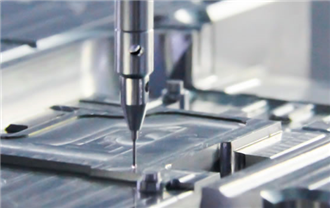
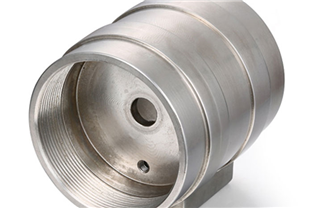
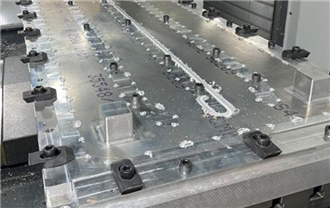
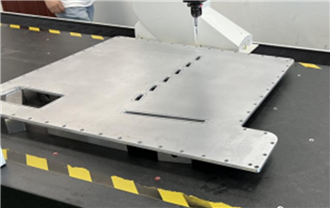
Complex geometries present unique manufacturing challenges. Features such as deep internal cavities, thin walls, undercuts, and non-standard contours require advanced machining strategies. Traditional high-volume methods like casting or injection molding often involve expensive tooling that is impractical for small batches. Low volume precision parts machining for complex geometries overcomes these obstacles by leveraging the flexibility of CNC technology. With five-axis machining centers, even the most intricate part designs can be produced efficiently.
The key lies in the ability to program tool paths that navigate tight spaces and maintain precision throughout the process. Skilled machinists combine their expertise with sophisticated software to ensure that every complex feature is executed exactly as designed. This makes low volume precision parts machining for complex geometries the preferred choice for industries pushing the boundaries of innovation.
Advanced Technology Enabling Precision
Achieving precision in complex parts requires state-of-the-art equipment. Five-axis CNC machines, for instance, allow tools to approach the workpiece from multiple angles without repositioning. This capability is essential for low volume precision parts machining for complex geometries, as it maintains accuracy while reducing setup time. Additionally, high-speed spindles and advanced tooling materials enable the machining of hardened steels and exotic alloys often specified for demanding applications.
Beyond hardware, software plays a critical role. CAD/CAM systems simulate machining operations before a single chip is cut, identifying potential collisions or tool deflection issues. This digital validation ensures that low volume precision parts machining for complex geometries proceeds smoothly, minimizing scrap and maximizing efficiency.
Material Considerations for Intricate Designs
Complex geometries often go hand-in-hand with demanding material requirements. Aerospace components may require titanium or Inconel, while medical implants might use cobalt-chrome or PEEK. Low volume precision parts machining for complex geometries must accommodate these materials while maintaining surface integrity and dimensional accuracy. Experienced machine shops understand the cutting parameters, tool selections, and cooling strategies necessary to machine difficult materials successfully.
The ability to work with a wide range of materials ensures that prototypes and low-volume production parts accurately represent the final product. This material authenticity is crucial for functional testing and validation, particularly when parts will face extreme conditions.
Applications Across Cutting-Edge Industries
The need for low volume precision parts machining for complex geometries spans numerous sectors. In aerospace, components like turbine blades and fuel system parts feature organic curves and tight internal passages. Medical device manufacturers require implants with porous structures for bone integration. The automotive racing industry demands lightweight suspension components with optimized geometries. Even the energy sector relies on machined parts for advanced drilling equipment.
Each of these applications benefits from the flexibility of low volume production. Engineers can refine designs through multiple iterations without the cost penalty of traditional tooling. This iterative capability accelerates development cycles and leads to better-performing products.
Quality Assurance for Critical Components
When parts feature complex geometries, verification becomes as important as production. Coordinate measuring machines (CMM), optical scanners, and surface testers confirm that every dimension meets specifications. Low volume precision parts machining for complex geometries includes rigorous inspection protocols to ensure that even the most challenging features are correct. Detailed inspection reports provide traceability and confidence, particularly for regulated industries.
Conclusion
The evolution of product design demands manufacturing solutions that can keep pace. Low volume precision parts machining for complex geometries delivers the precision, flexibility, and material expertise needed to bring ambitious concepts to life. By combining advanced machinery with skilled craftsmanship, manufacturers enable innovation across industries.
If your next design pushes the boundaries of geometry and precision, trust the experts in low volume machining to make it a reality.Please contact our engineers to discuss your complex project.
Add: Building 3No.277 Zhen'an Middle Road, Chang'an Town,Dongguan,Guangdong, China
Tel:+86-769-82855591
Copyright © 2019 All Rights Reserved Dongguan Start Precision Technology Co., Ltd. Tel: +86-769-82855591
Add: No. 277 Zhen'an Middle Road, Chang'an Town, Dongguan, Guangdong, China



 中文版
中文版 English