Steel Turned Parts with Blackening Treatment
Date:2026-08-08Article editor:Starting Point PrecisionViews:208In modern manufacturing, achieving both durability and aesthetic consistency in Steel Turned Parts requires careful selection of surface finishing processes. Among various options, blackening treatment (alkaline black oxide) has emerged as a reliable solution for enhancing corrosion resistance while maintaining dimensional precision.
Alkaline blackening, also known as hot black oxide coating, is a chemical conversion process that creates a magnetite (Fe₃O₄) layer on the surface of Steel Turned Parts. The process involves immersing components in a boiling alkaline salt solution containing oxidizing agents, typically at temperatures between 135‑155°C.
| Parameter | Specification | Impact on Quality |
| Bath Temperature | 135‑155°C | Affects coating thickness and adhesion |
| Immersion Time | 15‑45 minutes | Determines oxide layer density |
| pH Level | 5.5‑6.5 | Critical for uniform blackening |
| Rinsing Sequence | 3‑stage counterflow | Prevents contaminant residue |
| Sealing Oil | Rust‑preventive oil | Enhances corrosion resistance |
Independent laboratory tests confirm that properly blackened Steel Turned Parts consistently pass 48 hours of neutral salt spray testing (ASTM B117) without red rust formation. This performance is achieved through:
● Dense oxide layer: 0.8‑1.5 μm thickness with micro‑porosity that retains sealing oil
● Post‑treatment sealing: Application of water‑displacing oils that penetrate the porous surface
● Controlled process parameters: Strict monitoring of bath chemistry and temperature
Important: Salt spray results are highly dependent on surface preparation. Parts must be thoroughly degreased and activated before blackening.
Quality blackening treatment must meet strict aesthetic and functional criteria:
Appearance Standards:
● Uniform deep black color (no brownish or reddish tint)
● No visible scratches, pits, or burn marks from the process
● Consistent gloss level across all surfaces
● No white residue after rinsing
Dimensional Integrity:
● Maximum thickness change: ±0.005 mm
● Thread tolerances must remain within class 6H specification
● No hydrogen embrittlement (unlike electroplating)
| Characteristic | Alkaline Blackening | Electroplating (Zinc/Nickel) | Dacromet® Coating |
| Corrosion Resistance | Moderate (48‑72 h salt spray) | High (200‑500+ h) | Very High (500‑1000+ h) |
| Dimensional Change | Minimal (<0.005 mm) | Moderate (0.01‑0.03 mm) | Moderate (0.01‑0.02 mm) |
| Process Temperature | 135‑155°C | Ambient | 300‑350°C (curing) |
| Hydrogen Embrittlement Risk | None | High (requires baking) | None |
| Cost | Low (economical) | Medium | High |
| Typical Applications | Automotive fasteners, tools | Outdoor hardware | Heavy‑duty fasteners |
When to Choose Each Option:
● Blackening: Ideal for Steel Turned Parts requiring minimal dimensional change, matte aesthetic, and moderate corrosion protection (indoor applications, tools, automotive interior components).
● Electroplating: Selected when high corrosion resistance and decorative finish are needed (exterior automotive parts, consumer goods).
● Dacromet: Preferred for heavy‑duty applications requiring extreme corrosion protection and resistance to hydrogen embrittlement (structural bolts, suspension components).
To ensure consistent results, at Start Precision we implement stringent quality checks:
● Visual Inspection: 100% inspection under controlled lighting (750 lux minimum)
● Adhesion Test: Cross‑hatch tape test per ASTM D3359 (must achieve 5B rating)
● Salt Spray Testing: Weekly batch verification per ASTM B117
● Thickness Measurement: Random sampling using eddy‑current gauges
● Dimensional Verification: CMM inspection of critical features before and after treatment
A leading automotive tier‑1 supplier recently replaced zinc‑nickel plating with blackening treatment for their steering column Steel Turned Parts. The decision was based on:
● Dimensional stability: Eliminated rework costs from plating buildup on critical threads
● Cost savings: 30 % reduction in per‑part finishing cost
● Performance: Successfully passed the required 48‑hour salt spray test
● Environmental compliance: Reduced hazardous waste disposal costs
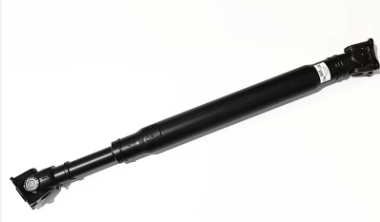
This real‑world case demonstrates that when dimensional accuracy and moderate corrosion resistance are the primary drivers, alkaline blackening offers a superior cost‑benefit ratio compared to electroplating or Dacromet.
Alkaline blackening offers a compelling balance of performance and cost for Steel Turned Parts requiring moderate corrosion resistance and strict dimensional control. When the 48‑hour salt spray requirement is adequate, this process often outshines electroplating and Dacromet in terms of cost‑effectiveness and process simplicity. For components where dimensional accuracy is paramount, blackening remains the preferred choice. However, engineers should carefully evaluate application conditions—especially exposure to chlorides or extreme humidity—before finalizing the specification.
For more insights on high‑precision manufacturing, explore our precision turned parts capabilities or visit our homepage.
Contact us to discuss your manufacturing requirements and discover how our technical expertise can optimize your component finishing processes.
Q1: What is the typical thickness of black oxide coating on Steel Turned Parts?
A: The oxide layer typically ranges from 0.8 to 1.5 micrometres. This minimal thickness ensures that dimensional changes are negligible—usually under 0.005 mm.
Q2: Can blackened Steel Turned Parts achieve 96 hours of salt spray resistance?
A: While standard blackening typically provides 48‑72 hours, specialised sealing processes can extend this to 96 hours. However, for longer requirements, we recommend alternative coatings like zinc‑nickel plating.
Q3: Is blackening suitable for stainless steel parts?
A: Standard alkaline blackening is designed for carbon and low‑alloy steels. Stainless steel requires a different passivation or specialised blackening process. Contact our engineering team for specific material recommendations.
Q4: How does blackening affect surface hardness?
A: Blackening is a conversion coating and does not significantly alter surface hardness. The base material hardness remains unchanged. Any perceived increase is due to the oxide layer's ceramic‑like nature.
Q5: Can I perform touch‑up or repair on blackened parts?
A: Yes, minor scratches can be touched up using commercial blackening touch‑up pens. However, this is a cosmetic remedy and does not restore full corrosion resistance. Affected parts should be re‑processed for critical applications.
Add: Building 3No.277 Zhen'an Middle Road, Chang'an Town,Dongguan,Guangdong, China
Tel:+86-769-82855591
Copyright © 2019 All Rights Reserved Dongguan Start Precision Technology Co., Ltd. Tel: +86-769-82855591
Add: No. 277 Zhen'an Middle Road, Chang'an Town, Dongguan, Guangdong, China



 中文版
中文版 English