Custom CNC Machining Parts for Robot Arms | Lightweight Solutions
Date:2026-06-09Article editor:Starting Point PrecisionViews:319Reducing the moving mass of a robot arm directly boosts speed, precision, and energy efficiency. Achieving this without sacrificing structural integrity requires a deliberate lightweight solution built on advanced materials and precision manufacturing. Our custom CNC machining parts integrate aerospace-grade aluminum and carbon fiber composites to deliver assembled components that set new performance benchmarks. As a specialized robotics CNC machining provider, we help engineers eliminate compromise and shorten the path from design to deployment.
The performance ceiling of any robot arm is largely defined by its material matrix. We machine 7075-T6 and 6061-T6 aluminum for their exceptional strength-to-weight ratio and natural corrosion resistance. Verified ASM material property data confirms tensile strengths exceeding 500 MPa while remaining roughly one-third the weight of equivalent steel components. For links and elongated structures where deflection must be near zero, we use unidirectional carbon fiber reinforced polymer (CFRP). Authoritative composite research documents tensile moduli above 230 GPa at a density of only 1.6 g/cm³. By joining these two materials through precision machining, we create a hybrid architecture that is impossible to achieve with off-the-shelf metal parts. See a finished carbon fiber link with machined aluminum end fittings.

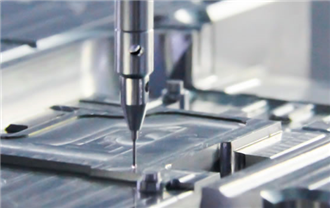
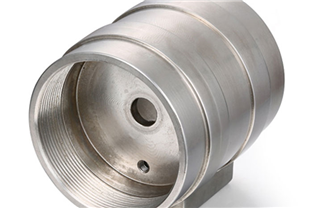
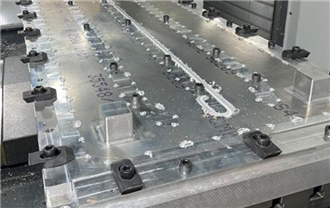
Transforming raw stock into mission-critical robot arm components demands equipment and process discipline. Our aluminum workflow relies on high-speed 3-axis and 5-axis CNC machining centers , routinely holding tolerances within ±0.01 mm on complex joint housings and end-effector mounts. We protect wear surfaces with hard anodizing, increasing hardness without adding measurable weight.
Carbon fiber machining requires entirely separate protocols to prevent delamination and fiber pull-out. Our dedicated CFRP machining cells use diamond-coated tooling, trochoidal milling strategies, and vacuum-assisted fixturing—all supported by closed-loop dust extraction. Every hybrid assembly is validated through in-house structural pull and fatigue testing, ensuring that the bond between aluminum inserts and carbon fiber tubes meets design loads.
A complete lightweight robot arm starts with a kit of our custom CNC machining parts, each engineered for a specific function. The structure is broken down clearly below:
◆ Base joint housing – Precision-machined from a solid aluminum forging, this part delivers a rigid foundation with the accurate bearing bores required for smooth joint rotation.
◆ Carbon fiber arm linkages – Tubular composite structures that drastically reduce moving inertia while maintaining outstanding stiffness.
◆ Aluminum adapter plates and wrist brackets – Provide a stiff, fully machinable interface for mounting grippers, sensors, and tool changers, ensuring precise alignment at the arm’s tooling end.
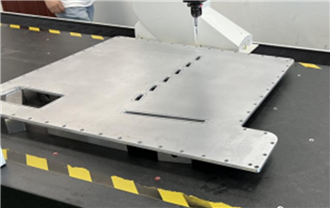
Every part we ship carries a serialized inspection record. In-process CMM probing, laser scanning, and surface profilometry feed into a digital quality dossier. A representative CMM inspection report demonstrates the level of detail we capture. Carbon fiber components additionally undergo ultrasonic testing to verify laminate integrity. Our quality system references SAE aerospace material specifications and ASTM composite standards . Final finishes—including Type III hard anodizing for aluminum and UV-blocking clear coats for carbon fiber—are applied in our controlled finishing center.
From a single prototype joint to a complete low-volume production run, our lightweight CNC machining solutions give your robotic systems a measurable advantage. Submit your drawings for a quote and start building lighter, faster arms today.
1. What makes aluminum and carbon fiber the preferred lightweight solution for robot arms?
Aluminum provides an easily machinable, corrosion-resistant base for complex joint geometry, while carbon fiber offers extreme specific stiffness that reduces structural weight and vibration in moving links.
2. How do you hold tight tolerances on carbon fiber parts?
We use diamond-coated cutters, optimized trochoidal toolpaths, and vacuum workholding. Typical post-cure tolerances are ±0.010″ (±0.25 mm), with achievable feature tolerances depending on laminate design.
3. Can you handle both adhesive bonding and mechanical assembly of hybrid parts?
Yes. Our facility manages adhesive bonding, threaded insert installation, and full sub-assembly, delivering robot arm sections ready for final integration.
4. Do you support prototype iterations before committing to production?
Absolutely. We offer rapid CNC prototyping with full Design for Manufacturability feedback, letting you validate form, fit, and function early in the development cycle.
5. How do you prevent carbon fiber dust from contaminating aluminum machining operations?
All composite machining is performed in physically separated, negatively pressurized cells with high-efficiency particulate extraction, eliminating cross-contamination risk.
Add: Building 3No.277 Zhen'an Middle Road, Chang'an Town,Dongguan,Guangdong, China
Tel:+86-769-82855591
Copyright © 2019 All Rights Reserved Dongguan Start Precision Technology Co., Ltd. Tel: +86-769-82855591
Add: No. 277 Zhen'an Middle Road, Chang'an Town, Dongguan, Guangdong, China



 中文版
中文版 English