Advanced 5 Axis Precision Machining | Complex Parts Made Easy
Date:2026-02-23Article editor:Starting Point PrecisionViews:591In the evolving landscape of modern manufacturing, the ability to produce intricate components efficiently separates industry leaders from the rest. Advanced 5 axis precision machining has emerged as the definitive solution for engineers and designers who demand complexity without compromise. By moving a part or a cutting tool across five different axes simultaneously, this technology transcends the limitations of conventional 3-axis machining, turning theoretically difficult geometries into readily achievable realities.
The Mechanics Behind the Magic
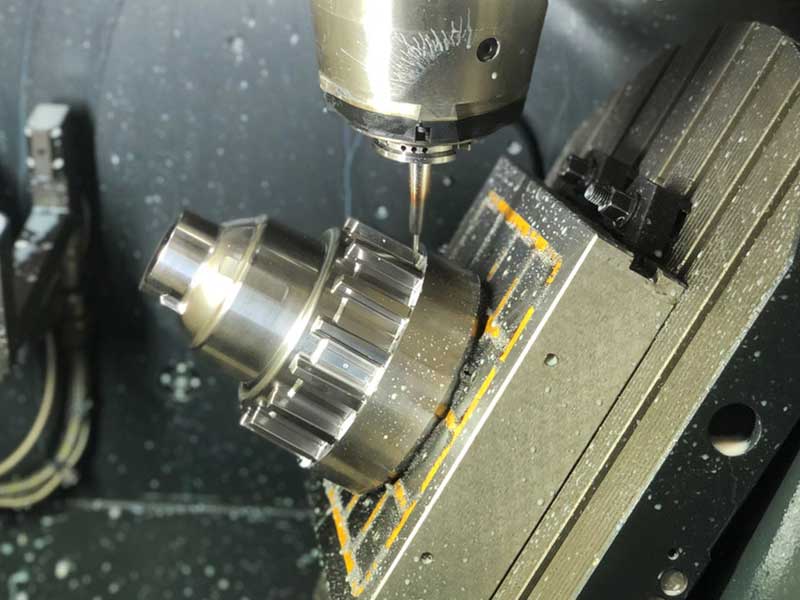
Traditional machining operates on three linear axes (X, Y, and Z). While effective for simple prismatic shapes, it often requires multiple setups and complex fixtures to create features like undercuts, angled holes, or contoured surfaces. Advanced 5 axis precision machining introduces two rotational axes (A and B), allowing the cutting tool to maintain a tangential orientation to the cutting surface at all times.
This capability offers three distinct mechanical advantages:
Improved Tool Life: By keeping the tool tilted, you utilize the most effective cutting edge, reducing heat buildup and wear.
Superior Surface Finishes: Shorter, more rigid tool setups minimize chatter, resulting in smoother finishes that often eliminate the need for secondary polishing.
Geometric Freedom: You can machine complex aerospace blisks, medical implants, and intricate mold cavities in a single setup, holding tolerances that would be impossible to achieve through manual repositioning.
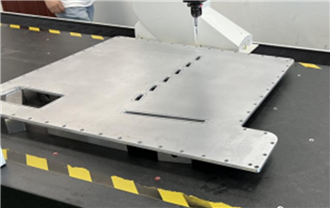
To see how our machinery handles these complex maneuvers, view our 5-axis work cell in action :
Software: The Brain Behind the Brawn
Hardware is only half the equation. The "easiness" promised in making complex parts comes from advanced CAM (Computer-Aided Manufacturing) software. Modern simulation tools allow programmers to visualize the entire machining process before a chip is ever cut. They can detect collisions, optimize tool paths for efficiency, and simulate material removal to ensure the final part matches the digital twin.
At the core of this digital workflow is the post-processor—a specialized translator that converts CAM toolpaths into specific G-code that our machines understand. Investing in robust software integration is what allows us to promise rapid turnaround times on complicated projects.
Key Applications Across Industries
The demand for advanced 5 axis precision machining is driven by sectors where weight reduction and strength are critical:
Aerospace: Manufacturing structural components from solid titanium billets reduces weight compared to assembled parts while increasing strength. The ability to machine thin walls and complex cooling channels is essential here.
Medical: Creating patient-specific implants from cobalt-chrome or titanium requires the flexibility that only multi-axis machining provides.
Energy: Turbine blades for power generation feature twisted airfoils that must be machined to exacting standards to maximize efficiency.
For a deeper look at material selection for these industries, standards provided by organizations like the American Society of Mechanical Engineers (ASME) offer valuable guidelines on tolerances and design practices.
Overcoming the Challenges of Complexity
While 5-axis machining makes complex parts "easy," it requires a strategic approach to fixture design. Because parts are moved in space, workholding must be incredibly secure yet non-obtrusive. Custom soft jaws and vacuum chucks are often employed to hold parts without interfering with the tool path.
Furthermore, simulation isn't just about the toolpath. We utilize thermal compensation strategies to account for heat expansion during long production runs, ensuring that the final dimensions match the morning's first-piece inspection, even hours later. This commitment to thermal stability is part of our quality assurance protocol.
The Future of Complex Manufacturing
As we move deeper into Industry 4.0, advanced 5 axis precision machining is becoming smarter. In-process probing allows machines to measure features mid-cycle and automatically adjust for tool wear, a concept known as adaptive machining. This closed-loop system guarantees that every part in a batch meets the high tolerance requirements, regardless of external variables.
Additionally, the integration of additive manufacturing with 5-axis subtractive techniques (hybrid manufacturing) allows for the creation of near-net shapes that are then finished to high tolerances. This reduces material waste significantly—a critical factor when working with expensive alloys like Inconel or titanium.
Conclusion
The phrase "Complex Parts Made Easy" is not just a tagline for this technology; it is the reality of modern CNC machining. By leveraging the full range of motion offered by 5-axis centers, combined with sophisticated software and rigorous quality control, manufacturers can push the boundaries of design. Whether you are prototyping a new medical device or scaling up production for an aerospace contract, embracing advanced 5 axis precision machining is the key to unlocking innovation.
Ready to discuss your complex project? Contact our engineering team to see how we can simplify your manufacturing challenges .
Add: Building 3No.277 Zhen'an Middle Road, Chang'an Town,Dongguan,Guangdong, China
Tel:+86-769-82855591
Copyright © 2019 All Rights Reserved Dongguan Start Precision Technology Co., Ltd. Tel: +86-769-82855591
Add: No. 277 Zhen'an Middle Road, Chang'an Town, Dongguan, Guangdong, China



 中文版
中文版 English