DFM for Five-axis Precision Machining Technology: Design Tips
Date:2026-02-23Article editor:Starting Point PrecisionViews:574Design for Manufacturing (DFM) is critical in five-axis precision machining, where complex geometries and tight tolerances demand careful planning. Implementing DFM principles early in the design phase can significantly reduce production costs, shorten lead times, and improve part quality. Here are essential design tips to optimize parts for five-axis machining.
1. Prioritize Tool Accessibility and Clearance
Five-axis machines excel at accessing complex features, but designers must still ensure that cutting tools can reach all surfaces without interference. Avoid deep, narrow cavities with sharp internal corners, as these may require specialized long-reach tools that are prone to deflection. Instead, design with generous fillet radii and tapered walls to accommodate standard tooling. Adequate clearance also reduces the need for multiple setups, a key advantage of five-axis technology.
2. Optimize Workpiece Orientation and Fixturing
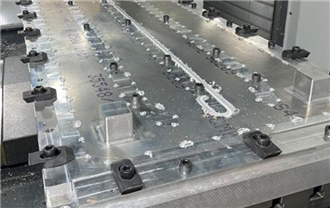
The ability to tilt the workpiece or spindle allows machining of multiple faces in a single setup, but fixture design must support this flexibility. Consider incorporating integral clamping features or datum surfaces that remain accessible throughout the process. Minimize overhangs and unsupported sections to prevent vibration during high-speed cutting. A well-designed fixture enhances rigidity and accuracy.
3. Specify Tolerances Wisely
While five-axis machines achieve high precision, overly tight tolerances increase machining time and cost. Use the coarsest tolerances that still meet functional requirements, especially for non-critical surfaces. For critical features, ensure they are oriented to take advantage of the machine’s best axes. Remember that thermal stability and material properties affect final dimensions.
4. Design for Efficient Chip Evacuation
Chip buildup can mar surface finish and cause tool breakage. Design parts with features that allow chips to fall away freely, such as avoiding blind pockets where swarf can accumulate. Consider adding angled surfaces or through-holes to aid chip flow. In five-axis machining, the ability to tilt the tool often improves chip removal compared to three-axis methods.
5. Consider Material Selection and Stock Size
Choose materials with good machinability for five-axis processes, especially for complex prototypes. Also, standardize stock sizes to minimize preparation time. Large, near-net-shape blanks reduce roughing passes and material waste, but ensure they fit within the machine’s work envelope.
6. Collaborate with Machinists Early
DFM is most effective when designers communicate with manufacturing engineers. They can provide insights on machine-specific constraints, such as maximum spindle speed or tool magazine capacity. Early collaboration prevents costly redesigns and ensures your design leverages the full potential of five-axis technology.
By applying these DFM tips, you can achieve high-precision results efficiently.If your design team has any questions, please feel free to contact our team of manufacturing engineers. We are committed to providing you with excellent service.
Add: Building 3No.277 Zhen'an Middle Road, Chang'an Town,Dongguan,Guangdong, China
Tel:+86-769-82855591
Copyright © 2019 All Rights Reserved Dongguan Start Precision Technology Co., Ltd. Tel: +86-769-82855591
Add: No. 277 Zhen'an Middle Road, Chang'an Town, Dongguan, Guangdong, China



 中文版
中文版 English