Custom Liquid Cooling Connector Machining Services for Thermal Systems
Date:2026-09-10Article editor:Starting Point PrecisionViews:121Liquid cooling systems depend on connectors that can maintain accurate fluid paths, reliable sealing, and stable mechanical connections. Custom Liquid Cooling Connector Machining Services are therefore essential for applications where dimensional accuracy, surface quality, and leak prevention directly affect thermal performance.
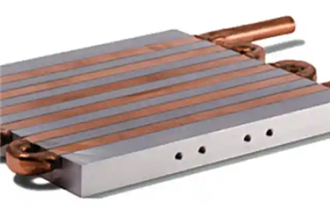
Liquid cooling connectors may be used in data centers, power electronics, battery systems, industrial equipment, and other high-density thermal management applications. NASA research has also demonstrated the importance of reliable liquid-loop connector interfaces in thermal control systems.
Key Requirements for Liquid Cooling Connectors
A custom connector should be designed around both mechanical and fluid-flow requirements:
● Dimensional accuracy: Precise threads, bores, shoulders, and mating surfaces support reliable assembly.
For reference, NASA technical documentation highlights sealing and leakage considerations in liquid-cooling connector applications.
CNC Machining Process
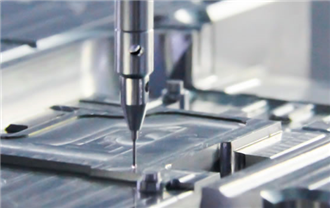
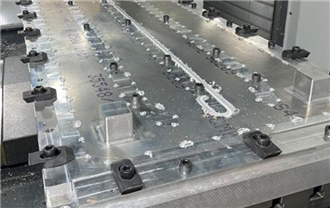
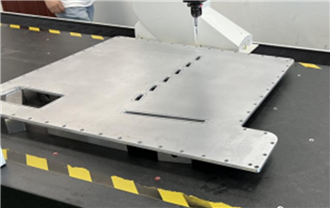
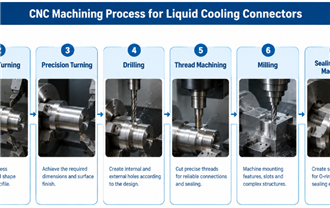
Professional Custom Liquid Cooling Connector Machining Services typically combine turning, milling, drilling, threading, deburring, and inspection.
Typical workflow:
1. Engineering review – Analyze 2D drawings, 3D models, tolerance requirements, threads, and sealing structures.
2. Material preparation – Select and prepare the specified metal alloy.
3. CNC turning – Produce cylindrical bodies, bores, grooves, and threaded features.
4. CNC milling – Machine flats, mounting features, ports, and complex external geometries.
5. Deburring and finishing – Remove sharp edges and improve critical contact surfaces.
6. Precision inspection – Verify dimensions, geometry, and critical tolerances before shipment.
7. Final quality control – Confirm the finished parts meet drawing and application requirements.
Equipment & Precision Capability
| Equipment | Model | Suitable Process |
| Five-axis machining center | DMG HSC 75 linear | Complex features |
| Vertical Machining Center | DMG DMC 835V | CNC milling |
| Vertical Machining Center | Mazak VCN-510C | Precision milling |
| CNC Turning Center | DMG CTX beta 800 | Connector bodies |
| CNC Turning Center | TAKZAWA NEX-108 | Turning & threading |
These models and quantities are listed in the company's published precision equipment list.
Quality Inspection
Liquid cooling connectors often contain multiple critical interfaces. Inspection should therefore focus on:
● Bore and outer diameter accuracy
● Thread dimensions
● Concentricity
● Sealing-groove geometry
● Surface condition
● Overall dimensional conformity
Start Precision lists ZEISS CONTURA, HEXAGON GLOBAL, HEXAGON Optiv, Mitutoyo, TESA, and other inspection equipment for dimensional quality control.
Example: Custom Cooling Connector
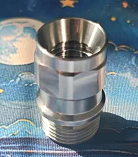
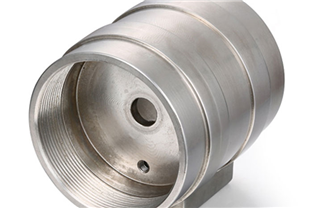
Consider a custom aluminum connector designed for a liquid-cooled electronic assembly. The component may require a precision-machined internal coolant passage, threaded inlet and outlet ports, an O-ring groove, and mounting flats.
A suitable machining strategy can combine CNC turning for the cylindrical body and threaded features with CNC milling for mounting surfaces. After deburring and dimensional inspection, the connector can be integrated into the cooling loop. Proper control of the sealing geometry helps support dependable fluid containment during operation.
For demanding thermal-management applications, custom machining allows connector geometry to be adapted to the available installation space rather than relying solely on standard fittings.
Why Choose Custom Machining?
Custom manufacturing provides greater flexibility when standard connectors cannot satisfy specific requirements. It can support:
● Prototype development
● Low-volume production
● Customized port configurations
● Complex connector geometries
● Material-specific machining
● Engineering changes and product optimization
For custom precision machining capabilities, visit Start Precision's official website. Its published process portfolio includes five-axis machining, CNC milling, turning and grinding, EDM, and quality assurance.
Certifications and Manufacturing Assurance
Quality management is particularly important for connectors used in demanding thermal systems. Start Precision hold IATF 16949, ISO 9001:2015, and ISO 13485:2016 certifications.
Conclusion
Reliable liquid cooling depends on more than coolant selection. Connector geometry, machining accuracy, sealing surfaces, material selection, and inspection all contribute to system reliability. Custom Liquid Cooling Connector Machining Services provide a practical route for developing precision connectors tailored to specific thermal-management requirements.
For professional manufacturing support, contact us to discuss your manufacturing requirements, including drawings, materials, tolerances, quantities, and application requirements.
1. What materials are suitable for liquid cooling connectors?
Common choices include aluminum alloys, stainless steel, copper alloys, and other materials selected according to coolant compatibility, strength, corrosion resistance, and thermal requirements.
2. Can custom connectors include different thread types?
Yes. CNC machining can produce various internal and external thread configurations according to engineering drawings and mating-component requirements.
3. Why is precision important for liquid cooling connectors?
Precision controls the fit between mating components and helps maintain accurate sealing interfaces, coolant passages, and mechanical connections.
4. Can custom machining support prototype quantities?
Yes. CNC machining is suitable for prototypes, engineering samples, small batches, and larger production runs.
5. What information is needed for a machining quotation?
Typically, manufacturers need a 2D drawing or 3D CAD file, material specification, tolerances, surface-finish requirements, quantity, and any special inspection or testing requirements
Add: Building 3No.277 Zhen'an Middle Road, Chang'an Town,Dongguan,Guangdong, China
Tel:+86-769-82855591
Copyright © 2019 All Rights Reserved Dongguan Start Precision Technology Co., Ltd. Tel: +86-769-82855591
Add: No. 277 Zhen'an Middle Road, Chang'an Town, Dongguan, Guangdong, China



 中文版
中文版 English