Liquid Cold Plate Machining for Data Center Cooling
Date:2026-09-09Article editor:Starting Point PrecisionViews:133As AI servers, GPUs, and high-performance computing systems generate increasing heat loads, traditional air cooling faces growing limitations. Direct-to-chip liquid cooling uses cold plates to transfer heat from processors into a circulating coolant, making precision manufacturing essential for thermal performance and system reliability.
Why Liquid Cold Plate Machining Matters
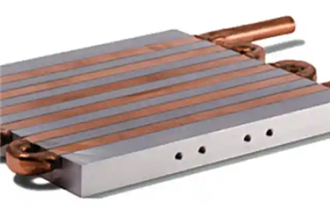
A liquid cold plate is more than a machined aluminum or copper block. Its internal channels, inlet/outlet ports, sealing surfaces, mounting features, and thermal interface must work as one system.
Professional Liquid Cold Plate Machining helps achieve:
● Precise coolant channels: Consistent channel geometry supports predictable flow.
● Tight dimensional control: Critical mounting and interface dimensions reduce assembly problems.
● Efficient heat transfer: Optimized channel layouts increase contact between coolant and heat-generating areas.
● Leak-resistant construction: Accurate sealing grooves and controlled joining processes reduce leakage risks.
● Controlled surface finish: Smooth thermal interfaces improve contact with CPUs, GPUs, and heat sources.
ASHRAE notes that cold plates have specific requirements for temperature, flow, pressure drop, material compatibility, and cleanliness.
Typical Cold Plate Machining Process
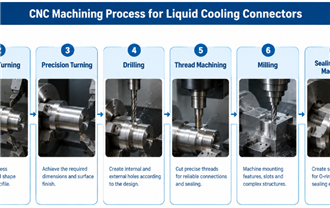
1. Material Selection → 2. CNC Roughing → 3. Channel Milling → 4. Port Machining → 5. Finishing → 6. Cleaning → 7. Leak Testing → 8. Dimensional Inspection
Aluminum alloys are widely considered when weight and manufacturability are important, while copper can be selected when higher thermal conductivity is required. Channel dimensions, remaining wall thickness, coolant compatibility, and joining method should be determined from the thermal and hydraulic design.
Equipment & Manufacturing Capability
| Equipment | Model | Typical Application |
| Five-axis machining center | DMG HSC 75 linear | Complex surfaces and multi-angle features |
| Vertical Machining Center | DMG DMC 835V | Precision milling |
| Vertical Machining Center | Mazak VCN-510C | Channel and pocket machining |
| Horizontal Machining Center | HAAS EC400 | Multi-face processing |
These models and quantities are listed in the company's current Precision equipment list.
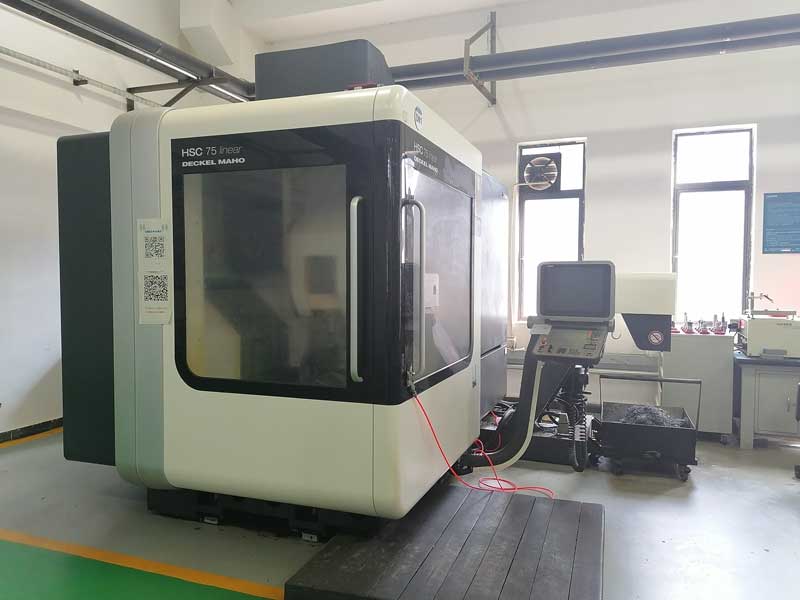
DMG HSC 75 linear equipment photo
Quality Control for Data Center Cold Plates
Quality inspection should cover both geometry and fluid integrity. Typical controls include:
● Dimensional inspection: Overall dimensions, channel locations, mounting holes, and sealing grooves.
● Flatness inspection: Thermal interface surfaces should meet the engineering drawing requirements.
● Surface inspection: Check machining marks, burrs, contamination, and potential defects.
● Leak testing: Verify the coolant circuit before shipment.
● Cleanliness control: Remove machining chips, cutting fluid, and particles from internal channels.
For more information on inspection practices, see the CNC Machining Parts Inspection Checklist.
Manufacturing Example
Consider an aluminum cold plate designed for a high-density server processor. The manufacturing route can begin with CNC roughing, followed by precision milling of serpentine or parallel coolant channels. Port holes and sealing grooves are then machined according to the assembly drawing. After deburring and cleaning, the part undergoes dimensional inspection and leak testing before final delivery.
The key objective is not simply to produce a visually accurate plate, but to maintain the designed coolant path, thermal contact surface, sealing performance, and assembly relationship. Research has demonstrated the effectiveness of direct-to-chip liquid cooling for high-heat-density data center applications.
Reliable Precision Manufacturing Support
For custom Liquid Cold Plate Machining, engineering communication is critical from prototype development through repeat production. Start Precision provides access to precision machining, CNC milling, five-axis machining, and quality assurance capabilities.
Certification references: Start Precision Certificate Page
The published certificate page displays ISO 9001:2015, ISO 13485:2016, and IATF 16949 certification documents.
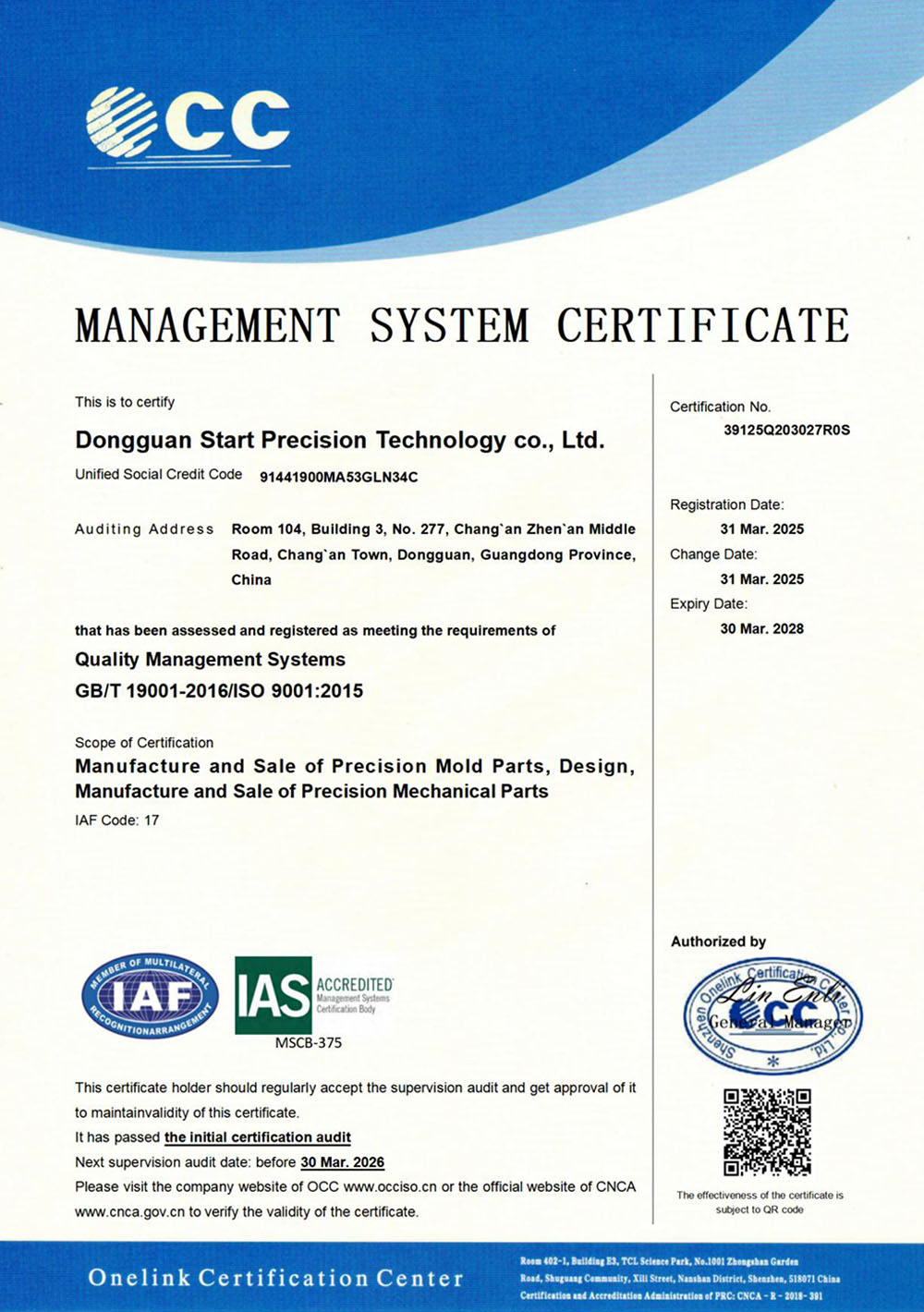
ISO 9001 certificate 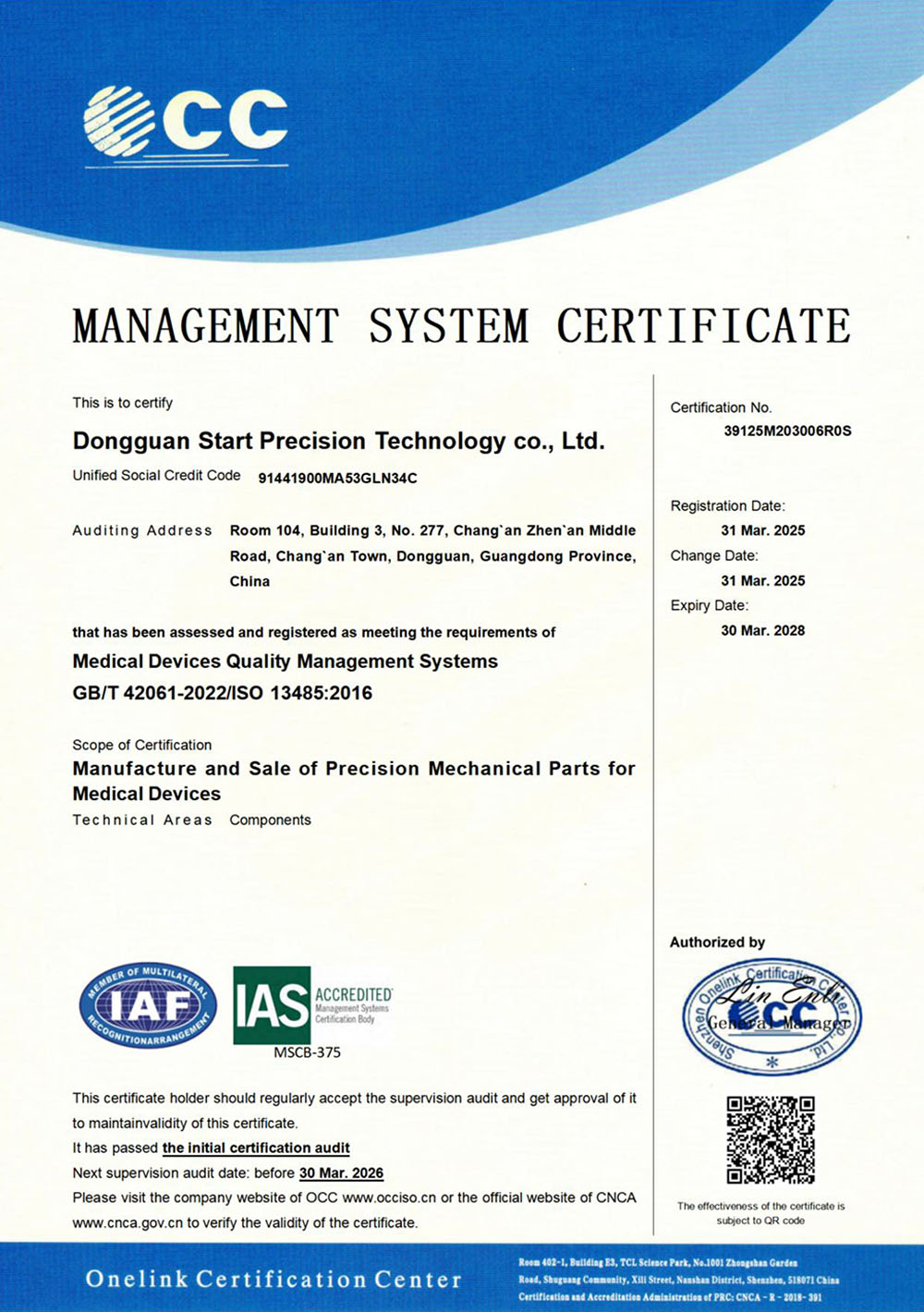
ISO 13485 certificate
Conclusion
High-density computing requires cooling components that combine thermal efficiency, dimensional precision, cleanliness, and dependable sealing. A controlled Liquid Cold Plate Machining process can help manufacturers produce reliable cold plates for CPUs, GPUs, AI accelerators, and other demanding electronics.
For factory-scale production or customized prototypes, contact us to discuss your manufacturing needs and technical requirements.
Add: Building 3No.277 Zhen'an Middle Road, Chang'an Town,Dongguan,Guangdong, China
Tel:+86-769-82855591
Copyright © 2019 All Rights Reserved Dongguan Start Precision Technology Co., Ltd. Tel: +86-769-82855591
Add: No. 277 Zhen'an Middle Road, Chang'an Town, Dongguan, Guangdong, China



 中文版
中文版 English