Liquid Cold Plate Machining for Custom Cooling Systems
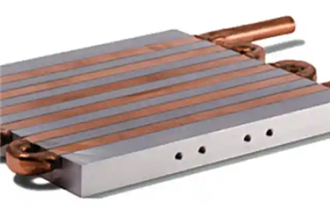
Date:2026-09-09Article editor:Starting Point PrecisionViews:156As electronic devices become more powerful, efficient thermal management is increasingly important. A liquid cold plate transfers heat from high-temperature components into a circulating coolant through precisely machined internal channels. Compared with conventional air cooling, a properly designed cold plate can provide more targeted heat removal for applications such as power electronics, battery systems, laser equipment, and high-density computing.
The quality of Liquid Cold Plate Machining directly affects channel geometry, thermal contact, coolant flow, sealing reliability, and long-term system performance.
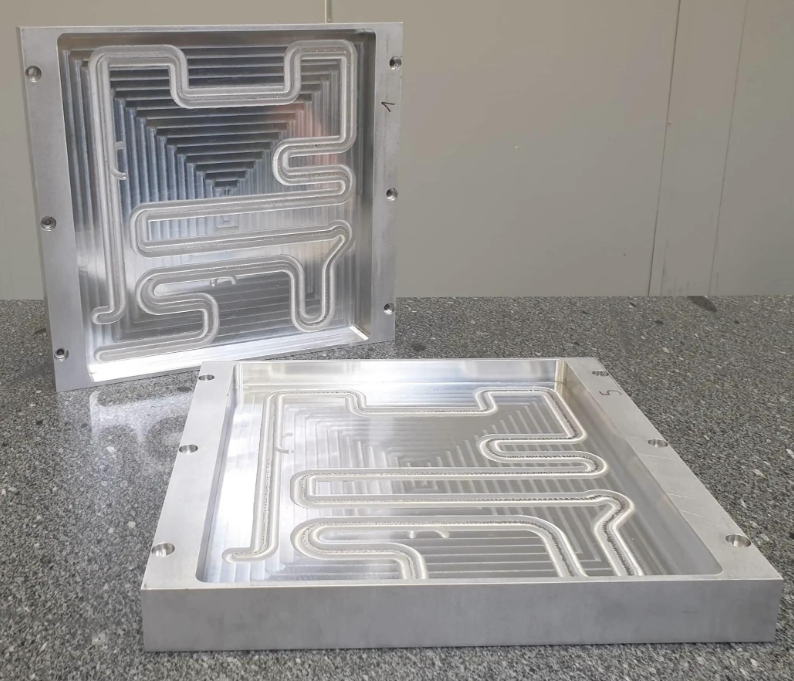
Why Precision Machining Matters
A custom cooling plate is more than a machined aluminum block. The manufacturing process must coordinate several critical features:
| Critical Feature | Manufacturing Focus | Performance Impact |
| Cooling channels | CNC milling / drilling | Controls coolant flow |
| Thermal surface | Precision face milling | Improves heat transfer |
| Ports | CNC thread machining | Ensures connection accuracy |
| Sealing groove | Precision CNC machining | Reduces leakage risk |
| Mounting holes | Position control | Simplifies assembly |
| Surface finish | Finishing process | Supports sealing and contact |
For complex geometries, multi-axis CNC machining can reduce repositioning and improve the positional relationship between channels, ports, and mounting features. Start Precision also describes the value of 5-axis machining for complex geometries and single-setup processing.
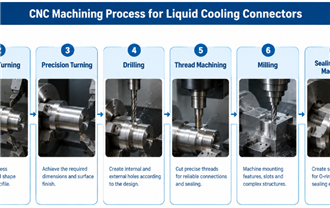
Typical Manufacturing Process
The process begins with a 2D drawing, 3D CAD model, cooling layout, or sample. Engineers review channel width, depth, wall thickness, port locations, sealing areas, tolerances, and material selection.
The aluminum or copper workpiece is securely fixtured before rough milling. Sufficient machining allowance can be reserved on critical surfaces for subsequent finishing operations.
CNC milling creates serpentine, parallel, pocketed, or other application-specific coolant channels. Tool diameter and cutting strategy should match the channel geometry to control burrs, tool deflection, and dimensional variation.
The thermal interface and sealing surfaces receive finishing passes. Flatness and surface quality are particularly important because the cold plate must maintain reliable contact with the heat source and sealing components.
Inlet and outlet ports are machined according to the customer's specified thread or connector standard. Correct positioning helps prevent installation interference and reduces unnecessary connection points.
Dimensional inspection can include CMM measurement, gauges, calipers, and other inspection equipment. Leak or pressure testing should be defined according to the application's working conditions.
For a broader CNC quality-control reference, see Start Precision's CNC Machining Parts Inspection Checklist.
Equipment & Process Parameters
| Item | Typical Requirement |
| CNC machining | 3-axis / multi-axis according to geometry |
| Complex geometry | 5-axis machining when required |
| Material | Aluminum, copper, or specified engineering alloy |
| Channel machining | End milling / drilling / pocket machining |
| Inspection | CMM, dimensional gauges, visual inspection |
| Testing | Leak or pressure testing according to specification |
| Surface control | Drawing-defined flatness and roughness |
| Production stage | Prototype, low volume, or batch production |
Important: Actual machining parameters such as spindle speed, feed rate, cutting depth, tolerance, and pressure-test requirements should be confirmed against material, geometry, coolant, and customer drawings rather than using one fixed value for every cold plate.
Material Selection for Custom Cooling Plates
Aluminum alloys are widely used because they combine relatively low weight, good thermal performance, corrosion resistance, and machinability. Copper can be considered when higher thermal conductivity is a priority, although material cost and machining characteristics must also be evaluated.
The final material should be selected according to:
● Heat load and thermal resistance
● Weight requirements
● Coolant chemistry
● Operating pressure
● Corrosion conditions
● Machining complexity
● Overall project cost
For quality-management requirements, customers can also refer to the official ISO 9001 quality management standard.
From CNC Workshop to Quality Inspection
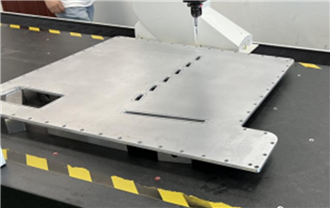
For B2B buyers, manufacturing transparency is important. A professional factory article should be supported by real equipment photos, machining-floor images, inspection scenes, and applicable certification documents rather than relying only on stock photography.
● CNC milling center
● Workshop
● CMM or dimensional inspection
● Actual factory certificate
● Product photo
Consider a power-electronics cooling project requiring a custom aluminum plate with multiple internal coolant channels, threaded inlet/outlet ports, mounting holes, and a precision thermal interface.
The manufacturing route can include CNC rough milling → channel machining → precision finishing → port machining → deburring → dimensional inspection → leak testing.
The key objective is not simply to achieve the external dimensions. Channel geometry, sealing surfaces, mounting positions, and thermal contact surfaces must work together as one functional component. This integrated approach helps reduce assembly problems and supports consistent cooling performance.
Reliable Liquid Cold Plate Machining requires more than CNC cutting. Channel geometry, material selection, thermal surfaces, sealing features, machining accuracy, inspection, and leak testing all contribute to the final cooling performance.
For prototypes, customized cooling plates, or production components, working from accurate drawings and clearly defined technical requirements can improve manufacturability and reduce downstream risk.
Contact us to discuss your manufacturing requirements and develop a suitable liquid cooling plate machining solution.
Frequently Asked Questions
1. What is Liquid Cold Plate Machining?
Liquid Cold Plate Machining is the CNC manufacturing of cooling plates with internal channels that circulate liquid coolant to remove heat from electronic or industrial components.
Aluminum alloys and copper are common choices. The appropriate material depends on thermal requirements, weight, coolant compatibility, corrosion conditions, and budget.
Yes. CNC machining can produce customized channel layouts, including serpentine, parallel, pocketed, and other application-specific geometries.
Depending on the design, manufacturers can perform specified pressure or leak tests after machining and sealing. The test pressure and method should be defined by the application requirements.
Yes. CNC machining is suitable for customized prototypes and low-volume production because the geometry can be produced directly from engineering drawings or CAD data.
A 2D drawing, 3D CAD file, material specification, quantity, cooling-channel design, port requirements, tolerances, surface-finish requirements, and testing requirements can help a factory evaluate the project accurately.
Add: Building 3No.277 Zhen'an Middle Road, Chang'an Town,Dongguan,Guangdong, China
Tel:+86-769-82855591
Copyright © 2019 All Rights Reserved Dongguan Start Precision Technology Co., Ltd. Tel: +86-769-82855591
Add: No. 277 Zhen'an Middle Road, Chang'an Town, Dongguan, Guangdong, China



 中文版
中文版 English