Precision CNC Machined Carbon Steel Parts with Rust-Proof Export Packaging
Date:2026-08-19Article editor:Starting Point PrecisionViews:153Exporting high-precision components exposes them to humidity, temperature swings, and salt spray during ocean freight. For Precision CNC Machined Carbon Steel Parts, even microscopic rust can ruin tight tolerances and surface finishes, leading to costly rejections. Effective rust-proof packaging is not an afterthought—it is a critical link in the supply chain that preserves dimensional accuracy and functional integrity from factory floor to final assembly.
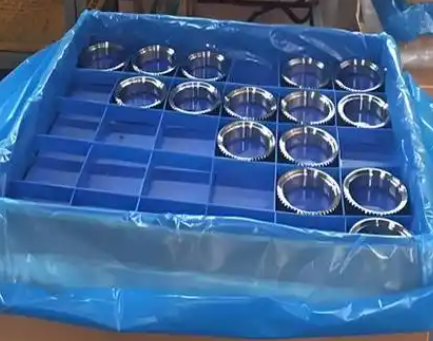
Carbon steel’s high strength and machinability come with a vulnerability to oxidation. The main threats include:
● Condensation inside containers (the “container rain” effect)
● Vapour corrosion from volatile organic compounds in wood pallets or cartons.
● Abrasive damage that breaks protective oil films.
● Long transit times (30‑60 days) over diverse climates.
Without systematic protection, rust can appear within days, turning a premium product into scrap. For a deeper understanding of corrosion mechanisms, refer to the NACE International resource library.
To safeguard Precision CNC Machined Carbon Steel Parts, combine multiple layers of protection. Below are the industry‑proven methods:
● VCI (Vapour Corrosion Inhibitor) Film & Bags
Releases molecules that adsorb onto metal surfaces, forming a monomolecular barrier. Ideal for inner wrapping. Learn more about VCI technology from Cortec’s technical data.
● Desiccant & Humidity Indicator
Silica gel or clay desiccants absorb residual moisture. Pair with indicator cards to verify humidity stays below 40% RH. Industry standards are detailed in MIL-D-3464E.
● Oil / Grease Coating
Water‑displacing, rust‑preventive oils (e.g., LPS 3, Shell Ensis) are applied by dip, spray, or brush. Suitable for long‑term storage.
● Vacuum / Heat‑Sealed Poly‑Aluminium Laminates
Provides an absolute moisture and oxygen barrier, often used for high‑value aerospace or automotive parts.
● Corrosion‑Resistant Outer Packaging
Corrugated boxes with moisture‑resistant coatings, plus stretch‑wrapped pallets to minimise water ingress.
| Method | Protection Duration | Humidity Tolerance | Cost per Unit | Best Application |
| VCI Film + Desiccant | 6–24 months | ≤60% RH | Moderate | General purpose |
| Oil Coating (heavy) | 3–12 months | ≤80% RH | Low | Unpainted surfaces |
| Vacuum Aluminium Pouch | 24+ months | ≤90% RH | High | Critical tolerances |
| Shrink Wrap + Silica | 3–6 months | ≤70% RH | Very low | Short‑sea shipments |
Reliable packaging must comply with international norms such as ASTM D3951 (commercial packaging) and ISO 9001 for process control . At Start Precision, every batch undergoes:
● Salt spray test per ASTM B117 to verify coating effectiveness.
● Humidity cycling (40°C / 95% RH) for 7 days.
● Drop and vibration tests per ISTA 2A.
For a full overview of our quality management, visit our factory overview. Adhering to these protocols ensures that your Precision CNC Machined Carbon Steel Parts arrive exactly as machined.
Robust rust‑proof packaging is a blend of material science, standard compliance, and practical experience. For Precision CNC Machined Carbon Steel Parts, the right combination of VCI, desiccants, and barrier films—backed by rigorous testing—ensures zero‑rust delivery, protecting your reputation and bottom line. Always partner with a manufacturer that understands these nuances.
Contact us to discuss your manufacturing requirements – we are ready to tailor a packaging solution for your export challenges.
Q1: How long can VCI packaging protect carbon steel parts without reapplication?
A1: High‑quality VCI films can protect for 6 to 24 months when sealed correctly and stored at moderate humidity (<60% RH).
Q2: Is oil coating enough for ocean freight to tropical regions?
A2: Oil alone often fails under high heat and condensation. We strongly recommend a multi‑layer approach: oil + VCI wrap + desiccants, plus a moisture‑barrier outer bag.
Q3: What is the most cost‑effective method for medium‑volume shipments?
A3: VCI polyethylene bags with a small desiccant pack and humidity indicator are very cost‑effective, typically adding less than 2–3% to the total part cost.
Q4: Can you reuse VCI materials for multiple shipments?
A4: No—VCI films lose their inhibitor after exposure to air and moisture. Always use fresh, factory‑sealed materials for each export batch.
Q5: How do I verify that my packaging meets ASTM D3951?
A5: ASTM D3951 requires that packaging provide adequate protection under normal shipping conditions. Request a certification from your packaging supplier and perform your own drop/vibration tests, or ask a qualified manufacturer like Start Precision for test reports.

Add: Building 3No.277 Zhen'an Middle Road, Chang'an Town,Dongguan,Guangdong, China
Tel:+86-769-82855591
Copyright © 2019 All Rights Reserved Dongguan Start Precision Technology Co., Ltd. Tel: +86-769-82855591
Add: No. 277 Zhen'an Middle Road, Chang'an Town, Dongguan, Guangdong, China



 中文版
中文版 English