Custom CNC Machining parts for Injection & Blow Molds
Date:2026-06-30Article editor:Starting Point PrecisionViews:282In plastic manufacturing, injection molds and blow molding tools determine product quality, cycle time, and scrap rates. Achieving micron‑level accuracy, complex cooling layouts, and rapid delivery requires custom CNC machining parts engineered specifically for each production environment. This article breaks down the exact components we machine, the materials we use, and real‑world performance data—helping you specify tooling with confidence.
Generic off‑the‑shelf components force compromises. Custom CNC allows us to tailor every geometric detail—from draft angles to conformal cooling channels—to your resin's viscosity and part geometry. Modern 5‑axis machining centers handle hardened steel (up to 58 HRC) with surface finishes below Ra 0.4 µm, drastically reducing manual polishing. The result? Faster heat transfer, consistent wall thickness, and 15‑30% longer tool life before maintenance.
Below is our comprehensive capability matrix. We machine every component in‑house, from raw billet to final coating.
| Category | Custom Parts We Machine | Typical Materials | Critical Requirements / Applications |
| Core & Cavity | Core inserts, cavity blocks, interchangeable shims | H13, S7, P20, NAK80 | Complex 3D contours, mirror polish (Ra≤0.2), textu for brand logosring |
| Slides & Lifters | Angle pins, T‑slides, collapsible cores | H13, O1 tool steel | Wear resistance for side‑action cores; precise matching angles (±0.01°) |
| Hot Runner Systems | Nozzle tips, manifolds, heater pockets, thermocouple holes | H13, 17‑4PH stainless | Leak‑proof sealing, thermal expansion matching, smooth internal flow paths |
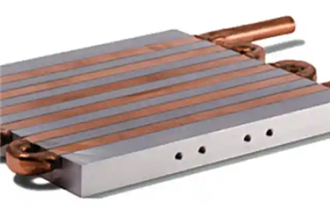
| Ejection & Cooling | Ejector pins, return pins, sleeve bushings, baffles, bubbler tubes | M2 high‑speed steel, Beryllium copper (BeCu) | High straightness (0.005 mm/m), gundrilled deep holes (L/D > 100) for conformal cooling |
| Blow Cavities & Rings | Blow mold cavities, clamping rings, pinch‑off blades | AL7075‑T6, P20, S7 | Fast heat dissipation (Aluminum cools 3× faster), airtight parting line seals |
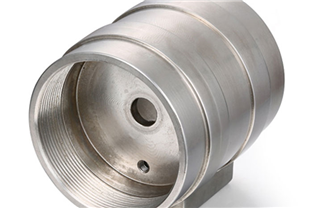
| Neck & Mandrel Tooling | Neck inserts, blow pins, mandrels, trimming knives | SS420, H13, Invar | Concentricity ≤0.005 mm, threaded unscrewing mechanisms, anti‑gall coatings |
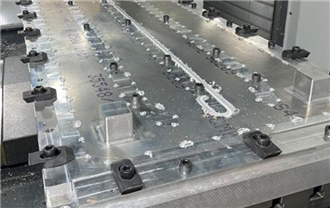
| Structural Supports | Mold bases, support pillars, ejector plates, guide bushings | S50C carbon steel, bronze alloys | Rigidity under clamping force (up to 2,000 tons), anti‑friction sliding surfaces |
This table covers over 95% of custom tooling requests. If your part isn't listed, we also machine custom fixtures, gauges, and prototype cavities for trial runs.
Choosing the right material directly impacts mold longevity. P20 is our go‑to for prototypes and low‑volume runs (under 100k shots) due to its excellent machinability. For high‑volume consumer goods, we recommend H13—it withstands thermal cycling up to 600°C without softening. For blow molding, AL7075‑T6 reduces cooling time significantly; one client cut their 20‑liter jerrycan cycle from 18 seconds to 11 seconds just by switching from steel to aluminum cavities.
Our CNC department employs diamond‑coated carbide end mills and high‑pressure through‑spindle coolant (up to 70 bar) to maintain thermal stability during roughing and finishing. All heat‑treatment processes follow ASTM A681 standards, with full traceability.
Blow tools present unique challenges. For a recent 20‑liter jerrycan project, the neck required a complex unscrewing thread. We combined wire EDM for the thread inserts and CNC turning for the neck ring, achieving concentricity within 0.01 mm. Additionally, our CAM software simulates the blow‑up ratio (typically 2.5:1 to 4:1 for HDPE) and compensates tool dimensions for material shrinkage (1.5‑4%). Industry benchmarks from Plastics Technology confirm that such hybrid machining reduces assembly errors by 30%.
Every custom part undergoes triple inspection:
CMM (Coordinate Measuring Machine) – for geometric dimensioning and tolerancing (GD&T).
Laser scanning – for free‑form surface verification against the STEP model.
Rockwell hardness testing – to confirm heat‑treatment uniformity.
We also implement real‑time SPC (Statistical Process Control), automatically adjusting feed rates to maintain dimensional stability across long production runs. This guarantees that the first part and the 10,000th part are virtually identical—critical for automotive interior and medical device molding.
For a full list of our inspection instruments, visit our quality assurance page.
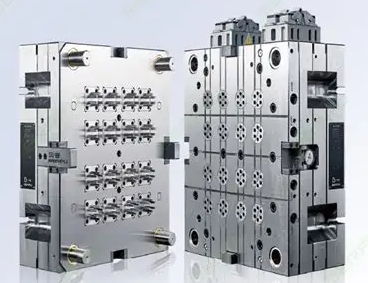
Real‑World Performance: 16‑Cavity PET Preform Mold
A beverage client approached us for a 16‑cavity hot‑runner injection mold targeting 2.2 million preforms per month. Requirements included:
Tolerance: ±0.005 mm on the neck finish (critical for bottle capping).
Surface: Ra 0.2 µm on sealing surfaces to prevent flash.
Delivery: 12 working days.
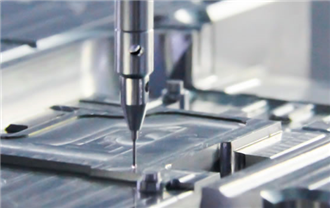
Using high‑speed milling with a 0.8‑mm ball‑nose cutter and in‑process probing, we delivered all cavities on spec in 11 days. The mold ran continuously for 14 months, producing over 2.8 million preforms—exceeding the target by 27%—with only standard cleaning.
Ready to specify your custom tooling? Contact our engineering team for a free feasibility review and DFM analysis. We combine custom CNC machining with decades of mold‑making expertise to deliver tools that outperform your production targets—on time and on budget.
Q1: What is the typical lead time for a custom injection mold?
Simple prototype molds (single cavity) take 5‑7 days. Production‑grade multi‑cavity molds with hot runners require 3‑6 weeks. We offer 24/7 emergency repair machining for critical breakdowns.
Q2: Can you machine molds from customer‑supplied 3D models?
Yes. We accept STEP, IGES, and SolidWorks native files. Our DfM (Design for Manufacturability) team reviews each model for ejector‑pin clearances and cooling‑line placement free of charge.
Q3: How do you handle deep‑hole drilling for conformal cooling?
We use gundrilling with carbide‑tipped bits and high‑pressure oil coolant, achieving straightness within 0.05 mm/m and internal surface finishes that prevent scale build‑up.
Q4: What is the maximum mold size you can machine?
Our largest CNC router accommodates workpieces up to 2,500 mm × 1,200 mm × 800 mm. For blow molds, we handle diameters up to 600 mm.
Q5: Do you provide material certifications and traceability?
Absolutely. All materials come with Mill Test Reports (MTR). We maintain full batch traceability per ISO 9001:2015. See our certification details.
Add: Building 3No.277 Zhen'an Middle Road, Chang'an Town,Dongguan,Guangdong, China
Tel:+86-769-82855591
Copyright © 2019 All Rights Reserved Dongguan Start Precision Technology Co., Ltd. Tel: +86-769-82855591
Add: No. 277 Zhen'an Middle Road, Chang'an Town, Dongguan, Guangdong, China



 中文版
中文版 English